Nobody runs whale safaris in Oslo. Visit Norway's whale watching page points at Vesterålen, Tromsø, Alta and Lyngenfjord, all of them a flight away from the capital.
The top search result for "whale watching Oslo" sells you something else. Adventure Life's page of Oslo whale watching cruises lists Arctic expedition voyages to Svalbard and Greenland, 8 to 16 days long, priced from around $11,000 to $65,000. Oslo is the departure port. Nobody aboard is watching whales anywhere near the city.
There is no whale trip to book here, then. What the fjord does have is a small toothed whale that lives in it all year, harbour seals hauled out on the skerries, and once in a while something nobody predicted. Over sixteen days in July 2025, three big whales came into the Oslofjord.
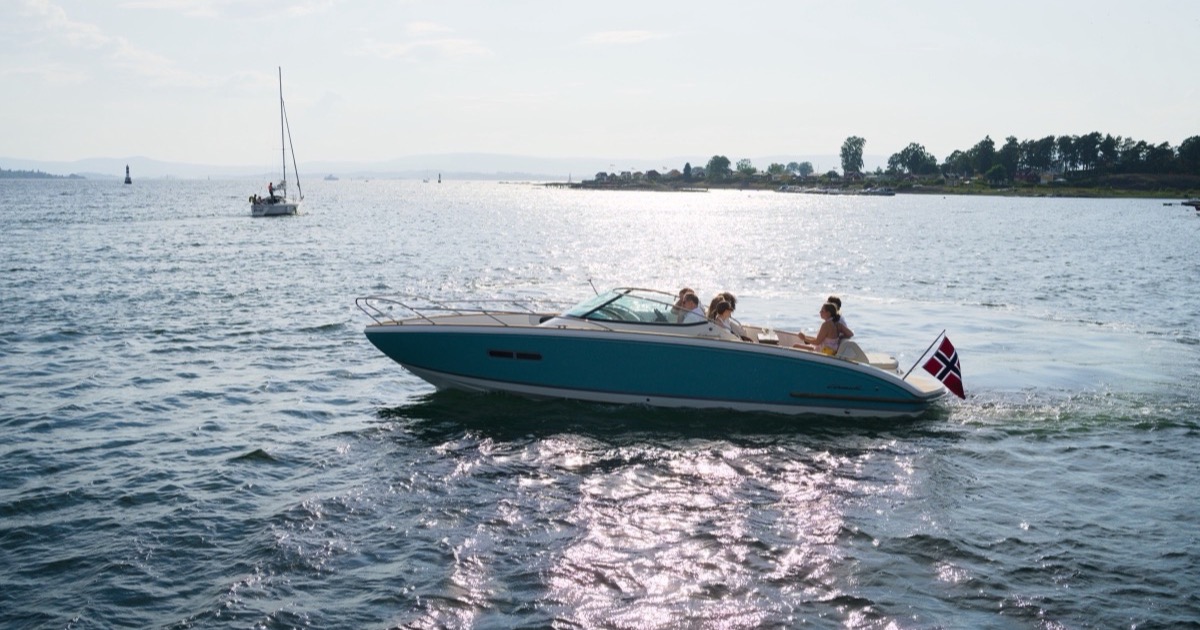
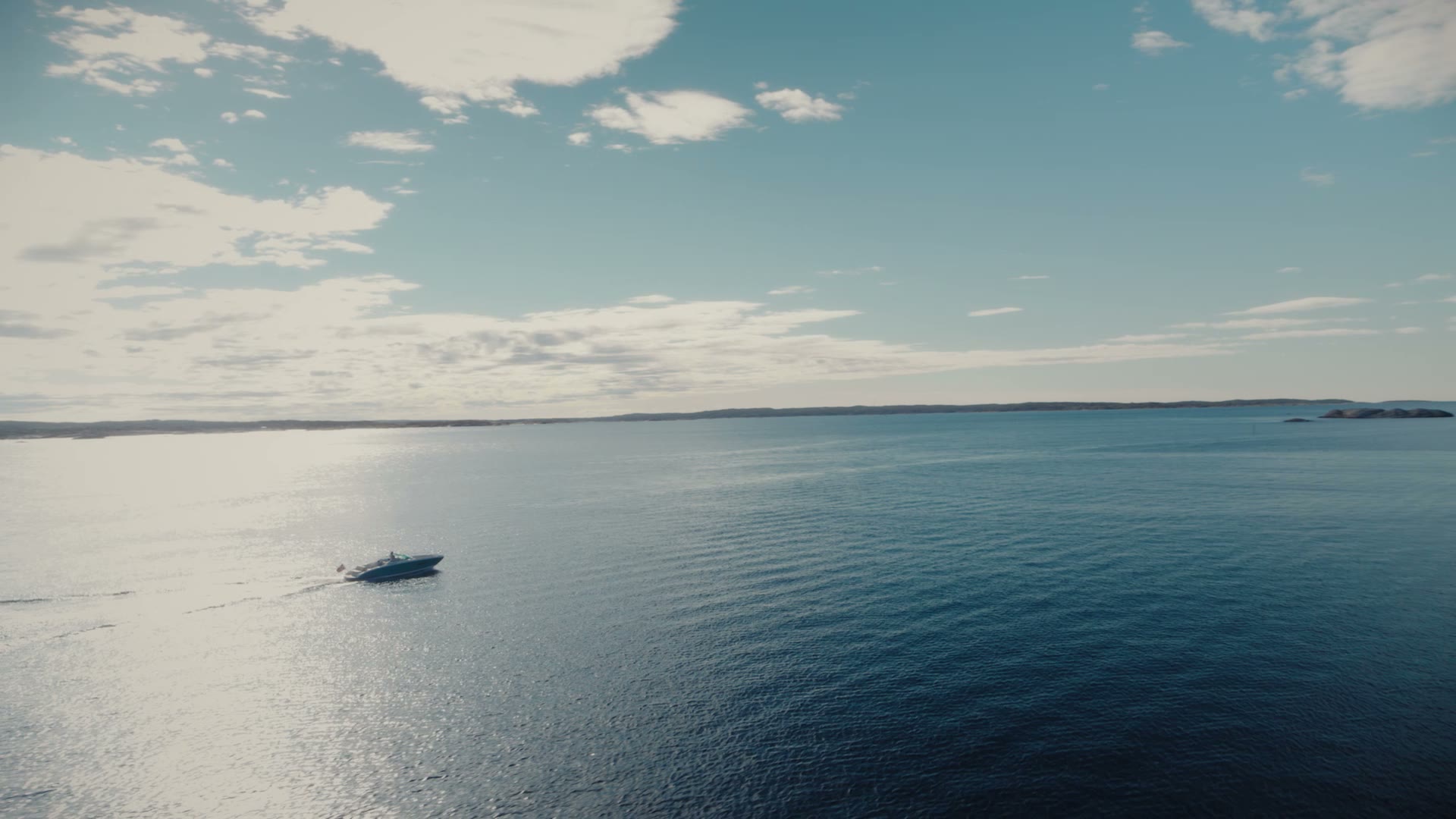
The inner Oslofjord on a calm morning — porpoise conditions
Harbour porpoises live here year-round
The harbour porpoise (Phocoena phocoena, nise in Norwegian) is a toothed whale, the same suborder as orcas and sperm whales, and it is in the Oslofjord in January as much as in July. The Institute of Marine Research calls it the most abundant cetacean in Norwegian waters, with around 350,000 animals in the North Sea alone, usually moving in groups of two to five behind herring and sprat. From our own seasons on the water we put 70 to 80 of them in the inner fjord.
A female reaches about 160 centimetres and 60 kilograms, a male slightly less. They rarely dive below 200 metres, which the inner fjord suits fine.
What you get to see is a fin. A porpoise surfaces in one short rolling movement, shows a small triangular dorsal, and is gone; there is no blow and no tail. The water that pays off, from years of running the same routes, is the deep channel east of Nesoddtangen, the sounds around Steilene, and Drøbaksundet, early or late in the day on a flat surface. Chop hides the fin, and the fin is all there is. Our full guide to the harbour porpoises of the Oslofjord covers how to tell them from dolphins.
If someone in Oslo promises you a whale, ask what they mean by whale. What I can do is put us on the water where the porpoises usually are on a calm morning. Half the boat still misses the first one, because they are looking for something the size of a bus.
The seals are the reliable ones
The harbour seal (steinkobbe) is the animal most guests actually get to see. The Institute of Marine Research puts males at around 150 centimetres and 100 kilograms and females at up to 150 centimetres and 80, so a full-grown one on a rock is the size of a person. Its coastal survey ended in 2015 with 7,552 animals counted ashore during the moult, which the institute scales up to a coastal population of roughly 10,000: rising along the Skagerrak coast, in Sogn og Fjordane and in Troms, falling sharply in Trøndelag.
The moult is also why they are countable, and why late summer is the easy time to find them. Through August and September they spend their days on land, and we pass the same skerries with animals on them trip after trip. You recognise the posture before you can explain it. A hauled-out harbour seal lies on its side with head and rear flippers in the air, which the field guides describe soberly and everyone on the boat calls the banana. More on where they turn up in the seals of the inner fjord.
When big whales do turn up
Large whales do come into the fjord, rarely and never on a schedule. The record goes back decades.
- February 2003: a humpback at the islands of Søstrene and Misingen, west of Hvaler in the outer fjord, reported heading north (NRK).
- March 2015: a fin whale stranded at Hvalsund on Hvaler. Fin whales reach around 22 metres in the North Atlantic and weigh roughly three tonnes per metre of length. The biologist who examined this one said a healthy animal does not look like that, and suspected it had swallowed plastic (NRK Østfold).
- July 2023: a humpback in Bunnefjorden, the innermost arm of the fjord. Kristian Kanck Kringstad heard splashing and shouting from the water while he was eating dinner and went out to look; Kjell Isaksen, biologist at Oslo's environment agency, called an animal that size unusual so far in (Aftenposten).
- July 2025: the strange summer. On Sunday 6 July a chalk-white whale about three metres long passed a fisherman at Holmestrand, which Dagbladet reported as probably a beluga. On Monday 21 July a humpback surfaced off Ildjernet by Nesodden, watched by a man who had boated those waters for forty years without seeing one (Aftenposten). The following evening, Tuesday 22 July, a big whale settled off Svartskog in Bunnefjorden, next to Roald Amundsen's old house. Marine biologist Pia Ve Dahlen was careful about the species and delighted about everything else: she hoped and believed it was a sperm whale, "peak whale" in her words, an animal that carries the largest brain in the animal kingdom and routinely dives below 2,000 metres, which Bunnefjorden cannot offer it. NRK's summer radio named it Roald Hvalmundsen two days later (Oavis).
That is three big whales in sixteen days, in a fjord that usually goes years between sightings like these. A researcher at the Institute of Marine Research has counted only seven or eight humpback observations in the inner Oslofjord over the past ten years or so, and the standing advice to boaters is the same every time: keep your distance.
Norway's most famous whale visitor belongs on the list too. Hvaldimir, the tame beluga who appeared near Hammerfest in April 2019 wearing a harness stamped "Equipment St. Petersburg" (hence hval plus Vladimir), swam into the Oslo area in May 2023 before continuing to Swedish waters. He would come back to boats, follow hand signals and play fetch. He was found dead at Risavika near Stavanger on 31 August 2024, and the autopsy report that October concluded he had probably died of a bacterial infection, possibly from a stick lodged in his mouth that also kept him from feeding; the police investigation into whether he had been shot was dropped once the report landed (VG).
In April 2026 another beluga turned up in the Drammen River at Hokksund, 60 kilometres from Oslo. It was named Hvalborg, and the Directorate of Fisheries drew protection zones around it: no fishing from boats within 500 metres, no fly fishing from shore within 300 (VG). Audun Rikardsen, professor at UiT The Arctic University of Norway, thought it was either feeding or shedding skin, said it had probably been in the same stretch of river the previous autumn, and asked boat and jet-ski drivers not to frighten it into shallow water (Nettavisen).
Where whale watching in Norway actually happens
If a whale is the point of the trip, fly north and treat Oslo as the city break on either side.
Andenes, Vesterålen is the classic. The continental shelf drops close to shore there, and sperm whales up to 20 metres feed along the edge all year. The main season runs late May to mid-September, with RIB trips of 1.5 to 2.5 hours or traditional boats taking 3 to 4 hours, priced from around 1,690 NOK in the 2025 season (Whalesafari Andenes has current rates).
Tromsø and Skjervøy are the winter answer. Between November and January, large groups of orcas and humpbacks follow the herring into the fjords, and daily boat tours go out to meet them. Expect a long day: 7 to 8 hours at sea for perhaps 1 to 1.5 hours with the whales, and the season's best departures sell out early.
Even in Andenes whales are not guaranteed to show. Whalesafari Andenes offers another trip free, or your money back less an admin fee, if they stay down.
What a day on the Oslofjord actually gives you
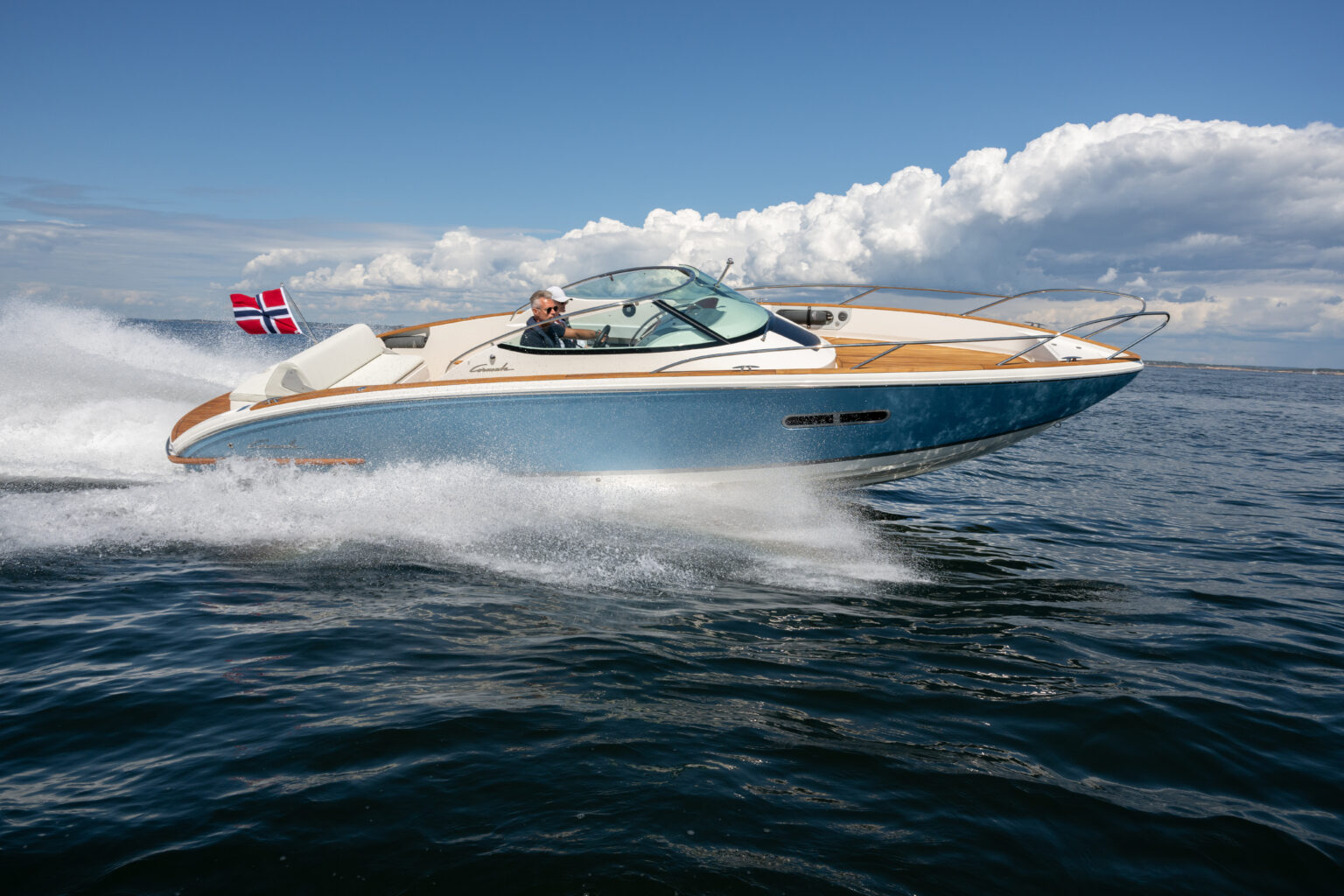
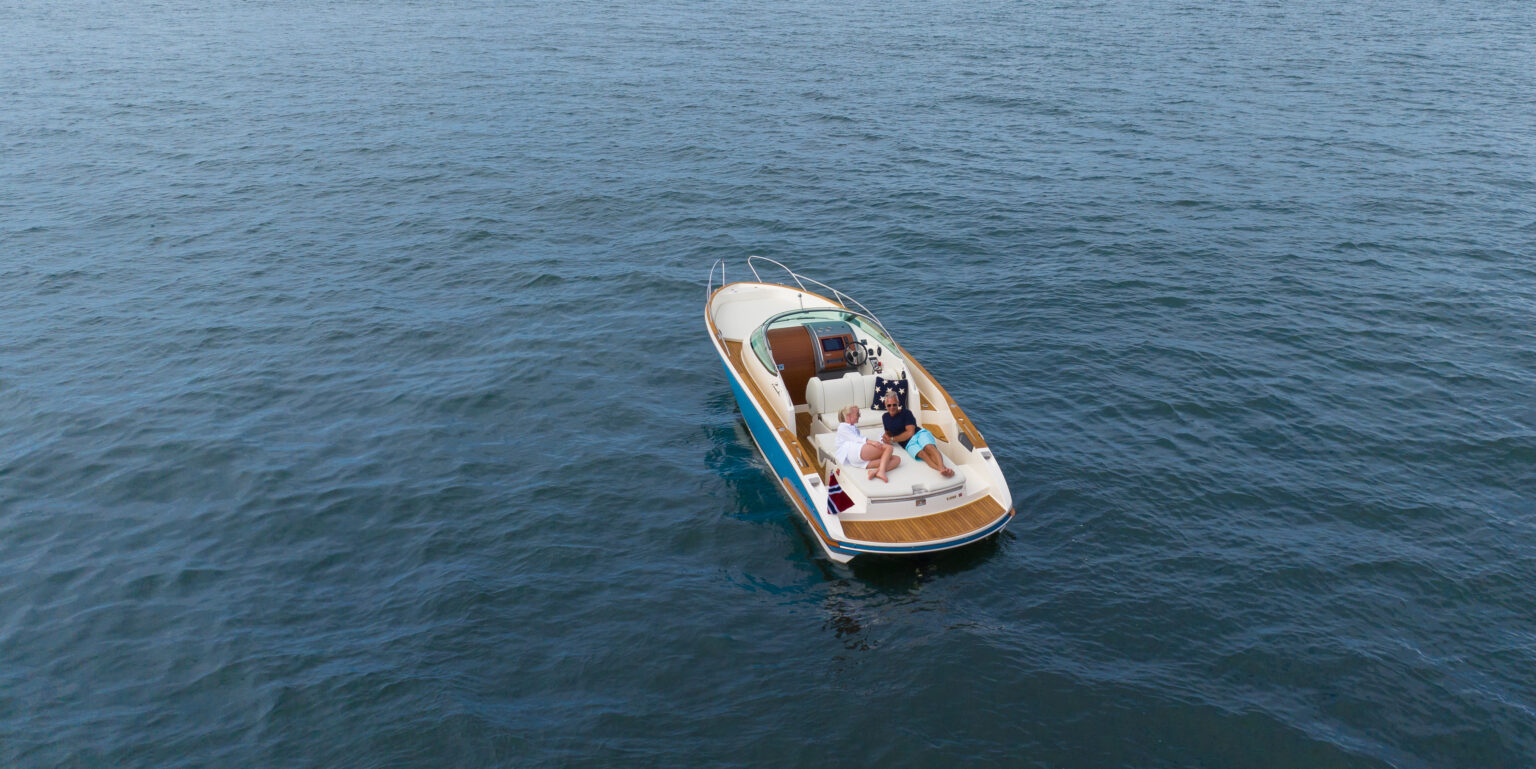
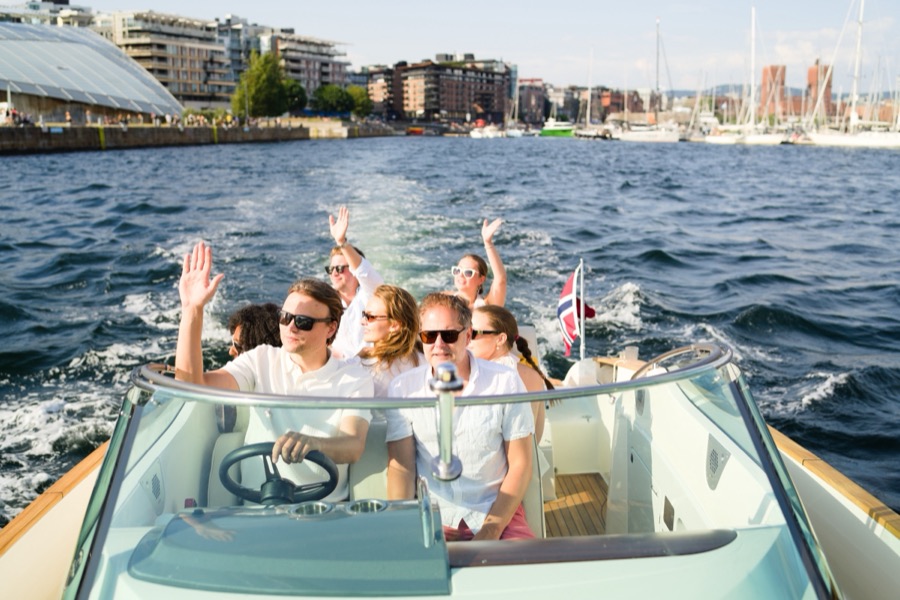
We run a private cruise, up to seven guests on one boat, three hours from 16,688 NOK for the whole boat. We don't call it a whale safari, because nobody in Oslo honestly can. You get the fjord as it is: porpoises if the morning is calm and you keep your eyes on the water, seals on the rocks through late summer, sea eagles and the rest of the fjord's wildlife as the day provides. The animals are the layer on top of a trip that already includes the islands, the skyline from the water, and a swim if the weather cooperates. You can check dates and book online; mornings and evenings are the wildlife slots, and we say so when you ask.
Most summers here mean porpoises and seals. July 2025 meant three big whales in sixteen days, and nobody, us included, had it on a schedule. Roald Hvalmundsen arrived unannounced.
Population figures are estimates that shift with every survey, and northern prices and seasons change from year to year. Last reviewed July 2026.
More from the fjord
Winter birds on the Oslofjord: eider, goldeneye, and the mystery of 2020
The Oslofjord doesn't freeze solid. From November to March it hosts tens of thousands of diving ducks — eider, goldeneye, long-tailed duck, scoter. Where to find them, why they're here, and what happened in February 2020.
GuideSeabird colonies of the Oslofjord: which skerries, which birds, when to stay away
The inner Oslofjord has 14 seabird reserves with a strict access ban 15 April – 15 July. Which islands matter, and which birds nest there.
GuideSeals in the Oslofjord: where they really are
The big haul-outs are at Hvaler, Færder and Bolærne, not in the inner fjord. What the counts show, why a skerry at Steilene is named Selskjær, and your honest odds of seeing one.