
Around 110 areas in the inner Oslofjord carry some form of legal protection, and most of them are small: bare breeding skerries a couple of boat lengths across. Landing on a seabird reserve is banned from 15 April to 15 July, with a 50-metre marine buffer around most of them. BirdLife Oslo og Akershus has counted the colonies annually since 1971. The bird that once defined an Oslo summer, the black-headed gull, is now classified as critically endangered in Norway.
The rules, on one page
- Access ban: 15 April – 15 July. No landing. No anchoring inside the marine buffer. No entering a reserve by kayak or paddleboard.
- 50-metre marine buffer. Stay at least that far off the shoreline of a reserve when you are in a boat.
- Outside the ban period landing is allowed at most sites, but dogs on leash, no camping on vegetation, no fires.
- Enforcement by Statens Naturoppsyn and police. Violation is a criminal offence.
The dates are under revision. In November 2023 the county governors for Agder, Oslo og Viken and Vestfold og Telemark put a proposal out to consultation to move the ban from 15 April–15 July to 15 March–15 August. The government's national seabird action plan for 2025–2035, announced on 14 January 2025, lists an extended ban in seabird reserves among its measures. Dates and buffer distances are set in each reserve's own protection order, so the live answer for a specific skerry sits on Statsforvalteren's portal, not in this article.
If you are not sure whether a rock is protected, assume it is and stay off. If you see a small sign with a bird silhouette, that is your cue.
The headline collapse: hettemåke
The black-headed gull (hettemåke, Chroicocephalus ridibundus) used to be the defining sound of Oslo's summer skerries. In 1987 Statsforvalteren counted 14,000 breeding pairs across the inner fjord reserves. In 2015, the same count reached 1,417 pairs. That is a 90 percent decline in thirty years, about one gull generation.
Nationally the picture is the same shape. Artsdatabanken moved the species to critically endangered (CR) on the 2021 Norwegian red list, on an estimated 84 percent decline over the last three generations.
Several causes work together. Closed landfills removed a summer food source. Warmer winters and shifts in small-fish availability changed the marine diet. Predation pressure from larger, more opportunistic gulls went up. The same long-term decline runs across northern Europe.
Kavringen, the reserve off Hovedøya, was once the loudest hettemåke colony in the inner fjord. It is effectively silent now, except for the scream of gråmåke, the herring gulls that have taken the space.
Who's on which skerry
The per-island counts below come from BirdLife Oslo og Akershus surveys, collated at oslooyene.no. They are a snapshot of the 2005 census; colonies move.
Kavringen. Herring gull (gråmåke), common gull (fiskemåke), cormorant (skarv), eider, long-tailed duck. The old hettemåke rookery, now gull-dominated.
Rambergøya. A low island connected to Hovedøya and Gressholmen by stone causeways. Lime-rich geology and shallow water attract waders and ducks, which makes the Gressholmen complex one of the best all-round birding spots in the inner fjord.
Bleikøya and Bleikøykalven. The defined breeding area is Bleikøykalven, the northeast skerry. The 2005 census found 381 nests across nine species there: 222 pairs of herring gull, 60 lesser black-backed gull (sildemåke) and 60 barnacle goose among them.
Kaffeskjær, Nakkeskjær, Galteskjær (between Nakholmen and Bygdøy). Terns, guillemots, cormorants. Kaffeskjær held 446 nests across four species in 2005, of which 398 pairs were black-headed gull and 44 common gull. Eight years earlier, in 1997, the same skerry had 153 black-headed pairs, which gives you the scale of the swings between counts.
Husbergøya and Nordre Skjærholmen (Bunnefjorden). Small mixed colonies rather than large ones. Husbergøya in 2005: 65 pairs of herring gull, 31 lesser black-backed, 9 eider, one great black-backed. Nordre Skjærholmen: 45 herring gull, 29 eider, 22 barnacle goose, one great black-backed.
Knerten (one of the Steilene group). Seabird reserve since 1978. Strict access ban 15 April – 15 July.
The inner fjord — nearly every small rock is a current or former colony
The numbers that matter
Pair counts from the BirdLife Oslo og Akershus 2015 seabird census across the inner Oslofjord, with each species' category on the 2021 Norwegian red list:
| Species | Pairs (2015) | Red list 2021 | Trend |
|---|---|---|---|
| Black-headed gull (hettemåke) | 1,417 | CR, critically endangered | −90% from 14,000 (1987) |
| Lesser black-backed gull (sildemåke) | ~694 | LC, least concern | Stable |
| Herring gull (gråmåke) | ~553 | VU, vulnerable | Halved in 15 years |
| Common gull (fiskemåke) | ~295 | VU, vulnerable | Declining |
| Common tern (makrellterne) | ~123 | EN, endangered | Fragile recovery |
| Eider (ærfugl) | 882 | VU, vulnerable | Up from 670 two years prior |
The eider is the one line in the table that moved up locally, probably tracking water-quality gains after the harbour cleanup. Nationally it moved the other way: Artsdatabanken took it from near threatened in 2015 to vulnerable in 2021, on a real decline of 30 to 35 percent and a revised generation length of eleven years instead of five. The outer-fjord winter mortality of 2020 belongs to that national picture.
Outer fjord: a different scale
Leave the inner fjord and the bird life opens up. Ytre Hvaler Nasjonalpark, which became Norway's first national park with a marine component in 2009, protects a skerry system that holds breeding great cormorant (storskarv), lesser black-backed and herring gulls, common tern, arctic tern, eider, and the occasional European shag (toppskarv). The outer skerries Torbjørnskjær, Heia, Akerøya, Vesleøya are the key reserves.
Færder Nasjonalpark (2013) protects the Bolærne islands, Færder itself and smaller skerries across to Tjøme, and contains 32 seabird reserves of its own. The ringing station on Store Færder, working since 1962, has registered 272 bird species. It is also the reliable place for white-tailed eagle sightings, since the eagles hunt the eider and cormorant colonies.
There are no puffins breeding in the Oslofjord. They nest from Vestlandet northward: Runde, Lovund, Røst. Occasional winter vagrants reach the outer fjord from Skagerrak, but there are no colonies here. If someone tells you they saw a puffin at Hvaler last June, ask what else was on the rock.
Reading the skerries
A working rule for the fjord: every white-streaked rock you pass is a seabird ledger. Gulls streak the top. Cormorants stain black-green. Eider leave the rocks mostly clean, because they nest on the ground in vegetation rather than on exposed rock. The density of the white tells you the size of the colony.
If the birds panic off the water as you approach, with a sudden dense takeoff, alarm calls and circling, you are too close. Back off to a hundred metres and they will settle. Photographs are not worth the stress cost to the colony.
If you want to see them properly
Binoculars are essential. The distance rules are real and you need optics to make the most of them. 8×42 is the standard birding configuration; borrow a pair if you don't have one.
For the inner-fjord colonies a half-day private cruise reaches all the Gressholmen-complex reserves and Kavringen without needing a drive. For Færder and Hvaler the full-day tour is long enough to get you to the outer archipelago and back, which is where the big numbers and the eagle encounters are. Either way, the captain keeps you outside the 50-metre buffer. We have been working these skerries for six seasons and we'd rather have a quiet distance and clear optics than a close pass and an anxious colony.
If you are kayaking in season, the same rules apply: stay 50 metres off every reserve between 15 April and 15 July. The Mad Goats self-service rental assumes you know this; it's part of the sjøvett the company counts on.
Colony counts are census snapshots and move between years. Access dates and buffer distances follow each reserve's own protection order and are currently under revision. Verify on Statsforvalteren's portal, linked above. Last reviewed: July 2026.
The terns at Knerten are the loudest thing in the inner fjord between May and August. We hold fifty metres off the island the whole season — flushing a colony off the rock costs the chicks the calories they need to survive their first week.
More from the fjord
Whale Watching in Oslo: What Actually Swims in the Oslofjord
No whale safaris run from Oslo. What the fjord actually holds: harbour porpoises year-round, seals on the skerries, and the documented whale visits of 2003–2025.
GuideWinter birds on the Oslofjord: eider, goldeneye, and the mystery of 2020
The Oslofjord doesn't freeze solid. From November to March it hosts tens of thousands of diving ducks — eider, goldeneye, long-tailed duck, scoter. Where to find them, why they're here, and what happened in February 2020.
GuideSeals in the Oslofjord: where they really are
The big haul-outs are at Hvaler, Færder and Bolærne, not in the inner fjord. What the counts show, why a skerry at Steilene is named Selskjær, and your honest odds of seeing one.
See for yourself
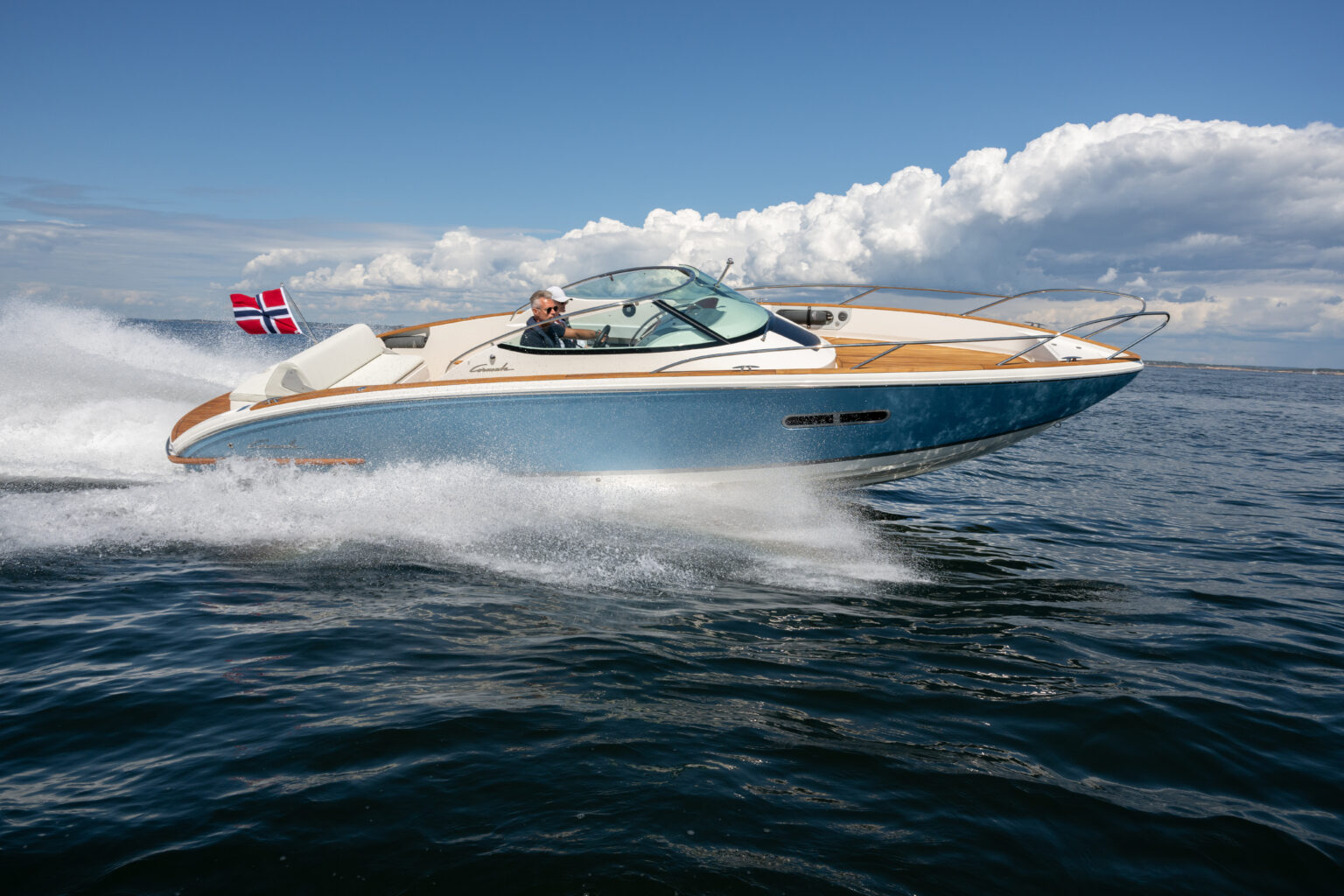
Private Cormate T28 charter on the Oslo Fjord.
Up to seven guests. Fixed pricing. Departures from Tjuvholmen, Oslo.
Check pricing & availability