Yes, you can swim in the Oslofjord. Surface water reaches 18–22°C between late June and mid-August, and sheltered bays run 2–3°C warmer than open water. Oslo Kommune measures bathing water at public beaches from June to August and publishes the results. From a boat anchored off the islands you sit well away from the stormwater outfalls that move those readings around. Visibility on calm days reaches four or five metres.
The ladder folds down from the stern. You stand on the bottom rung, water at your ankles, and the cold hits before you can think about it. Then you let go. The Oslofjord closes over your shoulders, maybe 18°C, maybe 19, and when you come back up the city skyline is sitting on the horizon looking like something you wouldn't have believed. The boat rocks at anchor. Someone on deck laughs. Twenty minutes from Oslo Central Station and you're swimming in a fjord.
People come to Oslo expecting forests, museums and a harbour walk. Fewer expect water clean enough to swim in, with a ring of islands twenty minutes from the centre. If you have questions about the Oslofjord before visiting, our FAQ covers the most common ones. What stays with people is the swim itself. The cold hits, it passes, and then you are floating between islands while the city carries on without you.
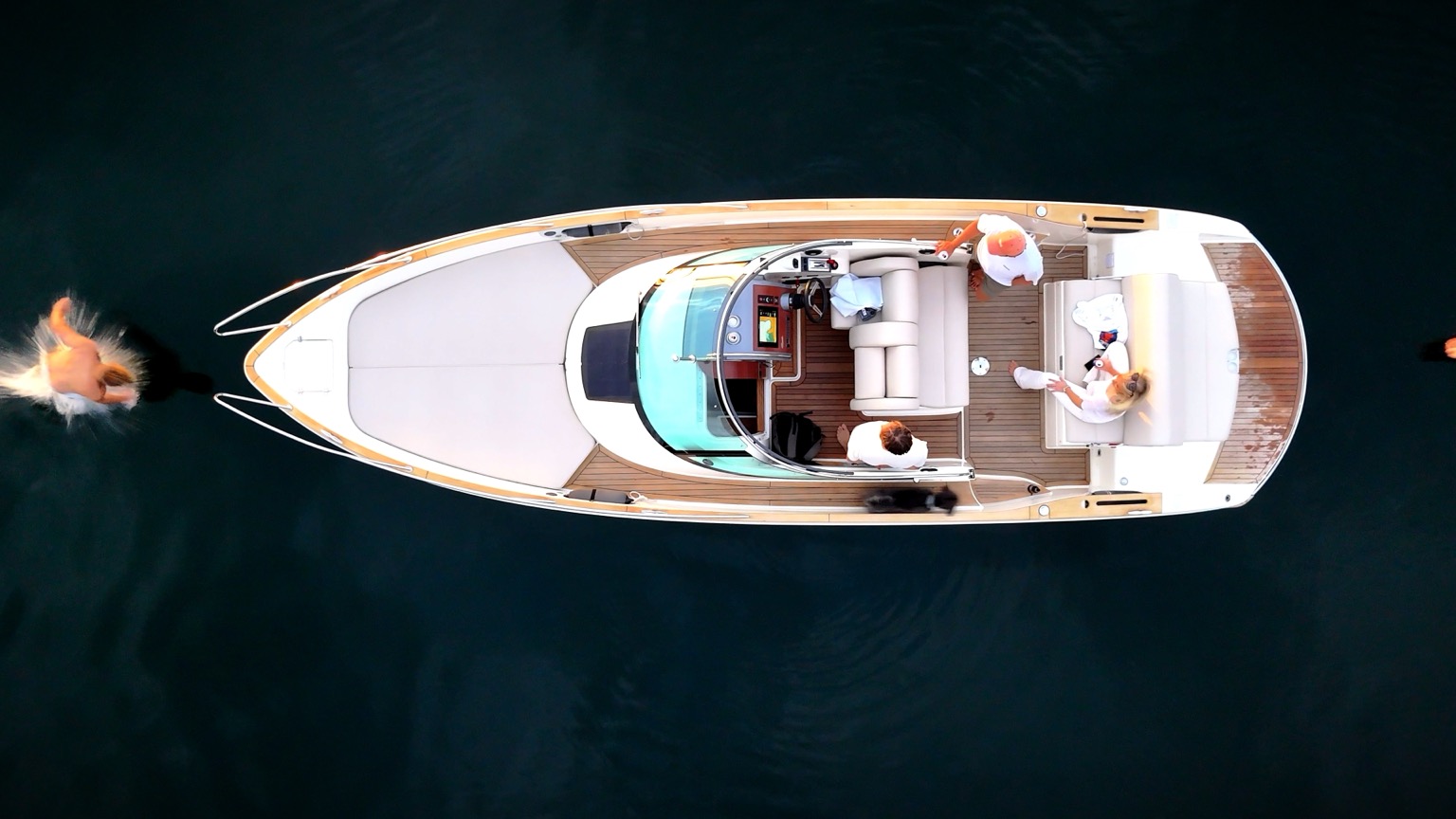
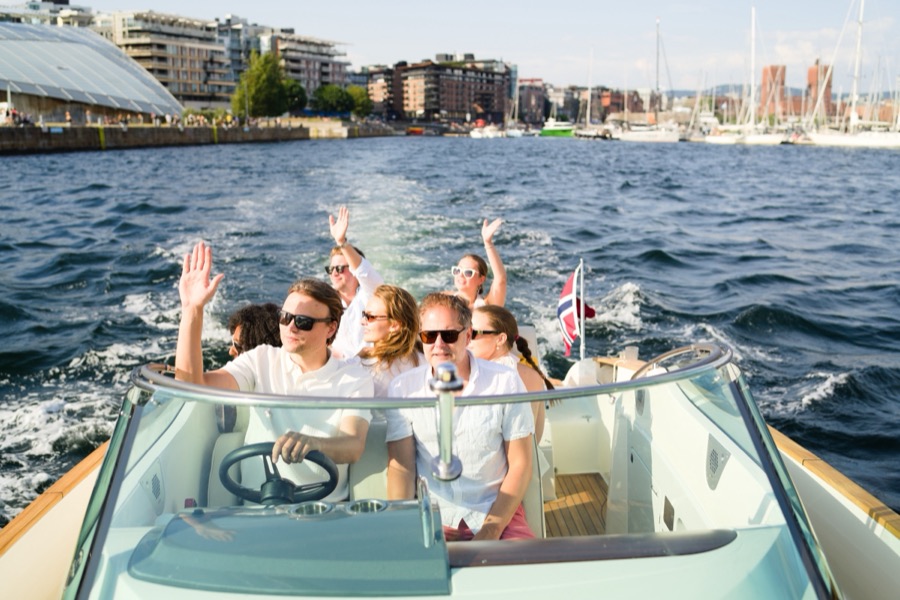
The moment before the cold hits — jumping into 19-degree water
Can you swim in the Oslofjord?
Yes. The inner Oslofjord is sheltered water, not open ocean, and Oslo Kommune measures bathing temperature and water quality at public beaches from June to August. The parameter they test is thermotolerant coliform bacteria (TKB), the standard indicator for sewage and runoff, counted per 100 ml of water. At Solvik, Langøyene and Hovedøya the city's health and welfare agency runs weekly analyses through the season, and the results go up on the municipality's beach page.
Surface temperatures run from about 17°C in June to 22°C in July.
Shore water varies for structural reasons: how close you are to land, what the last rainfall flushed into the harbour, how many people are in the water at once. That is what the monitoring is there for. If it has poured for a day and you are heading for a city beach rather than a boat, read the latest published result before you get in.
From the boat, none of that applies in the same way. We anchor in coves and along skerries away from urban runoff, and the main body of the inner fjord is deep and well circulated. It is warm enough for four months of comfortable swimming, and you get in straight from the stern on a built-in ladder. No wetsuit required, though the September regulars might argue the point.
Water temperature by month
Temperature swings more than most visitors expect. A sunny bay on Langøyene in late July and an open-water swim in mid-September are completely different propositions. Here's what the surface readings look like across the season:
| Month | Surface Temp | Notes |
|---|---|---|
| June | 17–19°C (63–66°F) | Refreshing. Sheltered bays warmer. |
| July | 19–22°C (66–72°F) | Peak season. Shallows reach 23–24°C. |
| August | 18–21°C (64–70°F) | Still warm, slightly cooling. |
| September | 15–17°C (59–63°F) | Bracing but swimmable. |
These are typical seasonal ranges, not a forecast. For today's number, check the live Oslo sea temperature or the Oslo Kommune beach page. Last reviewed: July 2026.
Those are surface readings. Below about two metres the temperature drops away fast, because the water column stays layered all summer: warm on top, cold underneath. I know which bays hold heat the longest and we anchor accordingly. On a flat calm day in July I have measured 24°C in the shallows off the south side of Gressholmen.
The jump
Every swim stop has the same moment. The boat is anchored, the ladder is down, the water is right there. Somebody has to go first.
Sometimes it's me. Sometimes it's a teenager who's been eyeing the side of the boat since we left the harbour. The deck sits about a metre above the waterline, so not high enough to worry about, but high enough to feel like a proper leap. The cold lasts a second, then the water feels fine.
For families with children on board, the jump usually becomes the highlight. Teenagers launch themselves off the side in rotation while the adults settle in on deck. Life jackets are on board for younger swimmers who want them, though most stick to the ladder.
"We were all able to go swimming in a cute secluded spot with a family of ducks!"
Mid-fjord swims feel different. The depth drops to thirty or forty metres, the water shifts from green to dark blue, and you are floating over water that runs out to the Skagerrak and eventually the North Sea. What you feel is the size of it.
The islands: where we take you
We don't have a fixed swimming spot. On a private cruise, we choose the bay based on wind, swell, temperature, and how many other boats are out. But certain islands come up over and over, and each one gives you a different swim.
Gressholmen
Gressholmen (GRESS-hol-men) is one of the closest islands to the harbour, and it still feels like you have left Oslo. Norway's first airport was here. Store norske leksikon puts Gressholmen Sjøflyhavn in operation from 1926 to 1938, while Norwegian Wikipedia dates the opening to 1927; the sources differ on the years at both ends. The hangar itself is still standing. It holds boats now.
Today the island is a nature reserve, and the southern beach has a sandy bottom that warms faster than anywhere else in the inner fjord, with shallow water in full sun from morning to evening. We anchor here on calm days when the southern exposure turns the bay into something that feels more Mediterranean than Scandinavian. Wild rabbits lived on the island for decades until their grazing caused erosion and stripped out the protected flora, and they were removed at Easter 2007 for that reason.
Hovedøya
Hovedøya (HOO-ved-oy-ah) is the largest of the inner islands. It carries more history per square metre than most districts of Oslo. Cistercian monks from Kirkstead Abbey in Lincolnshire built a monastery here in 1147. The ruins still stand, grey stone walls open to the sky, tucked among oaks that didn't exist when the monks arrived. After the monastery, it was a military base for centuries. Remnants of fortifications dot the western shore.
The swimming is on the eastern side. Flat rocks slope into deep, clear water where you can sit with your feet dangling and ease in, or just stand and dive. The depth drops quickly to four or five metres, and on still days you can see the bottom. We like anchoring in the eastern bays when westerly winds make the outer islands choppy. You dry off on warm rock with twelfth-century ruins behind you. I have not found a better place in Norway to sit and drip.
Langøyene
Langøyene (LANG-oy-en-eh) is the only inner island with an official city beach, and the one Oslo residents argue about every summer because it gets packed on hot weekends. It's also, by a comfortable margin, the warmest swim in the fjord. The sandy bottom holds heat the way rock can't. On a good July day the shallows hit 23–24°C. We anchor off the beach rather than at the public dock, so you get the warm water without the fight for towel space.
Langøyene is also the only inner island where free camping is legal. On summer evenings, tents pop up along the treeline and you can smell disposable barbecues drifting across the beach. There is nothing else on the island: sand, grass, and an unobstructed view south towards the outer fjord. It's the closest thing Oslo has to a proper beach island.
The spots without names
Then there are the bays that don't appear in any guide: small inlets between islands, rocky shelves where the water is turquoise and the only sound is a cormorant drying its wings on a nearby stone. We know these from years on the water. The bottom is visible at four metres, the wake from passing ferries doesn't reach, and you're unlikely to see another boat. These are the spots that surprise people most.
The swim at sunset
Temperature, access and cleanliness all matter, but what people remember is the setting: swimming off the back of a boat, in a cove between islands, with the city on the horizon and the sun dropping towards it.
"We stopped at a small island just as the sun was setting. We even got the chance to go swimming, which was such a memorable part of the trip."
The water drops a degree or two in the evening, but the light more than makes up for it. On a sunset cruise, when you surface and look around, the water is gold and the islands are silhouettes. If you want to know how the rest of a typical trip unfolds, the swim stop sits roughly at the midpoint, the quietest part of the evening, when the engine is off and the boat is still.
If you would rather not swim
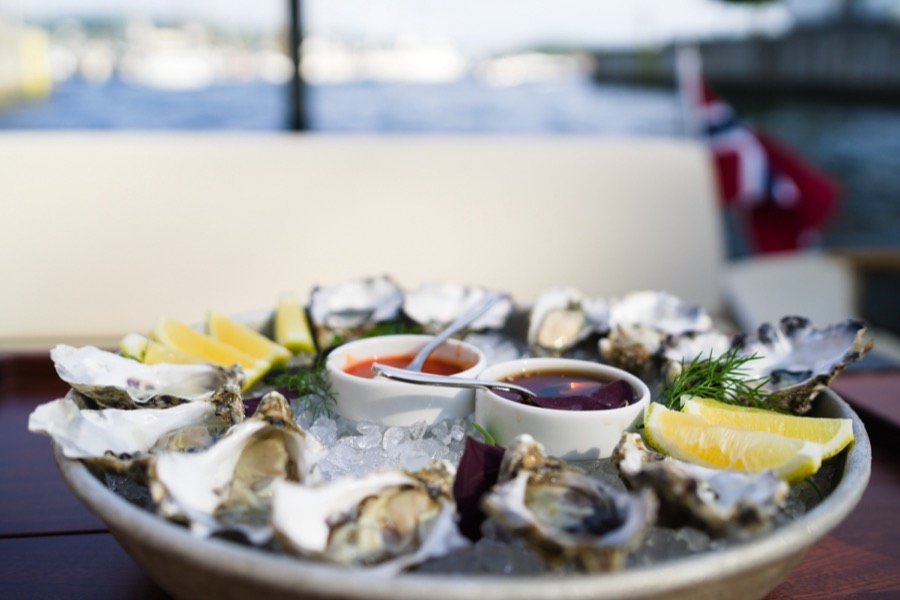
Plenty of people don't. The swim stop is also the anchor stop, and some guests prefer to sit on deck with a glass of something cold and watch the swimmers. Some take photos, some close their eyes and listen to the water against the hull. The Cormate T28 has a wide stern platform that doubles as a sunbathing deck when the ladder is stowed. On a warm evening, it's the best seat on the fjord.
Getting to the islands without a boat
You don't need a private boat to swim at these islands. Ruter runs public ferries from the City Hall piers to Hovedøya, Gressholmen, Langøyene and the other inner islands through the summer, and a standard Oslo public transport ticket covers the crossing with no boat supplement. Hovedøya is under ten minutes out; Langøyene takes roughly half an hour. Departure times and which pier serves which island change with the season, so check Ruter's app or website the morning you go.
The difference is what you can reach. The ferry drops you at the public dock on the popular side of the island. The boat takes you around the back, to bays where the water is still and the rocks are empty. Both are good swims; the one from the boat is quieter.
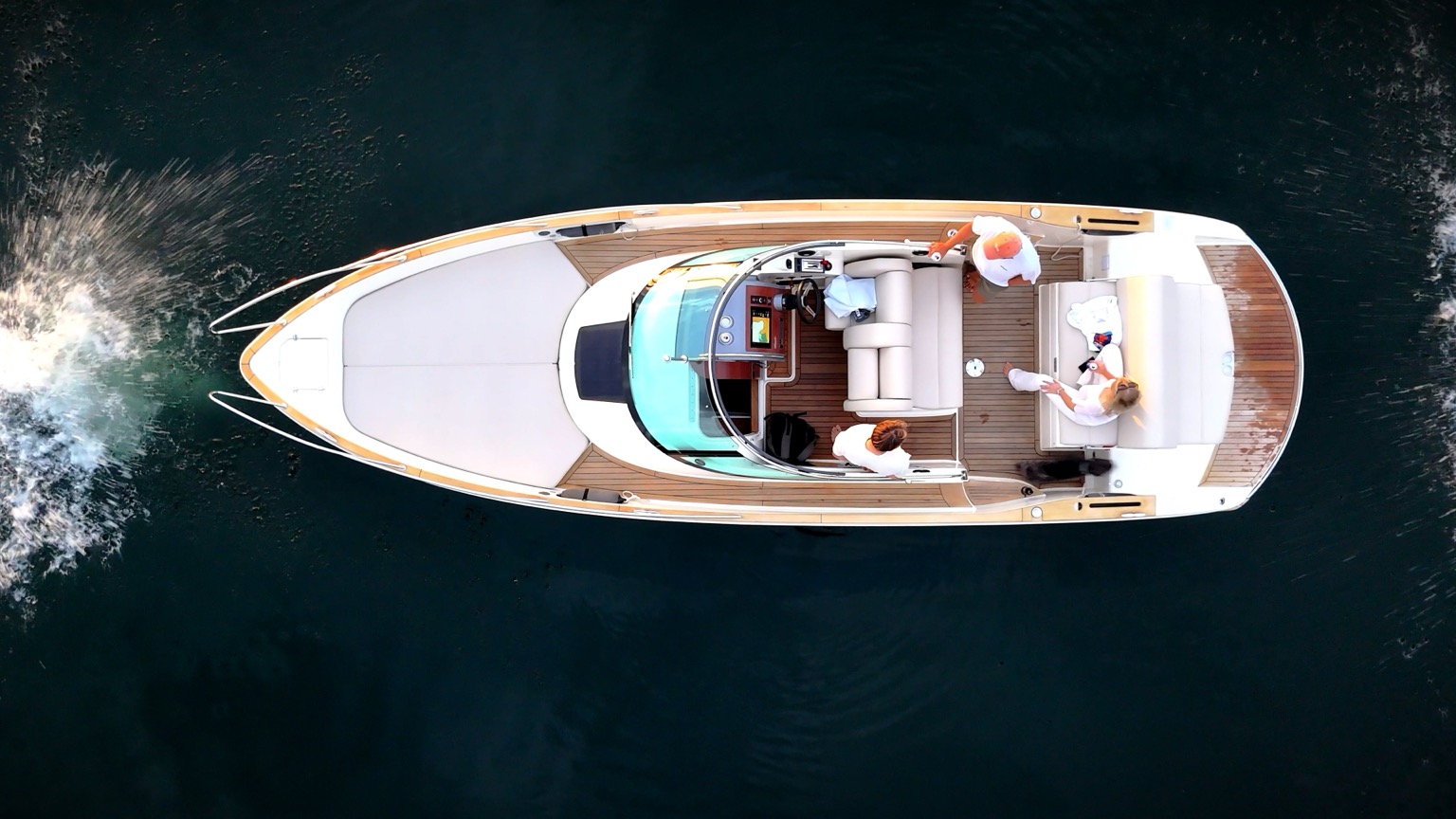
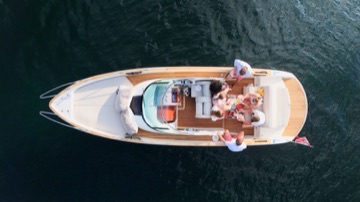
Your ride, seen from the drone above
What to bring
You need a swimsuit and a towel, nothing more. Sunscreen matters more than most visitors think, because you catch the sun off the water as well as from above and the summer days here are very long. People burn on the Oslofjord who never burn at home. Goggles are worth packing if you like seeing what's below you: visibility in the best spots reaches four or five metres, and the rocky seabed has crabs, starfish, and the occasional school of small wrasse that scatter when you get close.
You won't need a wetsuit, water shoes, or any special kit. The ladder is sturdy and the entry is clean.
Norwegians have a word for all this: utebad, outdoor bathing. They do it on ordinary Tuesdays. That a visitor can do the same twenty minutes from a European capital, off islands with nearly nine hundred years of recorded history behind them, still catches people off guard. Bring a towel that dries fast. You'll want to go in twice.
Can you swim right now?
That depends on the month you are reading this in. From late June to mid-August, yes, without qualification: surface water runs 18–22°C, sheltered bays a couple of degrees warmer, and the only decision left is which cove. Early June is swimmable at 17–19°C if you pick a sunny bay and commit at the ladder. August holds 18–21°C and is still full swimming season. September drops to 15–17°C, which regulars call bracing and everyone else calls cold. The reward is empty rocks and autumn light.
Outside that window, the honest answer is no for most people. The surface cools steadily through autumn, and the fjord does not return to comfortable temperatures until the following June.
Rather than guessing from a table, check the live Oslo water temperature for today's reading before you book.
I tell first-time swimmers the same thing every trip: jump, don't lower yourself in. Lowering is just delayed shock. Jump and you're acclimated in three breaths. The Oslofjord at 18 degrees feels like 15 if you ease in. Same water at the same temperature feels like 21 if you commit.
More from the fjord
Hiking in Oslo: The Forest at the End of the Metro Line
Four Nordmarka hikes with official DNT distances, forest lakes you can swim in, blue trail marks explained, and the 2026 metro closure at Sognsvann.
GuideOslo on Foot: Self-Guided Routes and Walking Tours
Four self-guided Oslo walking routes with real distances, how the tip-based free tours actually work, and when a private walk earns its price.
GuideFishing the Oslofjord: What You Can Catch, Where, and the Rules You Need to Know
Cod is fully protected and some zones are closed to all fishing. Here is what you can still catch in the Oslofjord, where, and the current rules.