Oslo Kommune counts 23 official bathing places on the Oslofjord: 17 on the mainland and six out on the islands. (The city's full tally is 42, but that figure includes 19 freshwater places, most of them up in the forest, which are a different kind of swim entirely.) The ones everyone uses are Huk and Paradisbukta on Bygdøy, Sørenga in the inner harbour, Hvervenbukta on the southern mainland, and the sandy bays at Langøyene and Gressholmen. Inner fjord water reaches 22°C (72°F) in July, and sandy-bottomed bays between islands can hit 24°C.
The inner Oslofjord is shallow in places, ringed by islands that block the open sea, and it sits under very long days from May onwards. That is what makes it swimmable this far north. If you have browsed our frequently asked questions, you already know that swimming is one of the highlights of any summer trip on the fjord. There are more places to do it than the guidebooks suggest, and they feel different from each other.
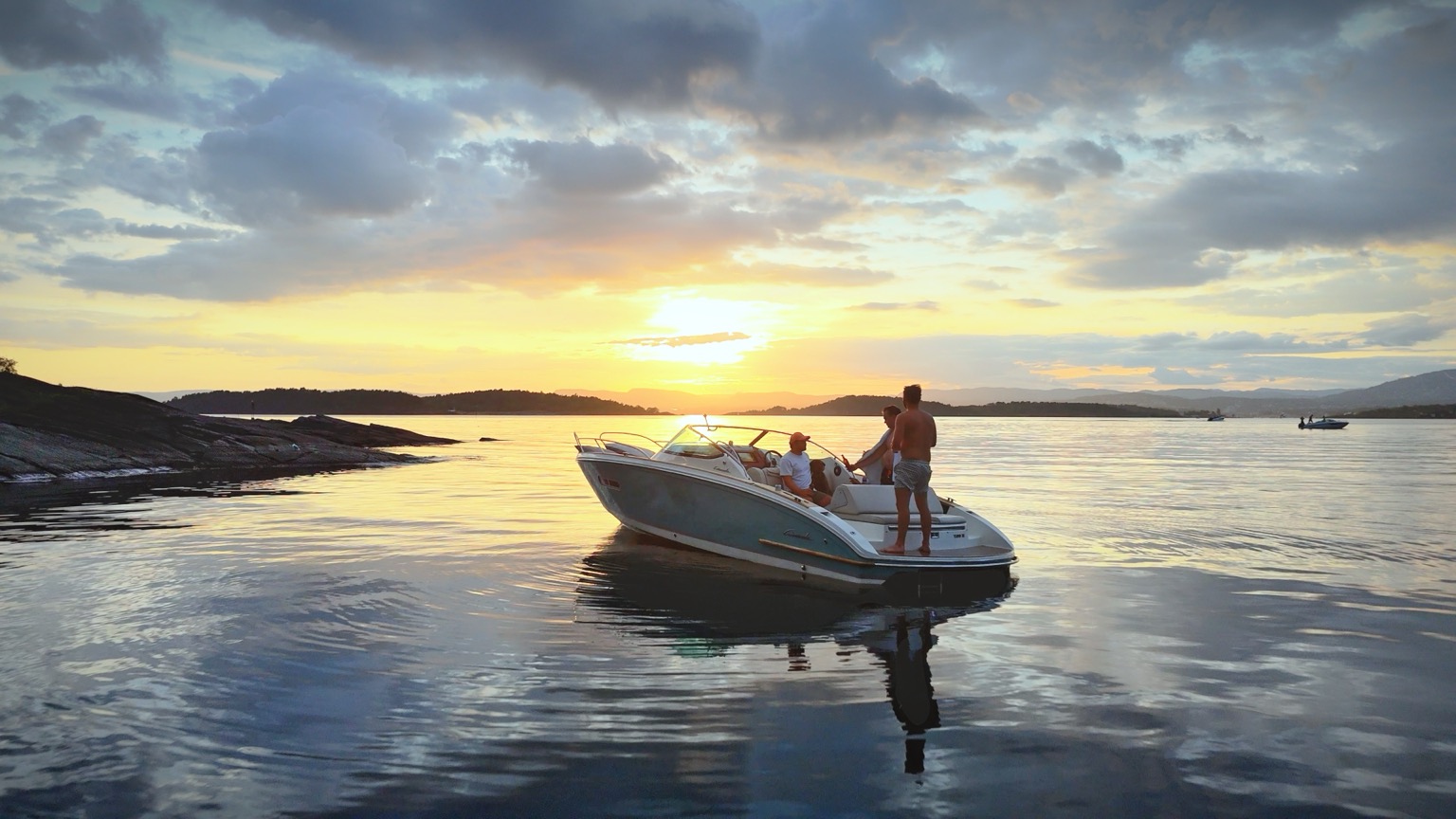
A sheltered cove in the outer islands — the kind of spot only boats can reach
The beaches everyone knows
Huk, Bygdøy (BIG-doy). Oslo's most popular beach, and the one in every guidebook. Sandy, south-facing, packed on summer weekends. The beach divides into a main section and a separate nudist area to the west, with a large grassy park behind both for shade and picnics. Bus 30 from Jernbanetorget or the summer ferry from City Hall Pier drops you at the door. The water is clean and tested through the season, but on a hot Saturday in July you will share it with half of Oslo.
Paradisbukta, Bygdøy. A sheltered bay tucked behind Huk, reached by a 10-to-15-minute walk through the Kongeskogen (King's Forest). The walk itself is worth the trip: old-growth pines, dappled light, the occasional red squirrel. The bay is calmer than Huk, the water shallower and warmer, the crowd quieter. More families than groups. If Huk is Oslo's Bondi, Paradisbukta is the cove around the headland that only locals bother finding.
Sørenga, Bjørvika. The newest place to swim in Oslo, and a piece of engineering rather than a stretch of coast: a floating park measuring 190 by 28 metres, opened on 25 June 2015 and built into the harbour redevelopment. It holds an enclosed seawater pool, a 50-metre eight-lane pool and a diving tower, which makes it the largest sea bath in Norway. Five minutes from Oslo Central Station. Office workers swim at lunch, teenagers jump from the platforms at sunset, and the Opera House glows white across the water. It is one of the better arguments that a city at 59°N can work as a summer destination.
The beaches locals know
The city beaches are fine. But the best swimming in Oslo is on the islands, and most visitors never make it there. The inner islands are served by Ruter public transport ferries from the City Hall piers on the same ticket that covers buses and trams, and most crossings take less than twenty minutes. Which pier serves which island, and how often, shifts with the season, so check Ruter before you set out. For the full picture of what each island offers, see our complete guide to the Oslofjord islands.
Langøyene (LANG-oy-en-eh). The only official sandy beach on the inner islands, and in my opinion the best beach in Oslo: if you only visit one, make it this one. The sand was renovated in recent years, the facilities upgraded, and you end up with a proper beach on a proper island, about half an hour out from the city centre. Water temperatures in the sandy shallows reach 23–24°C in July. Camping is free and permitted for up to two consecutive nights. The ferry runs in summer only and fills up on hot weekends. Arrive early.
Gressholmen (GRESS-hol-men), south beach. Sandy, sheltered, south-facing. The beach catches sun from mid-morning until evening and the water is calm and shallow enough for children. Norway's first civilian airport was here, and the seaplane hangar is still standing: Store norske leksikon records that it is now a boat store. The airport itself was in operation for a little over a decade before Fornebu took over as Oslo's main airport in 1939. About eighteen minutes out from the city centre.
Hovedøya (HOO-ved-oy-ah), eastern bays. No sand here; flat rock shelves drop into deep, clear water. Better for swimming than sunbathing, though plenty of people manage both. The water is cooler because the bottom falls away quickly, and the clarity is noticeably better for it. After you dry off, the ruins of a Cistercian monastery founded in 1147 are a five-minute walk through the forest. The monks came from Kirkstead Abbey in Lincolnshire. They chose well. Five to ten minutes from the City Hall pier.
Hvervenbukta. On the mainland, south of the city centre. A long, shallow, sandy beach facing west across the fjord. The water is warmer than almost anywhere else in Oslo because the sand absorbs heat and the bay is protected from wind. Families with small children gravitate here for good reason: the water stays knee-deep for a long way out. Bus accessible, free parking, and on a weekday it is half-empty when Huk is standing-room-only.
The spots only boats can reach
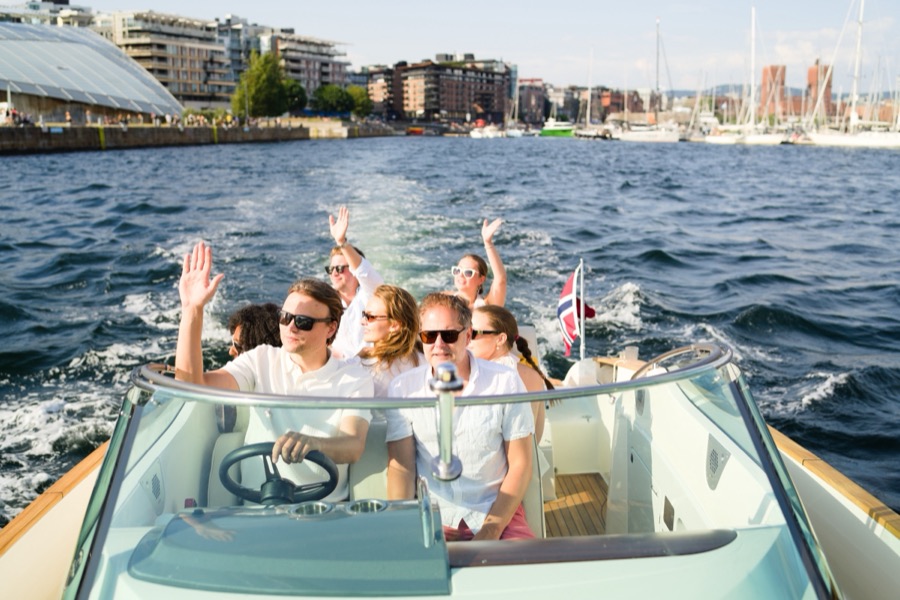
The public beaches are public because ferries, paths, and signs lead there. The best swimming in the Oslofjord is in the unnamed coves between islands, in the rocky inlets where the water is turquoise and the only footprint on the shore belongs to a heron. These are the spots we head for on a private cruise.
The cove behind Gressholmen. A sheltered pocket of water between Gressholmen and Heggholmen, protected from wind on three sides by low pine-covered ridges. The water here turns an unlikely green-blue on sunny days. Sandy bottom, shallow depth, colours you would associate with a colder Sardinia. We anchor here a lot. On weekday mornings, we've had guests look around at the empty water and ask if we're still in Oslo. You are. Eighteen minutes from Aker Brygge.
The rocky inlet east of Bleikøya (BLAY-koy-ah). Deep water between two islands, flat rock shelves for drying off, and a privacy no public beach offers. The depth means the water is a degree or two cooler, but the swimming is better. You can dive from the rocks into four or five metres of clean fjord water without worrying about touching bottom. I once watched a shore crab (the green ones, Carcinus maenas) the size of my palm crawl across the rock shelf right next to someone's towel. She didn't notice.
The Steilene (STAY-leh-neh) archipelago. Outer islands with no regular ferry service. Former industrial sites, now cleaned up and returned to nature. A harbour seal turns up on the low rocks here now and then, wandering in from the outer fjord. The water here is colder than the inner fjord (you are closer to the open Skagerrak) but the clarity is exceptional. On a calm day, you can see the bottom at three metres.
The Drøbak (DROO-bahk) side. Further south, where the fjord narrows past the Oscarsborg fortress, the coastline softens. Sandy bottoms, pine-fringed shores, water that has been warming in the sheltered southern basin all day. The beaches near Drøbak have some of the highest recorded summer temperatures in the fjord. On a full-day tour, we can reach these southern beaches comfortably, with time to swim and explore before heading back. From the city centre, it is perhaps twenty-five minutes by boat, depending on the route.
These are the spots that make guests on private boat tours say "I had no idea this was here." They sit ten to twenty minutes from the city centre by boat, with nobody else around.
Is the water in the Oslofjord clean?
Yes, though it took forty years of work to get there.
In the 1960s and 1970s, the inner Oslofjord was polluted enough that swimming was discouraged in many areas. Raw or poorly treated sewage flowed into the harbour. The fjord smelled. Fish stocks collapsed in parts of the inner basin. Then Oslo invested heavily in modern sewage treatment.
Today Oslo Kommune measures bathing temperature and water quality from June to August, testing for thermotolerant coliform bacteria (TKB) per 100 ml of water, and publishes the results. At Solvik, Langøyene and Hovedøya the city's health and welfare agency runs weekly analyses through the season. The inner Oslofjord consistently meets EU bathing water quality standards, and on the islands, where there is less runoff and more circulation, the water is cleaner still.
The ecosystem below the swimmable layer is a slower story. Cod fishing is banned across the whole Oslofjord under the current fisheries regulation, which covers the sea area inside the baseline from Telemark to the Swedish border, took effect on 1 January 2026 and runs to the end of 2035. Several areas are closed to all fishing. The bathing water and the fish stocks are measured separately, and they are in very different shape.
When can you swim in the Oslofjord?
The short answer: June through August, with July as the peak. The longer answer depends on what you are comfortable with and where exactly you swim. Sandy bottoms in shallow bays are always warmer than rocky shores in deep water. The difference can be three or four degrees at the same time of year, which is the difference between "lovely" and "I need to get out now."
| Month | Water Temp | What to Expect |
|---|---|---|
| June | 17–19°C (63–66°F) | Swimmable in sheltered bays. Bracing in open water. Long evenings. |
| July | 19–22°C (66–72°F) | Peak season. Sandy bays reach 23–24°C. Warm enough for everyone. |
| August | 18–21°C (64–70°F) | Still warm. Fewer crowds. The best balance of temperature and peace. |
| September | 15–17°C (59–63°F) | For the committed. Quiet beaches, autumn light on the water. |
The rule of thumb: if you want to swim without thinking about it, come in July. If you want the beaches to yourself and don't mind a sharp intake of breath on entry, September is underrated. Check yr.no for current conditions. The Norwegian weather service is precise and free.
What to bring
Swimsuit, towel, sunscreen. The last one matters more than you think. You catch the northern summer sun off the water as well as from above, and the days are very long. People burn on the Oslofjord who have never burned anywhere else.
Water shoes if you plan to swim from rocks rather than sand. The stone on some of the outer islands (especially the grey gneiss on Steilene) is rough enough to scrape bare feet. A reusable water bottle, because not all islands have running water. Something warm to pull on afterward. The breeze off the fjord feels colder on wet skin than you expect.
One practical detail that saves money: the ferries to the inner islands are covered by a normal Ruter transit pass. The same day ticket that covers buses, trams, and the metro also covers unlimited ferry rides to Hovedøya, Gressholmen, Langøyene, and all the other inner islands, with no special boat ticket or surcharge. Buy it on the Ruter app, tap on at the pier, and ride as many ferries as you like for the rest of the day.
Water quality and temperature before you go
Temperature is worth a check before you pack the towel. Surface readings swing several degrees between a sandy bay and open water on the same afternoon: Langøyene's shallows can hold 23–24°C in July while a rocky shore over deep water sits three or four degrees lower. The season turns fast too. Check the live Oslo water temperature for today's number rather than trusting a monthly average.
Water quality is less of a worry, but it is worth one click. Oslo Kommune publishes its beach results through the summer, and a heavy downpour is the moment to look at them rather than assume last week's reading still holds. Out at the islands, with less runoff and more circulation, the water is cleaner than in the harbour.
The one thing neither check covers is access. Several of the best coves in this article (the pocket behind Gressholmen, the rocky inlet east of Bleikøya, the Steilene rocks) have no ferry stop and no marked path to them. They are only reachable by boat. That is also why they stay empty.
Water temperatures and bathing-water results change through the season; the figures above are typical July ranges. Check the live sources linked above. Last reviewed: July 2026.
Where to start
With one free afternoon and a Ruter ticket, take the ferry to Langøyene and swim off the sand; it is the warmest water you will find within the city limits. An evening with no plan is better spent at Sørenga, five minutes from the station. Getting to water that nobody else is standing in takes a boat, and someone who knows which side of which island the wind is on that day.
If you are planning a family trip on the water, the island beaches make the strongest case.
Most of the best beaches aren't on any map. They're three-metre stretches of sand between rocks on the smaller islands. From a boat you spot them the moment the swell direction is right. We pick the day's anchorage by what guests want: a quiet cove, sun on the rocks, somewhere the swim ladder reaches sand.
More from the fjord
Island Hopping on Oslo's Public Ferries: The Free Day Trip
A NOK 137 Ruter day pass unlocks six islands, free camping, monastery ruins, and hidden beaches. The complete guide to Oslo's public ferry network.
GuideThe Islands of the Oslofjord: A Complete Guide
Every island in the inner Oslofjord — from Hovedøya's 12th-century monastery to Langøyene's sandy beach. Ferry routes, swimming spots, and history.
On the WaterOslo Hidden Gems a Local Would Actually Show You
The coves, seal rocks and wooden streets that pass one test: would a local go? An honest guide to Oslo's hidden gems, from the water and on foot.