A single ticket on Oslo's public transport costs 46 NOK in 2026 and covers buses, trams, the metro and boats. The boats are the ferries out to the islands of the inner Oslofjord. Forty-six kroner buys the crossing, and everything at the far end of it costs nothing: the monastery ruins on Hovedøya, the sand beach on Langøyene, the swimming rocks and the walking paths.
The city holds up its end elsewhere too: a sculpture park with 214 works that never closes, more than nine kilometres of harbour promenade, a botanical garden where the Victorian glasshouse is free to walk into, and a fortress lawn the city treats as its picnic ground. Prices and opening hours were checked in July 2026.
The island ferry is part of Oslo's public transport network. Same ticket as the tram.
The island ferries
46 NOK single, 137 NOK for 24 hours, zone 1, July 2026 (Ruter fares).
From Rådhusbrygge, the pier beside City Hall, line B1 loops out to Hovedøya, Lindøya, Gressholmen, Bleikøya and Nakholmen all year. In summer, B1X runs direct to Hovedøya, and B2 serves Langøyene, the only inner island with a proper sand beach. The 2026 summer timetable ran from 4 July to 30 August, with an autumn schedule continuing until 18 October; season dates shift year to year, so check the current boat timetable at ruter.no. Ferry times, paths and facilities on the biggest island are collected in this practical guide to Hovedøya.
One moment you are buying coffee at Aker Brygge; twenty minutes later you are standing under the trees at a medieval monastery ruin, on the same ticket you used for the tram that morning. English monks built that monastery: Abbot Philippus arrived from Kirkstead in Lincolnshire with twelve monks at the invitation of Bishop Vilhelm of Oslo, and the church was consecrated on 18 May 1147. The crown took the property in 1532, the buildings burned, and the stone went into reinforcing Akershus Fortress across the water (lokalhistoriewiki on Hovedøya monastery).
Gressholmen, two stops on, was Oslo's first airport. Seaplanes began landing there in 1926, the harbour was formally opened on 16 July 1927, regular traffic ended in 1938, Fornebu took over the following year, and the last aircraft left the hangar in 1952 (lokalhistoriewiki on Gressholmen).
We pass the B1 several times a day all summer. The queue at Rådhusbrygge on a hot Saturday is real; a weekday morning gives you the ferry deck nearly to yourself. Routes, timetables and tactics are in our island-hopping guide, and every island gets its own entry in the islands guide.
Vigeland Sculpture Park
Free, open around the clock, all year.
Frogner Park holds 214 sculptures in bronze, granite and wrought iron, made up of more than 600 individual figures, all by Gustav Vigeland, and the gates never close. The centrepiece is the Monolith: 17 metres of granite carved from a single block, with 121 human figures climbing over one another toward the top. Vigeland worked on the park for over 40 years and never saw it finished. The bridge sculptures went up in 1939 and 1940, the Monolith was carved between 1924 and 1943, and the fountain was not erected until 1947, four years after his death (Store norske leksikon).
The terrace around the Monolith is busy through the middle of the day. Early morning is the quiet window.
The harbour promenade and the opera roof
Free, no gates, no closing time.
Havnepromenaden runs more than nine kilometres along the waterfront, from Frognerkilen in the west to the mouth of the Alna river in the east (Oslo kommune). The route passes the Opera House, Akershus Fortress, City Hall, Aker Brygge, Tjuvholmen and Sørenga, which covers a decent share of Oslo's postcard in one walk.
Two stops on the route are free in ways that surprise people. The sloping marble roof of the Opera House is open to walk up, and the harbour view from the top costs nothing. City Hall, the twin-towered brick landmark on the waterfront, is free to enter and look around.
Our dock is at Tjuvholmen allé 14, roughly halfway along the promenade. The free city beaches sit directly on the route: Sørenga, Sukkerbiten, Tjuvholmen, and a small beach in front of the Opera House. The saunas along the promenade charge; the swimming is free. Where to get in the water is its own subject, covered in our Oslofjord swimming guide.
Akershus Fortress
Grounds free; castle interior and the military museums charge admission.
What the free part buys is a medieval fortress in active use as a city park: ramparts, lawns, gravel paths, and locals walking the dog or watching the ferries glide across the harbour basin below. The castle keeps its own opening hours and they vary by season, so check before you climb the hill for it. Seven centuries of sieges, royal burials and wartime occupation are a longer story, told in our Akershus Fortress guide.
Ekebergparken
Park free and open around the clock, all year. Museum and shop Tuesday to Friday 11:00–16:00, weekends 12:00–17:00, closed Mondays (Ekebergparken).
On the hillside east of the centre, work by 48 artists stands scattered among the trees, Salvador Dalí, James Turrell, Pipilotti Rist and Yinka Shonibare among them (the park's list of artists). You hunt for the pieces rather than walk a route past them, and the hillside gives panoramic views over the city and the fjord. Tram 13 or 19 goes up.
The Botanical Garden at Tøyen
Free, garden open 07:00–21:00 from 1 April to 30 September; greenhouses 10:00–21:00 in the same period and 10:00–17:00 from 1 October to 31 March.
The garden grows over 4,500 plant species (Naturhistorisk museum), and the free entry includes both glasshouses. Victoriahuset, built for the giant Victoria water lily, opened in 1876 and turns 150 in 2026; admission is free and the air inside is fully tropical (Victoriahuset). Palmehuset next to it opened in 1868 and is one of the oldest greenhouses in Norway (Palmehuset).
The one thing at Tøyen that charges is the Natural History Museum next door. The garden and its glasshouses are a separate, free decision.
Museums you can walk into for nothing
The 22 July Centre: always free. Monday to Wednesday and Friday to Sunday 11:00–17:00, Thursday 11:00–20:00, with free guided tours through the afternoon, including one in English (22. juli-senteret).
MUNCH: free for everyone aged 17 and under, every day. Free for all on Wednesdays from 18:00 to 21:00, except in July and August. Open Sunday to Tuesday 10:00–18:00 and Wednesday to Saturday 10:00–21:00 (MUNCH).
Free-entry schemes change more often than the guides describing them, and the July and August pause at MUNCH catches out exactly the visitors most likely to be in town. Check the museum's own page the week you go.
The guard, a river and a forest
Free, all three.
The changing of the guard at the Royal Palace happens daily and folds neatly into a walk through the Palace Park. The Akerselva river cuts through the city from north to south, tree-lined most of the way, marking the old divide between Oslo's east and west; following it downstream fills an afternoon. And Nordmarka, the vast forest north of the city, starts where the metro ends, with no ticket gate and no closing time.
The islands without a timetable
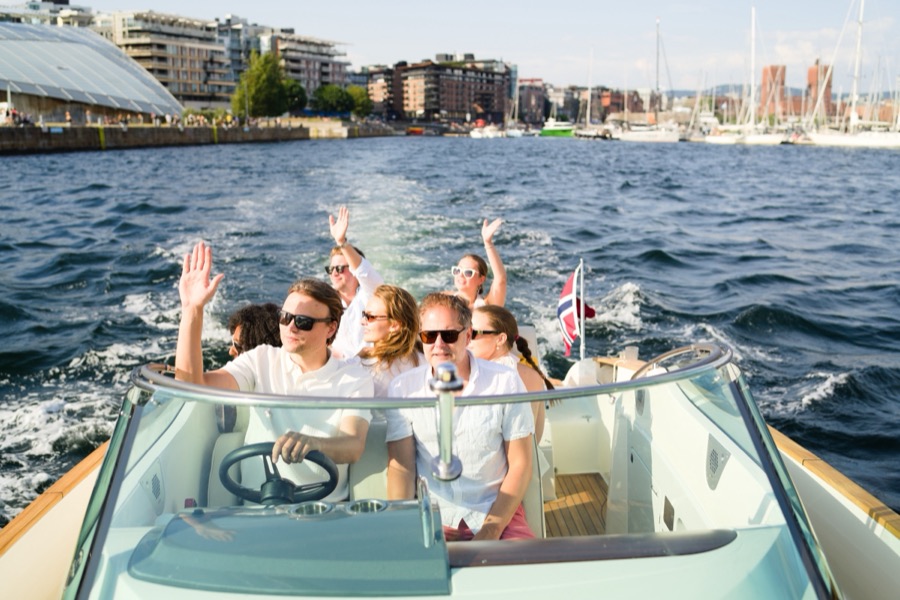
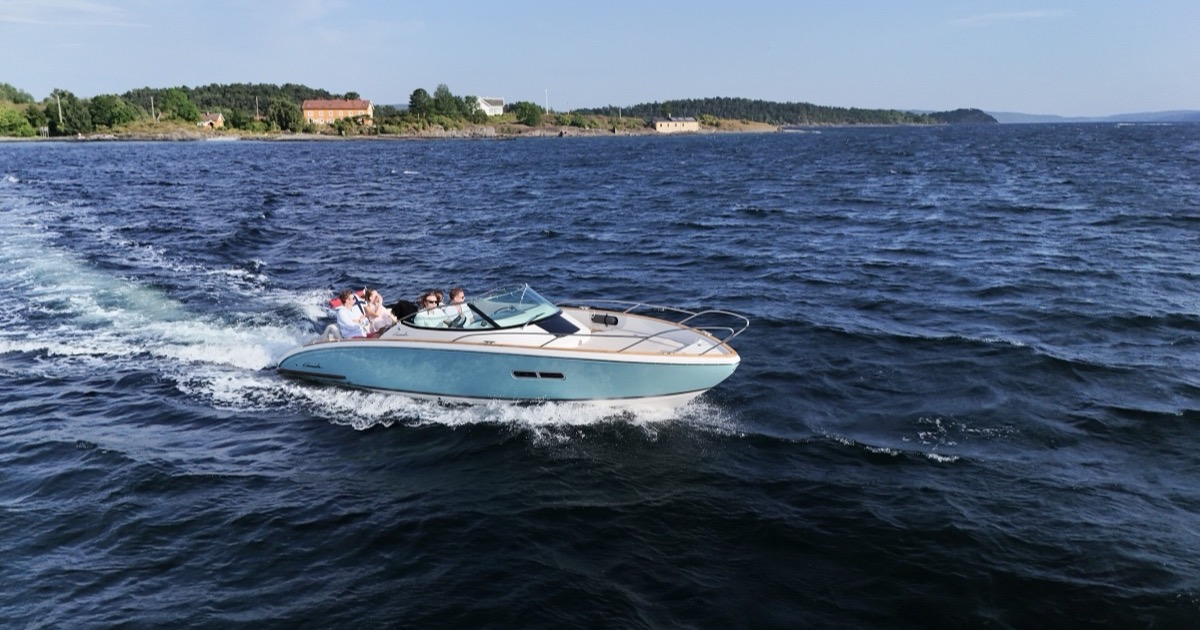
The Ruter ferry is the right first move, and for most visitors the only one needed. Its limits are the ones all public transport has: it runs to a schedule, calls only at its own piers, and the 2026 season ends on 18 October. When you want the same water on your own terms, with a quiet bay instead of a ferry quay and a departure time you chose, a private boat covers it. Our three-hour private cruise takes up to seven guests and starts at 16,688 NOK for the whole boat, departing from Tjuvholmen allé 14, halfway along the promenade. The routes are on our tours page, and booking takes a few minutes.
Either way, start with the ferry. Forty-six kroner for a boat trip through an archipelago takes some beating.
Ferry seasons, timetables, fares and opening hours shift year to year. The linked pages hold the current versions. Last reviewed: July 2026.
More from the fjord
Getting Married at Oslo City Hall, and the Afternoon After
Oslo City Hall marries couples on Wednesdays, Fridays and Saturdays in front of a Munch painting, 30 guests maximum. The paperwork, the costs, and the fjord after.
GuideThings to Do on the Oslofjord: Islands, Saunas, Seals and a War Story
Nine things to do on the Oslofjord: island hopping, swimming, saunas, fishing, seals, the Blücher story and a slow northern sunset. By ferry or private boat.
GuideViking Ship Museum in Oslo: Closed Until 2027, and What to See Instead
The Viking Ship Museum on Bygdøy is closed until November 2027. Where the Oseberg, Gokstad and Tune ships are now, and what to see in Oslo in the meantime.