Ruter, Oslo's public-transport operator, runs the ferries out to the inner Oslofjord islands, and an ordinary 24-hour day pass covers all of them along with the city's buses, trams and metro. Three lines serve these islands in 2026: B1 all year on a circle to Hovedøya, Lindøya, Gressholmen, Bleikøya and Nakholmen; B1X in summer as a direct run to Hovedøya; and B2 in summer to Langøyene, where tent camping is free for up to two consecutive nights. Line numbers and departure times shift with the season, so the Ruter boat timetable and current Ruter fares are the two things to check on the day you go.
The ride costs the same as a bus to Grünerløkka. A standard Ruter day pass buys unlimited travel on every bus, tram, metro and ferry in Zone 1 for 24 hours, island ferries included. You can step off at a monastery ruin from 1147, take the next boat to the island that held Norway's first airport, swim at a third, and be back in town for dinner on the one ticket.
For a full overview of every island, see our complete Oslofjord islands guide. What follows here is the practical side: how to actually do it, island by island, ferry by ferry, with sample itineraries and the stuff guidebooks skip.
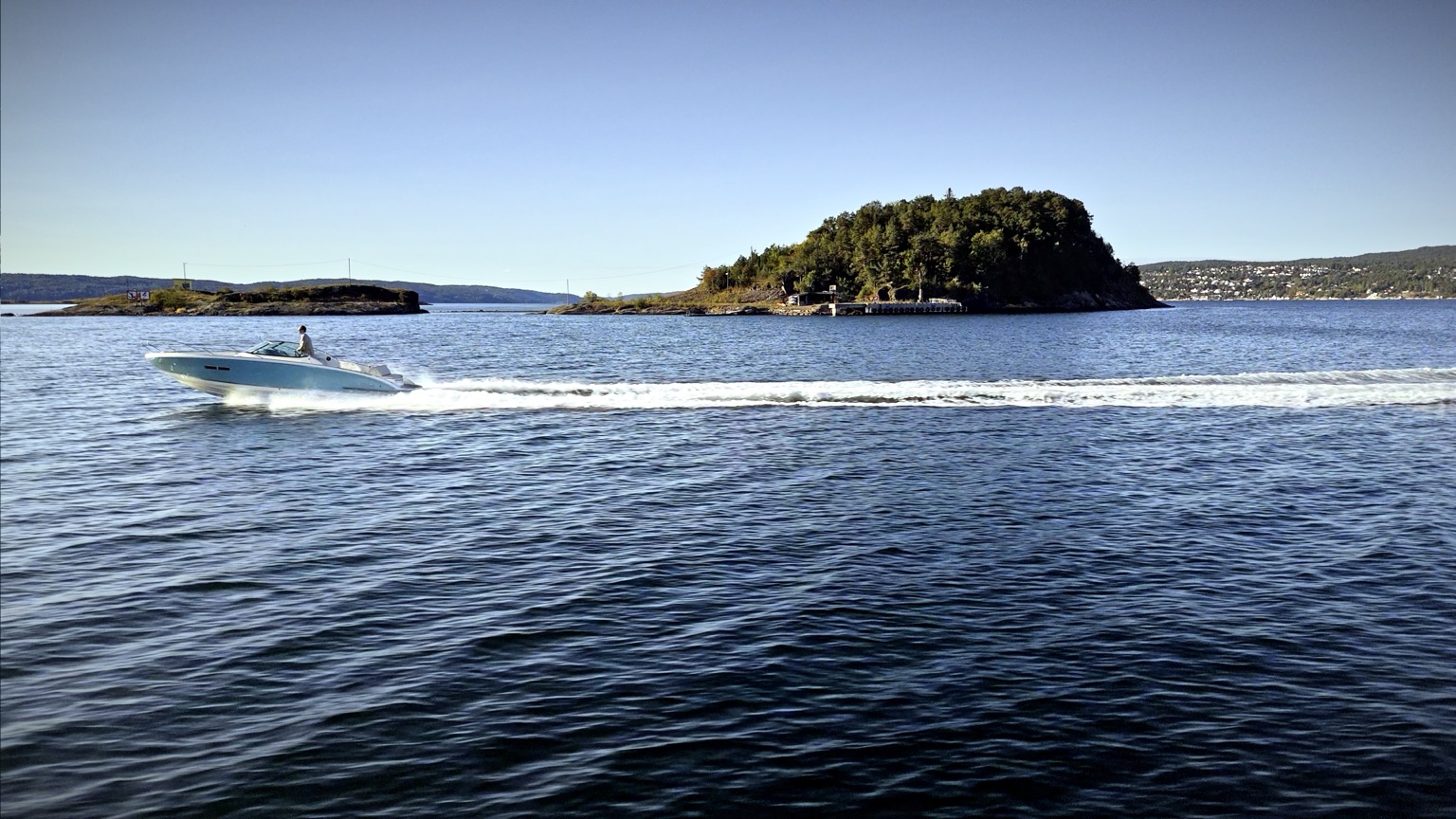
The inner Oslofjord islands — connected by Oslo's public ferry network
The ferry network: three lines, one ticket
The island ferries belong to Ruter, the same operator as the buses and trams, and they leave from Rådhusbrygge at Aker Brygge, the piers in front of City Hall. Standing at the Nobel Peace Center you are looking straight at them. Look for the small white boats rather than the big Nesodden commuter ferries.
| Line | Season | Route | Crossing |
|---|---|---|---|
| B1 | All year | Rådhusbrygge → Hovedøya → Lindøya øst → Gressholmen → Bleikøya → Nakholmen → Lindøya vest → Hovedøya | 7 min to Hovedøya, ~18 to Gressholmen |
| B1X | Summer | Rådhusbrygge → Hovedøya, direct | 7 min |
| B2 | Summer (roughly May to September) | Rådhusbrygge → Langøyene | ~30 min |
Frequency is the part that moves. B1 departures come thick through the summer, from early morning until past midnight on the busiest stretch, and drop to a fraction of that in winter, though the line keeps running all year. None of it is worth memorising: the Ruter boat timetable and the app show what is actually sailing the day you go.
All three lines take the same tickets: Ruter single tickets, day passes, weekly and monthly passes, and the Oslo Pass. Buy in the Ruter app (the practical choice, since live departures sit in the same place), at any Narvesen or 7-Eleven, or on board. There is no separate island ferry ticket. With a valid Ruter ticket you walk straight on.
Are the Oslo island ferries really free?
Technically, no. You need a Ruter ticket. The cost is low enough that it behaves like free transport in practice, and it is the same ticket you were going to buy anyway to get around Oslo. A single ticket covers the crossing plus every bus, tram and metro ride for the next 75 minutes. A 24-hour day pass covers all of it for a full day.
The Oslo Pass, which many visitors buy for museum access, includes all Ruter transport. If you have one, your island ferries are already paid for.
Island by island: what to expect
Hovedøya — history and swimming (2–3 hours)
Seven minutes from the pier, and it feels like a different century. The main draw is the Cistercian monastery, founded in 1147 by English monks from Kirkstead Abbey in Lincolnshire. The Romanesque church foundations and Gothic cloister walls are open, free, and remarkably intact for something nearly 900 years old. Get there before 10 AM and you will probably have the ruins to yourself.
Beyond the monastery: two Napoleonic-era cannon batteries from 1808, a big central meadow that's perfect for picnics, wildflower displays in June that are striking for such a small island, and swimming from the flat rocks on the western shore. Water reaches 17–20°C in July and August. Klosterkroa, a seasonal café near the ruins, serves drinks and light meals in summer. We have sailed past Hovedøya hundreds of times and there is almost always someone swimming off those rocks, even on days that feel too cold for it.
A walking trail circles the island in about 45 minutes. Views of the Oslo skyline from the western side are excellent. A resident fox appears regularly on the paths, so keep your eyes open.
Gressholmen — nature reserve and a very old tavern (2–3 hours)
Most people who visit Gressholmen do not realise they are visiting three islands. Narrow causeways connect Gressholmen to Rambergøya and Heggholmen, creating a surprisingly big walking network through wildflower meadows, rocky coastline, and sheltered bays. Budget two to three hours if you want to cover all three.
This was also Norway's first civilian airport. Gressholmen Seaplane Port opened in 1927, and when the new land airport at Fornebu took the bulk of the traffic in 1939, the seaplanes stayed: flights continued from Gressholmen until 1952. Traces of the infrastructure survive. Ask at the kro if you want to find them.
Gressholmen Kro, the island's seasonal tavern, has been serving food with a fjord view since 1930. Outdoor tables, ice cream, light meals. It fills up on warm weekends but weekdays are far more relaxed. On the outer island, Heggholmen, a small lighthouse sits at the water's edge. Most of the island cluster is a designated nature reserve: stay on marked trails, do not pick flowers.
Langøyene — the beach and camping island (half day or overnight)
Langøyene (LANG-oy-en-eh) is the southernmost inner island and the one that gets people talking. It has the best sandy beach in the inner Oslofjord, recently renovated, west-facing, with shallows that reach 23–24°C on hot days in July. It also has free camping on a fjord island thirty minutes from a European capital. I still think this is one of the most underrated budget travel options in Scandinavia.
Camping rules are straightforward: tents only, in the designated area on the north side of the island, for a maximum of two consecutive nights and a minimum of three metres between tents. No campfires anywhere (fire risk is taken seriously in Norway), and quiet hours from 11 PM to 7 AM. The island has renovated shower and toilet blocks with clean drinking water.
Beyond the beach: a volleyball court, a football pitch, a kiosk with basic provisions in peak summer (do not rely on it, bring food from the mainland), walking trails across the island's interior, and a separate naturist beach at the southern tip, well-screened by terrain.
The B2 ferry runs summer only, roughly May to September. On a hot Saturday in July, expect standing room on the ferry and a busy camping area by early afternoon. On a Tuesday in June, you will have space to spare.
Bleikøya, Nakholmen, and Lindøya — the cabin islands (1–2 hours each)
These three islands share something unusual: roughly 700 summer cabins between them, around 200 on Bleikøya, 200 on Nakholmen and 300 on Lindøya, painted in mandated colours (red, blue, green, yellow) on municipality-owned land with hereditary leases. Many were built over a century ago as retreats for working-class Oslo families. The waiting lists today stretch decades. This is a living neighbourhood rather than an attraction, so stay on the public paths, keep the noise down, and do not photograph people's homes close-up.
Nakholmen is the most visitor-friendly of the three. A small beach on the southwestern side has a bathing jetty, a diving board, and a swimming raft offshore. The southern rocky shore offers one of the best views in the inner fjord: Oslo's skyline to the north, open water to the south.
Bleikøya is for walking, not swimming. The shoreline is rocky and exposed, but the trails through old fruit orchards and colourful cabin neighbourhoods are some of the most charming on the fjord. Rich birdlife on the western shore, especially in spring.
Lindøya is the largest, with roughly 300 cabins and the strongest sense of community. Swimming is only safe at two spots (Kjøkkenodden and Badestadion) because the rest of the shoreline has soft, sinking ground. A small seasonal shop near the ferry landing sells basics.
Sample itineraries
Half-day: two islands, four hours
Take the ferry to Hovedøya (B1X in high summer, B1 the rest of the year). Spend 90 minutes exploring the monastery ruins and walking the island loop trail. Swim from the western rocks if the weather cooperates. Catch the next B1 onward to Gressholmen. Have a drink or a meal at the kro, walk the causeways to Rambergøya and Heggholmen, and take the B1 back to Aker Brygge. Total time from city centre to city centre: roughly four hours, including the crossings.
Full day: three or four islands, seven to eight hours
Start early. Catch the first ferry to Hovedøya (before 9 AM for the quietest monastery visit). Move to Gressholmen for a mid-morning walk and lunch at the kro. After lunch, hop to Nakholmen for an afternoon swim from the jetty. If energy remains, take the B1 to Bleikøya for a walking circuit through the cabin landscape before the last ferry home. Or skip Bleikøya and take the B2 to Langøyene for the beach in the afternoon, returning on the last summer ferry.
Overnight: Langøyene camping
Take the B2 ferry to Langøyene in the afternoon. Set up camp in the north-side designated area, swim, and watch the sunset from the western beach. In June, it does not set until nearly 11 PM. Sleep in a tent on a fjord island, thirty minutes from a European capital, for the price of a transit pass. Take the morning ferry back.
When to go
June through August is the full season. Every route running, cafés and kiosks open, water warm enough to swim comfortably, and nearly 19 hours of daylight in late June. The trade-off is crowds, especially on warm weekends. My recommendation: a weekday in June. Long days, full ferry schedules, and a fraction of the Saturday crowd.
May and September are excellent for walking and quieter visits. Ferry schedules are reduced but still frequent enough for island hopping on the B1. The B2 to Langøyene may not be running yet in early May or after mid-September, so check the Ruter app. Water is cold for swimming but the atmosphere is at its best. Hovedøya's monastery in September morning light, with no one around, is worth the trip alone.
October through April: The B1 to Hovedøya runs year-round on a reduced schedule. The other islands are accessible but quiet, with no cafés or kiosks open, so bring everything you need. The reward is solitude and a kind of stripped-down winter beauty: snow on the monastery walls, pine trees against grey water, the city skyline sharp in cold air.
What to bring
The islands have few facilities, so pack as if you are spending the day outdoors.
Always: The Ruter app (for real-time ferry departures), water, sun cream, a light layer for the ferry crossings. The wind on the water is cooler than on land, even in July. Bring food too, since not every island has a café, and those that do have limited hours and menus. A picnic is the better plan.
For swimming: A towel, swimsuit, and water shoes. Most island swimming is from rocks, not sand, so water shoes make the entry much more pleasant. Langøyene is the exception with its sandy beach.
For camping on Langøyene: Tent, sleeping bag, sleeping pad, all your food and water. The island kiosk has limited stock and hours. A headlamp for late-night trips to the toilet block. No open flames allowed, so bring a camping stove if you want to cook.
For shoulder season: A proper jacket, because the fjord wind is cold even on mild days. Sturdy shoes for trails that may be slippery after rain. Binoculars if you care about birds (Gressholmen and Bleikøya have the most birdlife in spring).
Toilet facilities are limited on most islands. Use them at ferry terminals and cafés when available. Carry out all your rubbish. Bins are scarce on the smaller islands.
Quick reference
| Island | Ferry | Travel time | Best for | Time needed | Food? |
|---|---|---|---|---|---|
| Hovedøya | B1, plus B1X in summer | 7 min | History, walking, swimming | 2–3 hours | Café (summer) |
| Gressholmen | B1 | 18 min | Nature, birdwatching, kro | 2–3 hours | Kro (summer) |
| Langøyene | B2 (summer) | 30 min | Beach, camping | Half day+ | Kiosk (limited) |
| Nakholmen | B1 | ~15 min | Swimming, views | 1–2 hours | No |
| Bleikøya | B1 | ~15 min | Walking, cabin culture | 1–2 hours | No |
| Lindøya | B1 | ~12 min | Cabin heritage, photography | 1–2 hours | Shop (seasonal) |
Crossing times are approximate and the ferry column reflects the 2026 season. Ruter publishes the live version in the boat timetable.
Tips the guidebooks leave out
Download the Ruter app before you go. It shows real-time departures for every ferry, which matters when you are standing on a pier on Nakholmen wondering how long until the next boat. The printed timetables at the piers are accurate but do not update for delays or cancellations.
The B1 runs a loop. This is the most useful thing to know. You do not need to retrace your route. In high summer, 4 July to 30 August, take B1X to Hovedøya during the day; B1 skips that stop between 10:00 and 21:00. Outside that window, take the B1 to Hovedøya, then continue around the loop to Gressholmen, then Bleikøya, then Nakholmen, getting off and back on as you like. The loop runs in one direction, so check which way the current service is going before planning a complex itinerary.
Have your camera ready on the ferry. The approaches to the islands, especially the colourful cabin rows on Lindøya and Bleikøya seen from the water, are some of the best photo opportunities in the inner fjord. The city skyline shrinking behind you as the ferry pulls away is worth a shot too.
No cars, no bikes (mostly). The inner islands are completely car-free, so everything is on foot. Distances are short; you can walk across any of them in 20 minutes.
Weekday mornings are the quiet window. Weekend afternoons in July are the busiest any of these islands get. If you want monastery ruins without crowds or a beach with room to lie down, go on a Tuesday.
Weather backup plan. If the weather turns, Hovedøya and Gressholmen have the most shelter. The monastery ruins are partially covered, and the kro has indoor seating. Langøyene offers very little shelter. Check the forecast before heading to the beach island.
Where the ferry stops being enough
The public network is excellent value. Six islands, a swim, a night in a tent, medieval ruins and a meal at a tavern that opened before the Second World War, all on a transit ticket. It is one of the best-value day trips in northern Europe and one of Oslo's most underused attractions.
It also does exactly what a timetable does. You go where the boat goes, when the boat goes there. Linger an extra hour on Nakholmen and you wait for the next departure. The cove on the back side of Gressholmen that the ferry passes but does not serve stays out of reach, and so does the Steilene archipelago, where a lighthouse stands on Fyrsteilene and a harbour seal turns up on the rocks now and then.
The arithmetic is the honest argument. Three lines reach six islands. The inner fjord alone holds more than forty, and the island register for the Oslofjord lists 125 from the city out to the open sea. Everything past those six needs a hull.
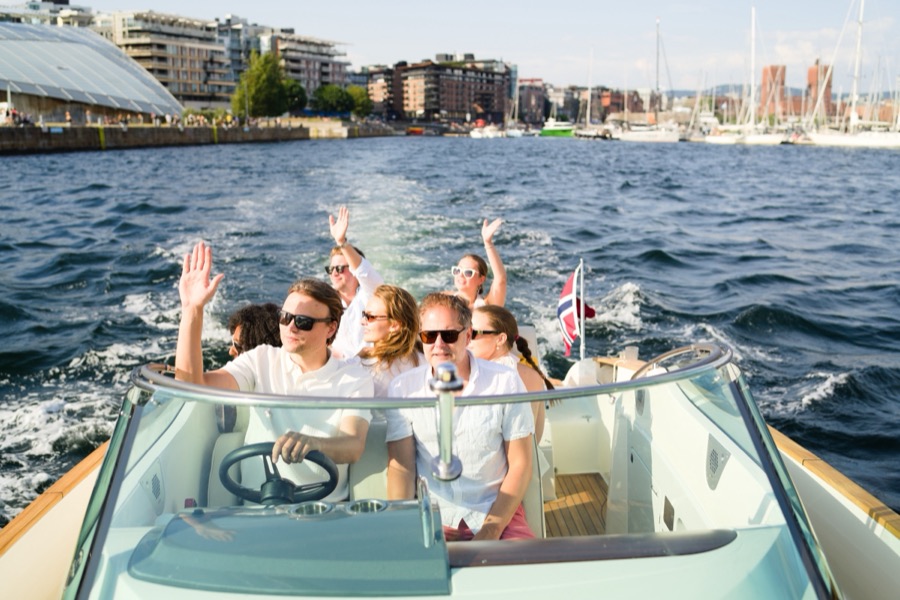
From the ferry deck you see the front of each island: the pier, the path, the view everyone gets. From a private boat you see the back sides, the hidden swimming coves, the flat rocks south of Hovedøya where no trail leads, the narrow channels between islands where the water goes still. We spend most of our time in those channels and after years on the fjord we still find new spots, which is what a private cruise is for: no schedule to keep. Anchoring in a sheltered cove and stepping off a swim ladder into deep clear water is a different day out from the pier beaches.
The honest recommendation: take the public ferry first. Explore Hovedøya, swim at Langøyene, stop at Gressholmen Kro. See what the inner islands offer on a transit ticket. Then, if you want what lies beyond the ferry routes, the seals, the outer islands, the coves most Oslo residents have never visited, that is what a private tour is for. The two complement each other.
Planning your 2026 island day
The short version of everything above: buy a 24-hour Ruter day pass (current fares here, from the app or any kiosk). It covers every ferry, bus, tram and metro ride for the day. Start at Rådhusbrygge and take the B1 to Hovedøya early; before 10 AM you will probably have the monastery ruins to yourself. Continue around the loop to Gressholmen for the causeway walk and something cold at the kro. Then choose your afternoon: the B1 onward to Nakholmen for the bathing jetty, or back to the pier for the summer-only B2 to Langøyene and its sandy beach. Between May and September the B2 is the one schedule worth checking in advance; the B1 loop runs all year.
If swimming is part of the plan, check the current Oslo water temperature before you go. In July the sandy shallows at Langøyene reach 23–24°C; in June and September the number decides whether you pack a towel or just a picnic. And if you are still deciding which islands deserve your hours, our complete guide to the Oslofjord islands covers all of them, including the ones the ferry does not reach.
Ferry fares, line numbers and departure times change season to season. Check the Ruter links above for current figures. Last reviewed: July 2026.
The whole archipelago on one day pass
Most visitors to Oslo walk Karl Johan, visit the Opera House, and eat well. They do not realise that a seven-minute ferry ride, on a transit ticket they probably already own, leads to monastery ruins, sandy beaches, free camping, and islands where no car has ever driven. The inner Oslofjord has been here since the glaciers retreated roughly 10,000 years ago. The ferries have been running for over a century.
Just walk down to the pier and get on a boat. You do not need a plan. The B1 loops, so you will end up back where you started.
The B1 ferry runs in a loop. Catch it from Rådhusbrygge, hop off at Hovedøya, walk the monastery loop, hop on, swim at Langøyene in summer, hop on, end at Aker Brygge. Standard Ruter day pass covers the whole circuit.
More from the fjord
The Best Beaches and Swimming Spots on the Oslofjord
From Huk and Sorenga to the coves only boats can reach. Oslo's best beaches, water temperatures, and where locals actually swim.
GuideThe Islands of the Oslofjord: A Complete Guide
Every island in the inner Oslofjord — from Hovedøya's 12th-century monastery to Langøyene's sandy beach. Ferry routes, swimming spots, and history.
On the WaterOslo Hidden Gems a Local Would Actually Show You
The coves, seal rocks and wooden streets that pass one test: would a local go? An honest guide to Oslo's hidden gems, from the water and on foot.