
Drøbak is a 19th-century wooden town 35 km south of Oslo, on the eastern shore of the Oslofjord where the channel narrows to 500 metres. Across the strait sits Oscarsborg Fortress, whose 1890s Krupp guns and hidden torpedo battery sank the German cruiser Blücher on 9 April 1940. Reached by car, bus, or boat, with a five-minute ferry out to the fortress. Free museum, a year-round Christmas shop, and a wreck under the water you pass over on the way in.
I have taken the boat south through the Oslofjord hundreds of times, and the moment the strait at Drøbak comes into view still changes the mood on board. The water narrows, the shores close in, and you feel the compression before you see the fortress. Oscarsborg sits right in the middle of it, low and grey on its islands, looking exactly like the kind of place where someone decided to put a lot of guns.
They did, and on one cold April morning in 1940 those guns changed the course of Norwegian history.
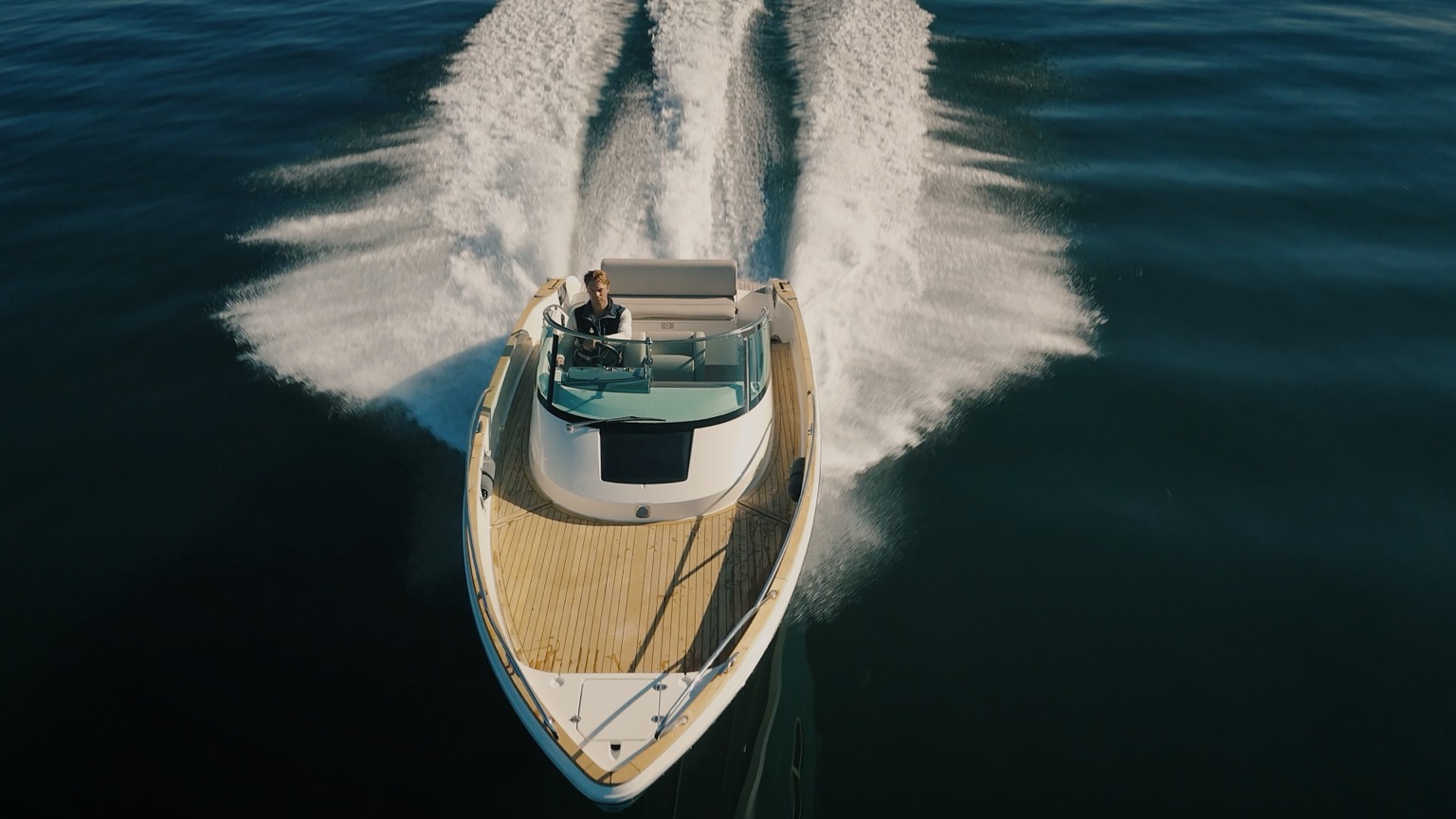
Heading south on the Oslofjord — Drøbak is 35 kilometres from central Oslo
Why Drøbak is the day trip most visitors miss
Most people who visit Oslo never leave the inner harbour. They see the Opera House, ride the ferry to Bygdøy, walk the inner islands. Those are good choices, but the Oslofjord is over 100 kilometres long, and everything south of Nesodden is a different world. The water opens up, the city vanishes, and the coastline shifts from urban granite to small wooden villages and pine forest.
Drøbak sits roughly 35 kilometres south of Oslo by water, right where the fjord squeezes down to its narrowest point. It is an old fishing and sailing village with wooden houses along the harbour, a year-round Christmas shop, a fortress island five minutes away by ferry, and the wreck of a German heavy cruiser on the seabed directly below. That combination is hard to beat for a day out of the city.
The approach from the water
Coming south from Oslo by boat, the first half of the trip takes you past the inner islands and along the Nesodden peninsula. The fjord is wide here, eight or nine kilometres across in places. You pass Håøya (HO-oy-ah), the largest island in the inner Oslofjord at 5.6 square kilometres and itself part of the Oscarsborg defence network, with a 28-centimetre battery installed in the 1890s. The southern half is a nature reserve now. In the summer of 2008 a white-tailed eagle chick left the nest there, the first successful breeding at the Oslofjord in 126 years (BirdLife Norge). That one always goes down well on board.
Then the fjord begins to narrow and the shores push closer. You can pick out individual houses on both sides, docks with small boats, the occasional swimmer in summer. The fortress island appears dead ahead. The navigable channel is barely 500 metres wide, and a ship passing through has nowhere to turn and nowhere to hide, which is the military logic of the place in one glance. It is also a remarkably pretty stretch of water.
Oscarsborg Fortress: four centuries of fortification
The first fortifications at the Drøbak narrows went up in 1644 under Christian IV, the Danish-Norwegian king who put his name on half the military infrastructure in Scandinavia. The modern fortress took shape between 1845 and 1855, built on two small islands in the middle of the strait, and received its current name by royal decree that year after King Oscar I.
Three installations covered the channel. The main battery was three 28-centimetre Krupp guns on the fortress island, mounted in 1892 and 1893, firing 345-kilogram shells; the garrison named them Moses, Aaron and Joshua. On the mainland shore above Drøbak, three 15-centimetre Armstrong guns formed the Kopås battery, built between 1898 and 1900. And under the water off North Kaholmen, the northern fortress island, sat three Whitehead torpedo tunnels, built between 1898 and 1901 and in service from 15 July 1901, able to fire six torpedoes without reloading. Norway had two underwater torpedo batteries of this kind, the other one guarding Bergen from Kvarven, and German intelligence had no record of the one at Drøbak.
We have a full article on the sinking of the Blücher with the detailed timeline. The short version: at 04:21 on 9 April 1940, Colonel Birger Eriksen ordered the old Krupp guns to open fire on a column of German warships entering the narrows in darkness. Moses and Aaron got one shell away each and both hit. Kopås worked its guns for the rest of the action. Then two torpedoes from the concealed battery at North Kaholmen struck below the waterline, and at 06:22 the Blücher capsized and sank, taking between 700 and 1,000 men down with her according to Store norske leksikon. The delay of several hours gave King Haakon VII, the government and fifty tonnes of gold reserves time to leave Oslo.
There were no Norwegian casualties. Reservists with guns from 1892 and forty-year-old torpedoes sank one of Germany's newest warships, and the emplacements they fired from are still standing.
Visiting the fortress today
A short ferry crosses from Drøbak harbour to the fortress island. Five minutes, and you step onto the quay where supplies once arrived for the garrison. The fortress grounds are open for free exploration, the museum is run by the Norwegian Armed Forces Museums and free as well, and you pay only for the ferry crossing.
What to see: the Krupp gun positions, where Moses and Aaron still stand in their original emplacements. The torpedo battery tunnels on North Kaholmen, which you can walk through. The fortress museum, which tells the story of the battle from the defenders' side. And the ramparts, where the view across the strait makes the tactical logic self-evident. Allow two to three hours. The tunnels alone need time to absorb.
Beyond the military history, Oscarsborg has become a surprisingly versatile cultural venue. The Oscarsborg Opera stages outdoor performances in the fortress courtyard each summer, with stone walls for acoustics and the fjord as backdrop. The fortress also runs as a hotel and conference centre, which means you can sleep inside a 19th-century fortification overlooking the water where the Blücher went down. I think it is the best day trip from Oslo by a comfortable margin, and I say that knowing full well I am biased because I get to arrive by boat.
The fortress island has a guest harbour with 110 berths for visiting boats, and on a summer weekend it fills up fast. Norwegians call getting there early førstemann til mølla, first to the mill, and it means what you think it means.
The wreck beneath the strait
The Blücher lies at a depth of around 90 metres, almost upside down, the way she tipped over in her last seconds (lokalhistoriewiki.no). In 2016 the Norwegian Directorate for Cultural Heritage designated the wreck a protected war memorial. Diving is forbidden without special permission, out of respect for the hundreds of men still inside the hull and because the wreck continues to leak oil. A 1994 operation recovered roughly 1,000 tonnes from 133 tanks, but a number of bunkers could not be reached.
From a boat you pass directly over the wreck site. There is nothing to see on the surface, and knowing what is down there changes how you look at the water anyway. One detail I always mention to guests: the same stretch of strait carries fishing boats and sailing yachts every day in summer. War grave and weekend marina, side by side, which is a very Oslofjord arrangement.
Drøbak: the town on shore
Drøbak (DROO-bahk) is part of Frogn municipality, population around 16,400. It was a fishing and sailing village long before anyone built a fortress in the strait, and the old wooden harbour town is largely intact. White-painted houses line narrow streets that slope down toward the water. The harbour has a marina with guest berths, a handful of restaurants along the waterfront, and the kind of small-town pace that makes Oslo feel very far away.
Drøbak is known across Norway as the country's Christmas town. The connection comes from a local tradition that Julenissen, the Norwegian Father Christmas, lives here. Tregaarden's Julehus, a year-round Christmas shop on the main street, has been selling ornaments and decorations since 1988. Visit in July and you will find tinsel and gingerbread-scented candles while it is 28 degrees outside. It is as surreal as it sounds.
More interesting to most visitors: the Drøbak Akvarium, a small aquarium devoted entirely to Oslofjord marine life. A few rooms of local species, touch pools, and an honest look at what actually lives in the water beneath the boats outside. Between the fortress and the aquarium, a full day fills itself.
The Drøbak Sill: where the fjord divides
The narrows at Drøbak are ecologically decisive as well. Beneath the surface, a ridge of rock called the Drøbak Sill rises to within 19.5 metres of the waterline. This shallow threshold separates the inner and outer Oslofjord and controls how water circulates between them. Deep, oxygen-rich water from the Skagerrak can only enter the inner fjord when conditions push it over the ridge. Some years that happens once or twice, some years barely at all. The restricted circulation explains why the inner fjord behaves so differently from the outer fjord, why its ecology is more fragile, and why the cleanup work of the past fifty years has mattered so much.
From a boat, none of this is visible. The water looks the same on both sides of the sill. But if you have read the FAQ or our fjord geography article, you can point at the exact spot where the inner and outer fjord meet and explain why it matters. Guests seem to like that.
How to get to Drøbak and Oscarsborg
By boat
Roughly 45 minutes from Tjuvholmen in a private boat, and the reason to do this trip at all if you have the option. The route south runs past the inner islands, along Nesodden, past Håøya and into the narrowing strait, and it takes you over the wreck on the way in. On a full-day tour of six hours there is comfortable time to reach Drøbak, explore the fortress, walk the town and come back through the islands. The nine-hour luxury experience can take in Drøbak plus swimming stops and the outer archipelago.
By car
E6 south from Oslo, exit toward Drøbak/Frogn, about 40 minutes in normal traffic. Parking is available in the town centre and by the ferry dock, and the fortress ferry goes from the harbour.
By bus
Route 500 or 501 from Oslo Bus Terminal at Schweigårds gate, roughly an hour, covered by a Ruter ticket. The bus drops you in central Drøbak, a short walk from the harbour and the fortress ferry. This is the budget option and it works fine. You miss the water approach and save a few hundred kroner.
The Drøbak to Oscarsborg ferry
The ferry from Drøbak harbour to Oscarsborg runs frequently through the summer, roughly May to September, and the crossing takes about five minutes. It is operated by Forsvarsbygg. Check the Oscarsborg ferry timetable for current departures, prices and event closures. The fortress grounds are free to walk. Guided tours run in summer and are worth doing at least once, because the guides are often former military personnel who know the tunnels and gun positions better than any sign can explain.
Ferry times, prices and the opera season change with the season. Check the live links above. Last reviewed: July 2026.
A suggested day
Morning: arrive in Drøbak by boat, bus or car. Walk the old town and harbour, look at the wooden houses, visit the Christmas shop if you feel compelled. Take the ferry to Oscarsborg and spend two to three hours on the fortress: the museum, the gun positions, the torpedo tunnels.
Midday: eat back in Drøbak. The waterfront restaurants serve good shrimp sandwiches (rekesmørbrød) and local fish, and the harbour setting is hard to argue with.
Afternoon: the aquarium, then back to Oslo. If you came by boat, the return through the islands with the light going low and golden is the part most people do not see coming.
Håøya: the island you pass on the way
Heading south to Drøbak by boat, you pass Håøya on the port side. At 5.6 square kilometres it is the largest island in the inner Oslofjord. The southern half is a nature reserve with camping areas and swimming beaches, and nothing commercial on it whatsoever, so bring what you need and carry it out again. Håøya was part of the Oscarsborg defence network, and a 28-centimetre battery from 1890 still sits on the island, now overgrown. The white-tailed eagles nesting on the southern cliffs are the more popular residents these days. When we pass on a tour, guests sometimes ask about the eagles. The answer is usually "look up."
Practical details
Best time to visit: May through September. The fortress ferry runs on a summer schedule, the outdoor opera season is June through August, and the town is at its liveliest. The fortress grounds are accessible year-round, but the museum and guided tours follow a seasonal schedule.
Time needed: A full day from Oslo. Half a day covers the fortress alone, but you would miss the town, and that would be a shame. With a private boat the transit time is shorter and you gain the water approach.
Cost: Fortress grounds and museum are free. You pay for the ferry crossing, checked at the dock, plus food and transport.
What to bring: Comfortable shoes for the ramparts and tunnel steps. A jacket, even in summer, because the strait funnels wind. A camera. Binoculars if you want to spot Håøya's eagles from the water.
The narrowest point
Drøbak and Oscarsborg sit where the Oslofjord stops being wide. A strait narrow enough to control, a fortress with guns named after prophets, a torpedo battery that stayed classified until 1993, and a town that decided it was also the home of Father Christmas: it is a lot for one location. Akershus Fortress gets more tourists because it sits in central Oslo, but Oscarsborg is the fortress that fired its guns when it mattered.
The ferry from Drøbak runs frequently in summer. The fortress museum is free. The shrimp sandwiches at the harbour are better than they need to be.
Drøbak in late summer narrows like a funnel. The shores close in and the current picks up. You can see the gun positions on the fortress without binoculars, and the town across the strait still looks like the 1890s: wooden houses, a narrow harbour, and the Christmas shop that never closes.
More from the fjord
Viking Ship Museum in Oslo: Closed Until 2027, and What to See Instead
The Viking Ship Museum on Bygdøy is closed until November 2027. Where the Oseberg, Gokstad and Tune ships are now, and what to see in Oslo in the meantime.
History & NatureOslo’s Maritime History: A Thousand Years on the Water
From Viking longships to electric ferries, the Oslofjord has been Norway’s most important waterway for a millennium. A history told from the water.
History & NatureOslo Harbor Cleanup: How the City Reclaimed Its Waterfront
Between 2006 and 2008, Oslo dredged 444,000 cubic meters of toxic sediment from its harbor. The result: Sørenga, Tjuvholmen, and a fjord you can swim in again.
See for yourself
Private Cormate T28 charter on the Oslo Fjord.
Up to seven guests. Fixed pricing. Departures from Tjuvholmen, Oslo.
Check pricing & availability