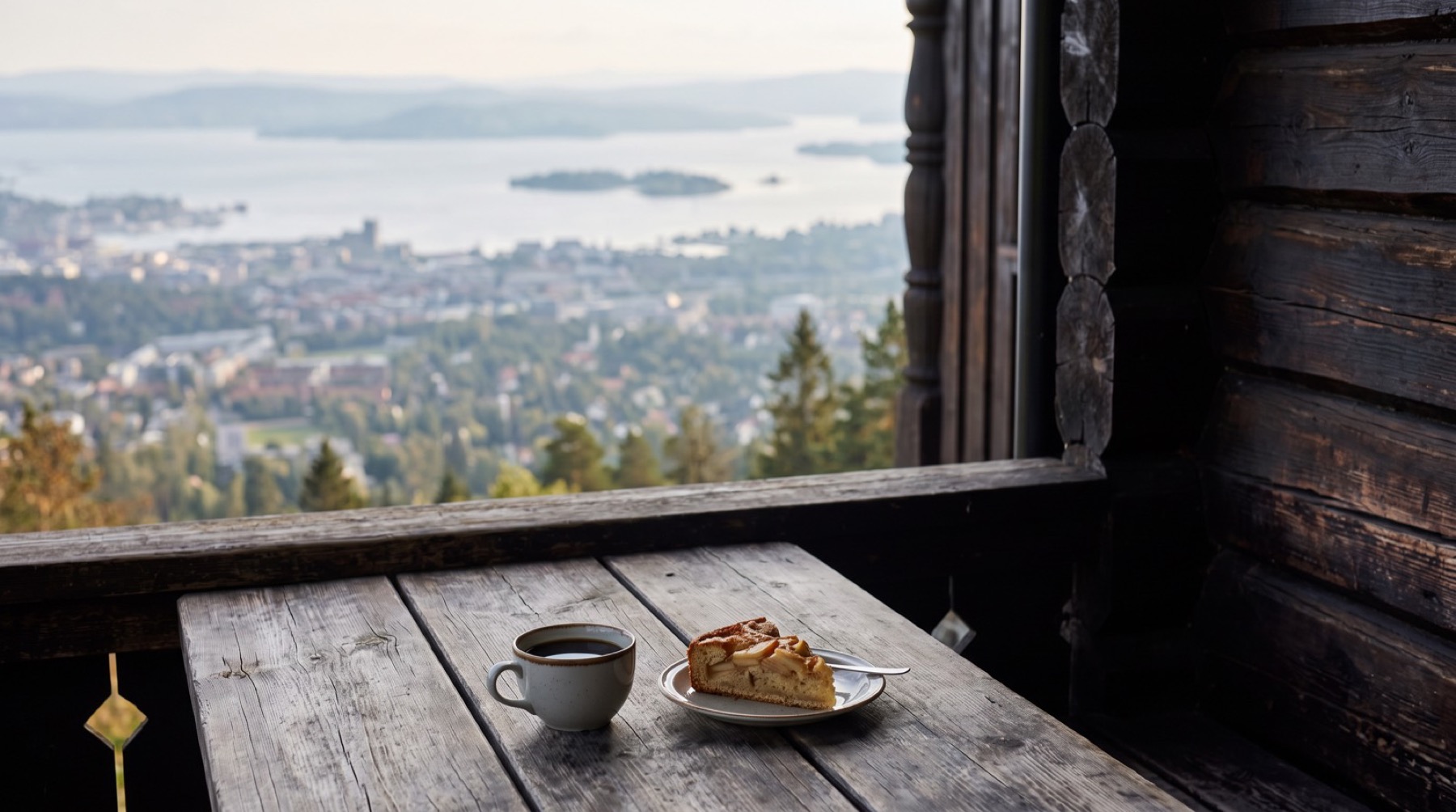
Oslo finished signposting its harbour promenade in June 2015: nine kilometres of continuous waterfront from Frognerkilen in the west to Kongshavn in the east, with fourteen orange containers along the way that mark the stretches and tell you what stood on each quay before. It needs no ticket and no booking, and it is the best single walking route in the city.
This guide covers that one and three others, then the guided options: the tip-based tours that gather at the bronze tiger outside the central station, and the private walks that answer a different question. Everything here starts within fifteen minutes of Oslo S.
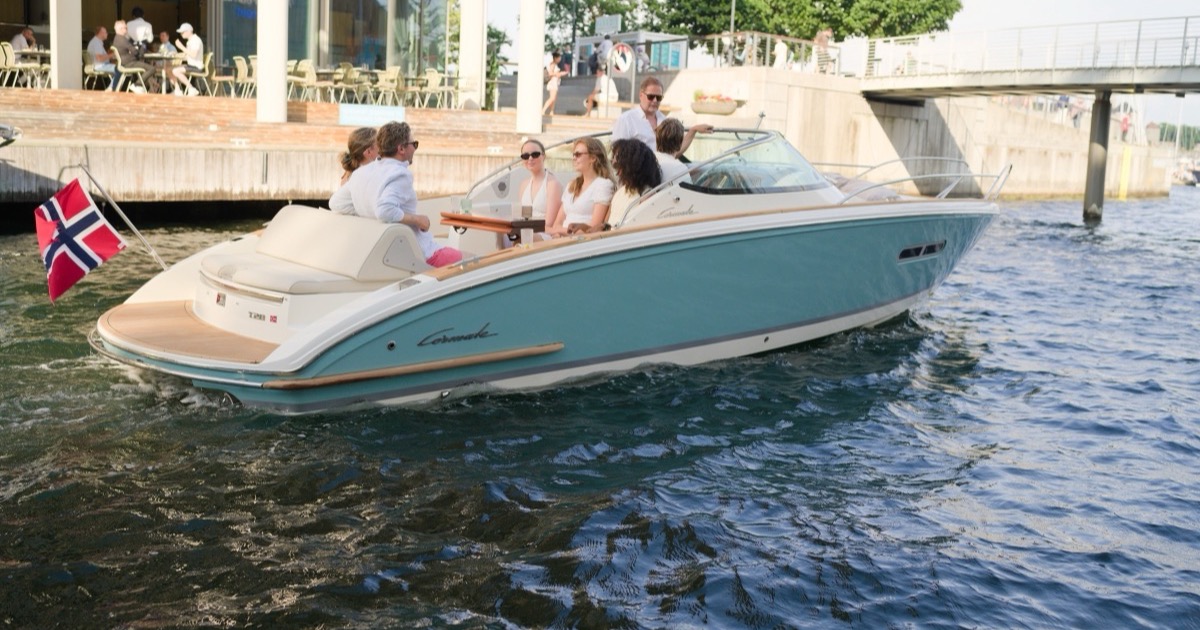
The harbour promenade at Aker Brygge — one of 14 marked stretches between Frognerkilen and Kongshavn
Walking the harbour promenade, west to east
The fourteen marked points, in order: Frognerkilen, Kongen, Filipstad, Vika, Tjuvholmen, Vestbanen, Akershusstranda, Vippetangen, Langkaia, Bjørvika, Sukkerbiten, Sørenga, Lohavn, Kongshavn. Each container carries historical photographs, drawings of what is planned next, and the comic-strip pair Krüger and Krogh, borrowed from 1960s Oslo. The route, the point list and the June 2015 completion date are in Wikipedia's article on Havnepromenaden.
We run our boats out of Tjuvholmen and see the promenade from the water every day of the season, so here is an honest grading. The middle is the best of it: Tjuvholmen to Aker Brygge to Rådhusplassen, then along Akershusstranda under the fortress walls, around Vippetangen and on to the Opera. That section never leaves the water's edge, and it holds the density: galleries, working harbour, fortress, opera roof. The western end through Filipstad is still partly a construction site (summer 2026). With two hours instead of four, walk Tjuvholmen to Sørenga.
City Hall stands roughly midway, and you hear it before you reach it. The east tower holds a carillon of 49 bells that plays every hour from seven in the morning until midnight. Its two towers measure 63 and 66 metres and look identical from the square because the ground is not level, and the building was inaugurated on 15 May 1950, per Wikipedia's article on Oslo rådhus. What a wedding party does with the afternoon afterwards is covered in our City Hall wedding guide.
The full nine kilometres take about two and a half hours at a steady pace, and longer in practice, because of the stops. From Rådhusbrygge, halfway along, the island ferries leave for the inner islands on a standard transit ticket, which is the classic way to lose the rest of the day. The coastal path continues past both endpoints too, west around Bygdøy and east below Ekeberg.
Following the Akerselva down
The Akerselva runs 9.8 kilometres from Maridalsvannet to the fjord at Bjørvika and drops 149 metres over 20 waterfalls on the way, according to Store norske leksikon. That fall is what the mills used, and their buildings still line the banks between Nydalen and Grünerløkka.
| Works | Year | Detail |
|---|---|---|
| Bentse Brug | 1696 | in operation as Norway's first paper mill; Ole Bentsen had held a 15-year exclusive privilege since 1685 |
| Lilleborg | 1842 | the soap works established on the site |
| Christiania Seildugsfabrik | 1856 | founded, making sailcloth, towels and cloth. 920 employees at its peak in 1908, most of them women. Oslo National Academy of the Arts has occupied the building since 2010 |
| Bjølsen Valsemølle | 1884 | founded by Gustav Martinsen and Ole Amundsen; the country's largest rye mill once the new plant opened in 1896 |
From lokalhistoriewiki.no on Bentse Brug, lokalhistoriewiki.no on Lilleborg, lokalhistoriewiki.no on Bjølsen Valsemølle, and Store norske leksikon on Christiania Seildugsfabrik.
At the sailcloth factory the women ran the machines while the men worked as craftsmen and foremen. Norway appointed its first female factory inspector, Betzy Kjelsberg, in 1910, and over twenty-five years she followed up close to 2,000 businesses nationwide, per Store norske leksikon.
Industrial waste and sewage wrecked the water for a century, and the recovery is recent enough to have a date on it. A chlorine spill in 2011 killed most of the fish; Oslomarkas fiskeadministrasjon then released 300,000 salmon and trout fry, and by 2015 the river was declared fit for ordinary recreational fishing again. The last stretch, Vaterland down to Bjørvika, went into a tunnel between 1964 and 1969, so the path leaves the river before the river reaches the fjord.
Mathallen at Vulkan is the halfway stop. It opened on 2 October 2012 with just over 30 food shops and eateries, inside the 1902 hall where iron sections for bridges were cast, three floors and close to 3,500 square metres, according to Wikipedia. Standard hours are Tuesday to Saturday 10–20 and Sunday 11–18 with Mondays closed, but through July the hall is open every day 11–20, so treat Mathallen's own opening-hours page as the answer (read 30 July 2026). The duck confit sandwich at Galopin and the fish soup at Vulkanfisk both justify the detour on their own.
From Mathallen it is a short stretch down to Bjørvika, where the Akerselva ends and the harbour promenade begins. The river down and then the harbour west is the neatest route combination in the city.
Crossing Kvadraturen, the 1624 grid
The medieval city of Oslo burned on 17 August 1624. Christian IV had it rebuilt on the west side of Bjørvika, close under Akershus castle and fortress, and the new city took his name: Christiania. The streets went in as a grid, which is where the name Kvadraturen comes from, and they were laid 24 alen wide, about 15 metres, so that fire would not cross from one side to the other. Those measurements are from lokalhistoriewiki.no, and they are still what you walk between.
Entry to the fortress grounds is free. The main gate is open 06:00 to 21:00 all year. The side gates run 07:00 to 21:00 on weekdays and 08:00 to 21:00 at weekends from May to September, and 07:00 to 18:00 daily from October to April, per Forsvarsbygg (checked 30 July 2026). The visitor centre in the long red building by Karpedammen runs drop-in guided tours year-round, and Forsvarets museer publishes the current times and prices. It is the cheapest professionally guided walking in Oslo.
The walls have been tested. On 8 March 1716 Karl XII of Sweden attacked with 10,000 men against roughly 3,000 defenders under colonel Jørgen Christopher von Klenow, and the Swedes eventually had to withdraw, as Wikipedia sets out. The seven centuries behind those walls have an article of their own.
Two axes frame the grid. Karl Johans gate measures 1,415 metres in a straight line from the facade of the central station to the facade of the Royal Palace, has carried that name since 1860, when two older streets were merged under it, and is pedestrianised from Oslo S up to the Parliament, per Wikipedia. Down at the water, the Opera House roof is a walking route in its own right: white Carrara marble inside and out, rising out of the fjord, open to walk on without a ticket, designed by Snøhetta after the practice won the competition in 2000, per Wikipedia. One caveat from working here through the winters: marble and ice go badly together, and access can be restricted when it is slippery. May to September, walk it at will.
A Grünerløkka loop on a Sunday
Olaf Ryes plass is the anchor. The municipality bought the field from Thorvald Meyer and Carl Johan Michelet for 10,000 kroner in 1864, the square covers 10 dekar, and the fountain in the middle went up in 1927, lit from its first evening, per Wikipedia. Markveien and Thorvald Meyers gate run north from here, and their ground floors hold the densest row of independent shops and cafés in the city.
Walk north to Birkelunden. The bandstand was built in 1926 to a design by Otto Hald, the park holds a market every Sunday, and in February 2006 the park and the blocks around it were protected as Birkelunden kulturmiljø, the first protected brick-tenement environment in Norway, per Wikipedia. Then cut west to the river and follow the Akerselva path back down past Mathallen toward the centre. The circuit is a comfortable half-day with lunch in it.
How the free walking tours work
Tours gather at the bronze tiger on Jernbanetorget, directly in front of the central station, run two hours, and cover the central circuit: the Opera, City Hall, Akershus, Aker Brygge, the Nobel Peace Center, the Parliament and the Royal Palace. There is nothing to book. You turn up.
The word covers the sign-up. Guides work entirely on tips, and what you hand over at the end is their pay for the morning; most carry a card reader and take kroner, euros or dollars. GuruWalk's listing for Free Walking Tour Oslo, the most reviewed of the Oslo tours, stood at 4.73 stars from 1,973 reviews when we checked on 30 July 2026.
The limits are structural. Groups get large on summer days and the route is fixed. The pace belongs to the slowest fifteen people. For a solo traveller or a couple with a free first morning in the city, that is a fair trade and a fast orientation.
When a private walk earns its price
Our land side, See Oslo, runs two walks from the same Tjuvholmen base as the boats, each about four hours. The private city walk is 12,900 NOK for up to eight guests, no VAT on it, with entry tickets and a coffee along the way included. A larger group walks with two guides, at 1,500 NOK for each guest past the eighth. It is put together from a preference sheet you fill in before you arrive: art or history, fortress or markets, how much walking suits the group, what to skip. No two of them follow the same route, because no two sheets come back the same.
The Oslo food walk is 14,900 NOK including VAT and the food budget for up to three guests, plus 3,000 NOK for each guest beyond that. Stops usually include Theatercaféen, Kafeteria August and Engebret, and they shift with the season and with your answers. Allergies and preferences are collected in advance and the guide books each stop and orders for the table, so the eating starts at the first one.
Six people on the city walk works out at 2,150 NOK each, tickets and coffee included, for a route drawn around them. That reaches an occasion a fixed loop cannot: a client visit, or three generations walking at three different speeds. If your day is really about Oslo's food scene rather than its facades, a tip-based overview is the wrong tool however good the guide. For a backpacker with a loose morning, the tiger is the right call.
The same city from the water
A few hundred metres out you see the whole promenade at once, Frognerkilen to the Opera roof, with the walkers as small figures against the quays. We are out there most evenings of the season. In the hour before sunset the light over the fjord reaches the promenade as well, and a sunset cruise after a day on foot gives you Oslo in two acts.
If you take one thing from this article, walk Tjuvholmen to the Opera in that hour. It costs nothing, and it is the same light we sell.
Opening hours, tour arrangements and review counts above were checked on 30 July 2026 against Forsvarsbygg, Mathallen and GuruWalk. All three move with the season, so use the links before you go.
More from the fjord
Hiking in Oslo: The Forest at the End of the Metro Line
Four Nordmarka hikes with official DNT distances, forest lakes you can swim in, blue trail marks explained, and the 2026 metro closure at Sognsvann.
GuideFishing the Oslofjord: What You Can Catch, Where, and the Rules You Need to Know
Cod is fully protected and some zones are closed to all fishing. Here is what you can still catch in the Oslofjord, where, and the current rules.
GuideDock and Dine: Restaurants You Can Reach by Boat on the Oslofjord
From Aker Brygge seafood to Drøbak harbor cafés and island taverns with century-old views. Every waterfront restaurant worth a visit on the Oslofjord.