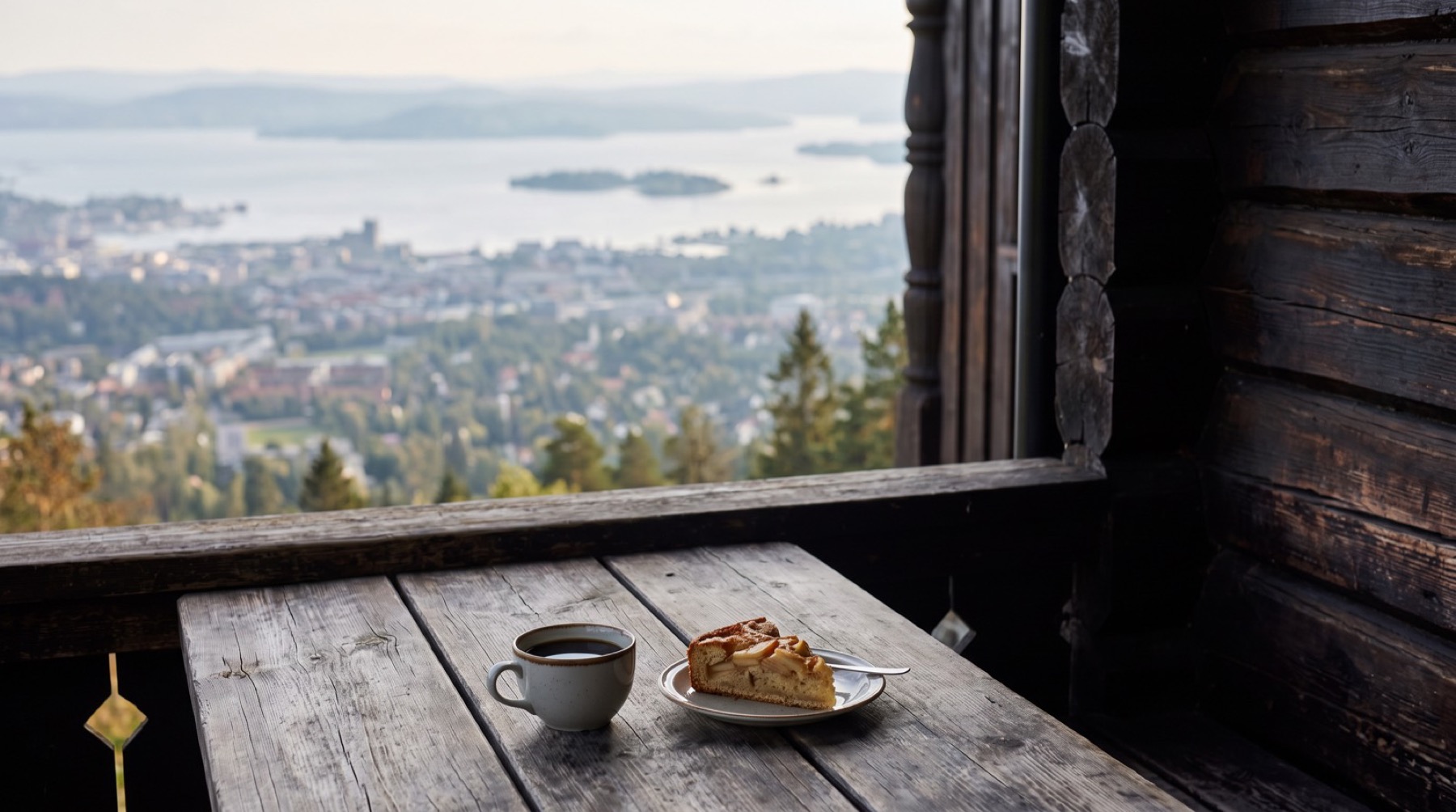
A waterfront restaurant with its own guest pier lets you tie up, eat, and cast off without arranging transport at either end. On the Oslofjord these sit in three clusters: Aker Brygge and Vippetangen in central Oslo, the inner islands (Gressholmen Kro, Revierhavnen kro on Hovedøya, Lille Herbern), and the harbour towns down the eastern shore, with the Hvaler archipelago at the fjord mouth. Most island and coastal kitchens run May through September.
Some of the best meals I've had in this part of Norway started with tying up at a guest pier and walking thirty seconds to a table. What follows is every place worth knowing, working outward from Aker Brygge. Seasons and opening hours shift from year to year out here, so each entry carries a live link where the kitchen keeps one. If you're still working out the basics of a boat trip, our FAQ covers the common questions.
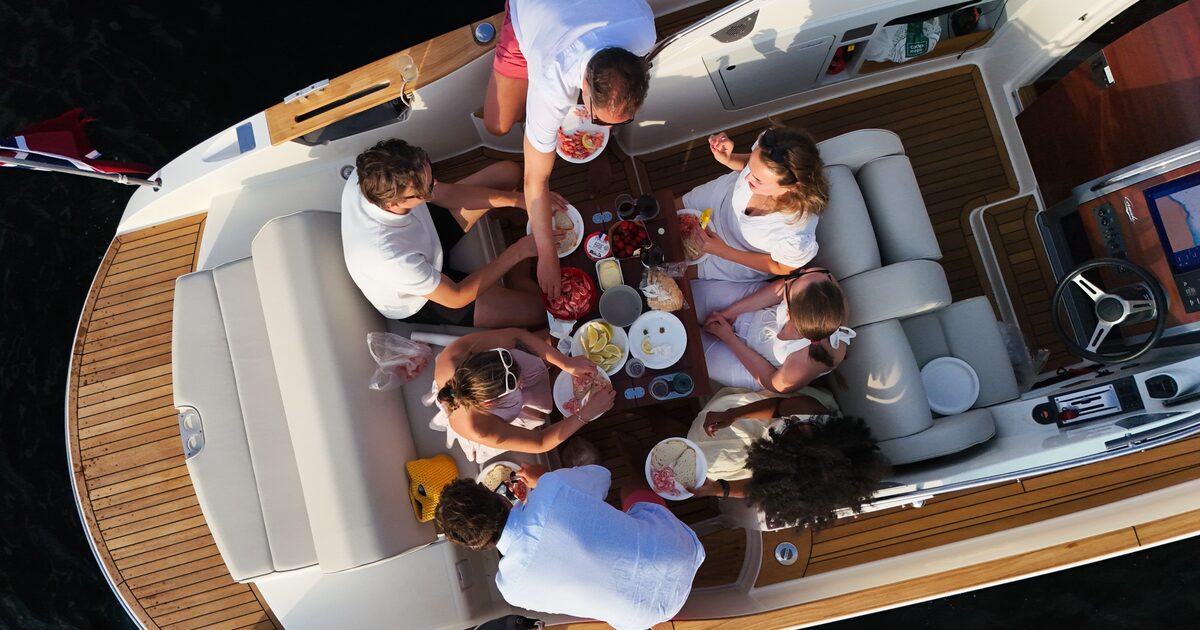
Lunch on deck between stops — the next table is a short boat ride away
Where they are
| Cluster | Where you eat | Getting there without a boat |
|---|---|---|
| Aker Brygge, central Oslo | Lofoten Fiskerestaurant, Louise, Winther, Lekter'n | Walk from the city centre |
| Vippetangen, central Oslo | Vippa food hall | Walk east past Akershus fortress |
| Hovedøya | Revierhavnen kro | Boat club membership or a table for ten; the public ferry does not get you in |
| Gressholmen | Gressholmen Kro | Public island ferry from Aker Brygge |
| Store Herbern, off Bygdøy | Lille Herbern | Passenger ferry from Herbernveien brygge |
| Håøya, Frogn | Håøya Naturverksted | Summer ferry from Aker Brygge, infrequent |
| Spro, Nesodden | Primitivo Ristorante | Bus 575 to Nordre Spro |
| Drøbak | Café Sjøstjernen, Skipperstuen, Kumlegaarden | Road |
| Oscarsborg | Havnekroa | Five-minute ferry from Drøbak harbour |
| Son | Sjøboden | Road |
| Hvaler | Havkatten, Vertshuset Skjærhalden | Road |
| Vollen, Asker | Bukta Matbar | Road |
Aker Brygge and the Oslo waterfront
Aker Brygge is the obvious starting point. It is where Oslo meets the water, a long crescent of restaurants, bars, and outdoor terraces that faces the fjord and catches afternoon sun from roughly March to October. The guest marina sits right there, so you can step off a boat and be seated within minutes.
Lofoten Fiskerestaurant (Stranden 75) is the one I send people to most often. It has been here over twenty years and the quality has not dipped. The menu changes four times a year to track the Norwegian fishing calendar: Lofoten cod with liver and roe from January to March, then crab, then the summer shellfish, then lutefisk in the autumn. Two hundred outdoor seats fill the terrace from April through September. Prices are high by any standard and astronomical by most, and the fish is the best you will eat this close to the water in Oslo.
Winther does pizza on the quay and keeps the longest hours on the strip: open until 22:00 Monday to Wednesday and until 01:00 Thursday to Saturday, closed Sundays, per Aker Brygge's own tenant list in July 2026. Solsiden does upscale seafood and cocktails with a harbour view. Louise Restaurant & Bar is an Aker Brygge institution with a broad terrace and a menu wide enough to hold both oysters and steak. Lekter'n is a floating bar and restaurant, literally on the water, which feels like cheating in an article about waterfront dining but earns its place by being good fun on a warm evening.
Most of these are a five-minute walk from the Aker Brygge guest marina. If you are arriving by boat on a sunset cruise, finishing the evening at one of these terraces is a natural way to end the night. The late Nordic light keeps the outdoor tables warm and bright well past 10pm in June and July.
Vippa: the food hall on the pier
Walk east from Aker Brygge past the fortress and you reach Vippetangen, the old cargo pier. Vippa is a food hall inside a converted port warehouse, run as a social enterprise that uses international street food as a vehicle for immigrant integration. The stalls rotate: Vippa says the composition changes most years, and in July 2026 their own list ran to eight, covering Meso-American, Nepalese, Balkan, Chinese, Moroccan, Burmese, Greek and Syrian cooking. The outdoor terrace sits directly on the fjord. Prices are budget to moderate. The quality is high.
On a sunny day, a hot plate of something and the entire fjord spread out in front of you beats most white-tablecloth restaurants in town. If you want to understand how Oslo thinks about food right now, Vippa is the better indicator.
Island tables: summer only, worth the timing
The inner fjord islands have their own food culture, and it runs on a strict seasonal clock. Open from roughly May through September, closed the rest of the year, no exceptions. Plan around it.
Gressholmen Kro sits in a clearing among the trees on Gressholmen, with outdoor tables looking across the water toward Nesodden, and it opens for the summer half of the year. Ice cream and simple plates, which is all a place like this needs to be. On a warm weekend in July it fills by noon and stays full, so come early or come on a Tuesday. There is a particular satisfaction to eating lunch on an island that held Oslo's first airport: Gressholmen Sjøflyhavn ran from 1926 to 1938, and the old hangar is a boat store today.
Revierhavnen kro is down in the boat club harbour at Revierhavna on Hovedøya, right at the water's edge, and it works differently from the other island cafés. The harbour belongs to the island's boat clubs, and the kro lists three ways in: you are a member of one of them, you arrive in your own boat and tie up at the guest pier, or you book a table for at least ten people. The first two need no arrangement in advance. What does not work is stepping off the Aker Brygge ferry and walking in. It is an à la carte kitchen open through the warm months, and the terms and current hours are on their site. If you are marking an occasion there in spring or summer, book early, because the calendar fills up. Uphill from the harbour stand the ruins of the Cistercian monastery that monks from Kirkstead in England founded on 18 May 1147. They brewed their own ale on the island, so a stop afterwards is at least in keeping with the site.
Lille Herbern is a summer restaurant on its own islet just off Store Herbern, southeast of Bygdøy. No road reaches it. You arrive in your own boat, or on the small passenger ferry from Herbernveien brygge on Bygdøy, which takes eleven people at a time across a sound short enough that the crossing is advertised as one of the shortest ferry rides in the world. The kitchen works a Josper grill and puts seafood and grilled plates on it, with sixty-five seats indoors and service out on the rock in good weather. The ferry shuttles only as long as the restaurant is open, and the season is short, so check the hours and book a table before you build an evening around it.
Håøya Naturverksted sits on Håøya in Frogn, the largest island in the inner fjord. Varden, the summit above the café, is 229.4 metres and the highest point on the whole Oslofjord. The café is a small creamery: white goat cheese from cashmere goats they milk by hand, sourdough, cinnamon buns, platters of cheese and cured meat, honey from their own hives. Most people arrive by boat or kayak and use the guest harbours at Sagbukta, Tåjebukta or Dragsundet. There is a summer ferry from Aker Brygge as well, though it does not run often, so check the timetable at Ruter. They have no website, and the season and opening hours go up on their Facebook page. Look before you set out, because the walk up to Varden and back deserves a bun at the end of it.
Nesodden: the old quarry harbour
Spro is the old quarry harbour on the eastern side of Nesodden, and it has a large guest pier. Primitivo Ristorante is a new Italian restaurant there, right at the water, cooking modern and classic Italian and buying good ingredients close to home where it can. You can tie up at the pier. There is parking at the restaurant, and the 575 bus stops at Nordre Spro. How far into the year it stays open is not settled: July has run on temporary summer hours with the permanent ones due in August, so check before you go.
Drøbak: the harbour town with real food
Where the fjord narrows to its tightest point, Drøbak is a wooden-house harbour town that feels like it belongs on the south coast. The guest harbour has good berths and several restaurants within a two-minute walk. On a full-day tour, we can include a lunch stop here, and I always recommend it.
Café Sjøstjernen ("The Starfish") is the one right at the guest harbour. Steamed mussels, drinks, a short menu that changes with what the boats bring in. The terrace hangs over the water. The mussels are what I come for, and you can smell them from the boat on the way in. They arrive in a garlic broth with bread for dipping, and on a good day it is one of the best simple meals on the fjord.
Skipperstuen is the boat harbour restaurant, slightly more formal, with a broader menu of Norwegian seafood. Kumlegaarden keeps the old spelling and the old dish: kumle, also known as raspeball, a Norwegian potato dumpling served with salted meat, mashed rutabaga, and melted butter. It is farmhouse food, dense and warming, the kind of dish that exists because Norwegian winters last six months and people needed calories. After a morning on the water it is exactly right.
Across the narrows, Oscarsborg Fortress has its own restaurant, Havnekroa, accessible by a five-minute ferry from Drøbak harbour. Eating lunch on a fortress island that sank the German heavy cruiser Blücher on 9 April 1940 adds a certain weight to the meal.
Son: the quiet marina town
Further down the eastern shore, Son is a small marina town that looks almost Mediterranean on a bright day: white-painted houses, a compact harbour, sailboats lying at anchor. The population swells in summer with Oslo residents who keep boats here.
Sjøboden Restaurant is the main waterfront option: casual dining in a converted warehouse, right on the harbour. Fish and chips, grilled catch of the day, local shrimp when available. The setting does most of the work. On a calm evening with the harbour still and the light going gold, it is hard to believe you are an hour from Oslo.
Hvaler: the archipelago at the fjord mouth
Hvaler municipality counts 833 islands, islets and skerries larger than 20 square metres near the Swedish border, at the far southern end of the Oslofjord. The seafood restaurants here serve what was swimming that morning.
Havkatten at Ødegårdskilen on Vesterøy is the true dock-and-dine experience. It has its own guest pier, so you tie up, walk twenty metres, and sit down to grilled fish and local shrimp. The pier-to-plate distance is about as short as it gets.
Vertshuset Skjærhalden is the harbour restaurant in the main village, reliable and well-positioned, and the natural fallback when Havkatten is full.
Vollen: the harbour village in Asker
On the western shore of the fjord, Vollen is a harbour village in Asker municipality that most visitors never hear about. Bukta Matbar sits at Vollen Marina with a large outdoor terrace over the water, doing stone-oven pizza, small plates and seafood. Hours run long in summer and shorter out of season, so look before you cast off.
Dinner cruises are the other arrangement
Several operators run dinner cruises on the Oslofjord: Brim Explorer, Strømma, Trollcruise, and others. Those are restaurants on boats. The arrangement here runs the other way round, where you cross the water and eat at a place that exists because of where it sits on the shore. A harbourside table you reached by boat feels different from a buffet on a moving vessel, and I would take the table.
How Norwegians eat by the water
Norwegian waterfront dining keeps its own hours. Lunch is the main event in summer. Norwegians eat early, and a dinner reservation at 5pm raises no eyebrows at all. By 8pm many kitchens are winding down. The word kos (roughly: cozy togetherness, but broader than that) governs the atmosphere. A meal by the water takes as long as it takes. Nobody is hovering to flip your table, and the long summer light gives you every reason to sit on.
Tipping is not expected. Service charge is included. If the food was exceptional, rounding up or leaving 5–10% is appreciated but not assumed. Do not feel awkward about it.
Planning a dock-and-dine trip
The best way to combine a boat trip with a meal depends on how much time you have and how far you want to go. A three-hour cruise can end at Aker Brygge with time for dinner on the terrace. A luxury experience includes dining stops as part of the itinerary, so we plan the route around where and when you want to eat. A full-day trip south can include lunch at Drøbak and still leave time for swimming and sightseeing on the way back.
Reservations are wise at Lofoten Fiskerestaurant and Solsiden in peak season. The island cafés do not take bookings, so you turn up and take the wait if there is one.
Guest harbour fees vary. Aker Brygge charges by the hour and it is not cheap. Drøbak and Son are more reasonable. The island cafés are reached by anchoring or using public ferry docks. Check our FAQ for details on what a typical tour includes.
Where to start
If I had to pick one place to send someone for a first dock-and-dine meal, it would be Gressholmen Kro. The food is straightforward, but sitting at an outdoor table looking across the water, hearing nothing but gulls and the clink of someone else's glass, while the city sits just over the horizon: that is the Oslofjord at its most honest.
Go on a weekday. The weekend crowds have not arrived yet.
Six hours opens the fjord up. You can run to Drøbak, anchor for a long lunch, swim off the back of the boat, photograph Oscarsborg in the afternoon light, and still be back at Tjuvholmen for sunset. Three hours doesn't reach Drøbak, doesn't include lunch.
Fjord kitchens open, close and change hands between seasons. Everything above was checked in July 2026, and where a place keeps a live page, the link goes straight to it. Ring ahead before you build a day around one table.
More from the fjord
Hiking in Oslo: The Forest at the End of the Metro Line
Four Nordmarka hikes with official DNT distances, forest lakes you can swim in, blue trail marks explained, and the 2026 metro closure at Sognsvann.
GuideOslo on Foot: Self-Guided Routes and Walking Tours
Four self-guided Oslo walking routes with real distances, how the tip-based free tours actually work, and when a private walk earns its price.
GuideFishing the Oslofjord: What You Can Catch, Where, and the Rules You Need to Know
Cod is fully protected and some zones are closed to all fishing. Here is what you can still catch in the Oslofjord, where, and the current rules.