Oslo splits a weekend cleanly in two. The centre is compact enough to cover on foot in a day: the Opera House, Karl Johan, the National Museum and Vigeland Park all sit within a short walk or tram ride of each other. The other half is the fjord, which most two-day itineraries reduce to a one-hour cruise at the end. A weekend here works when the city gets one full day and the water gets the other.
This guide gives Saturday to the streets and Sunday to the fjord, which is the right order in principle and the wrong one in practice: if the forecast shows one clear day, that day belongs to the water, whichever day it is. The museums are open regardless of wind.
One practical thing before the itinerary. A Ruter 24-hour ticket costs 137 NOK as of July 2026 and covers the metro, trams, buses and, in season, the island ferries (current fares at ruter.no). Ruter adjusts fares on the third Sunday in January, so check the app if you are reading this later. The boat out to the islands costs nothing beyond the ticket you already hold.

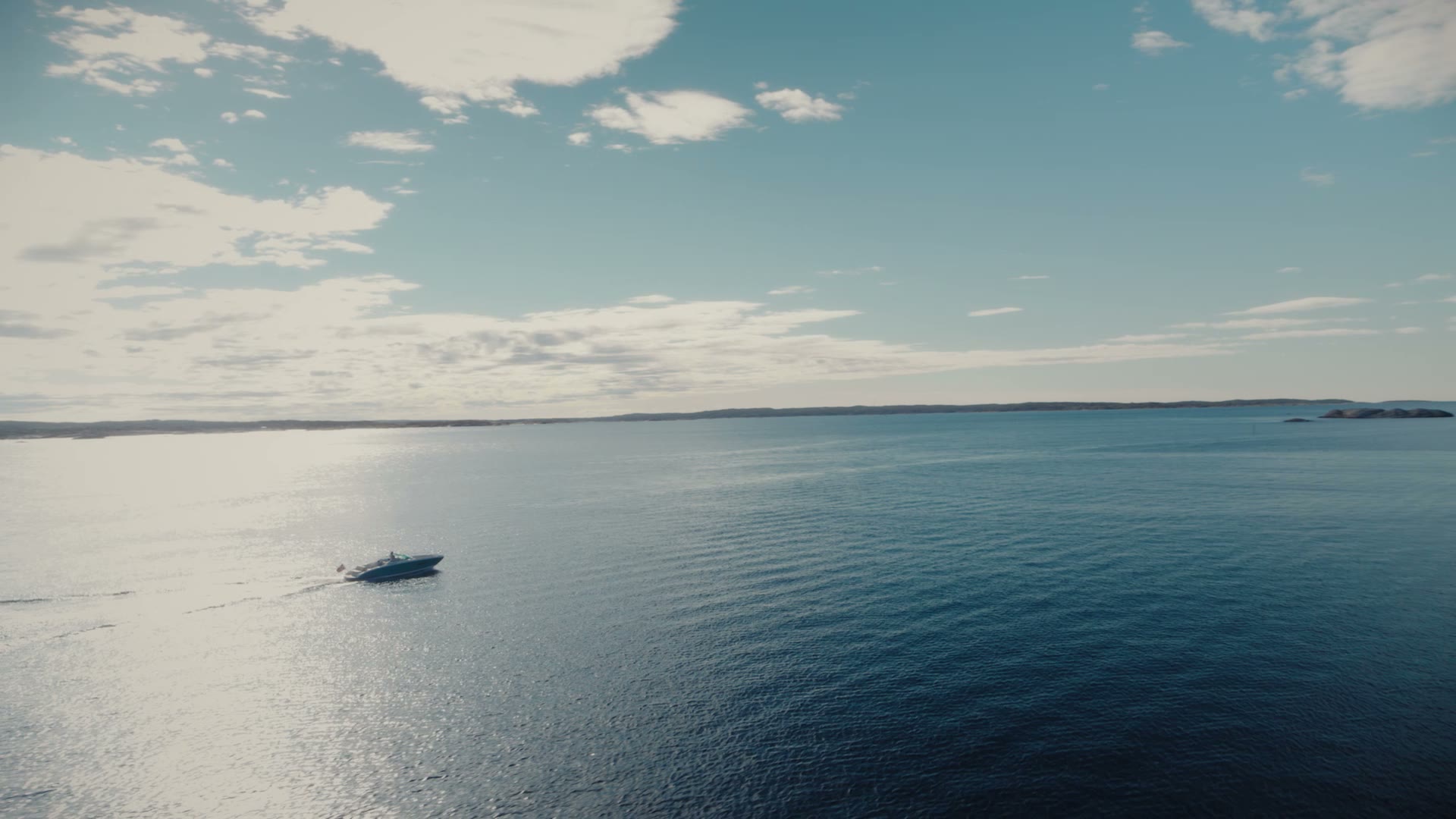
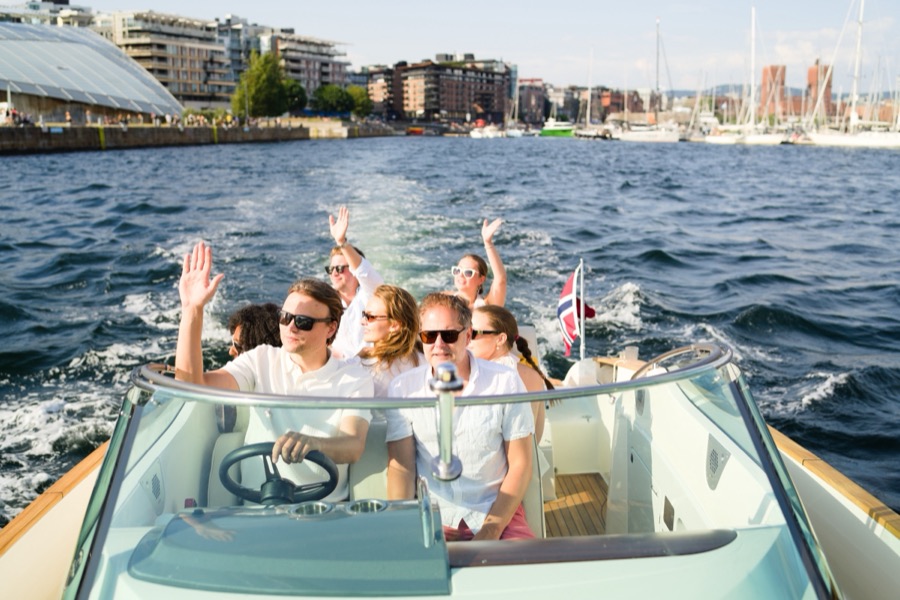
The view that explains the two-day split: the city from the water
Oslo in 2 days: how the split works
Day 1 is the land day: architecture in the morning, one museum, sculpture park or Bygdøy in the afternoon, dinner by the harbour. Day 2 is the fjord, by public ferry or private boat. If it rains on your planned fjord day, swap them. If it rains all weekend, there is a land version of the fjord day further down.
The itinerary assumes roughly May to September, when the island ferries run at full frequency and our own boat is on the water. A winter weekend is a different animal and gets its own section.
Day 1: the city on foot
Morning, from 09:00. Start on the Opera House roof. Snøhetta won the competition in 2000 and designed the building so that its sloping surfaces, laid in light Carrara marble and granite from Rennebu, rise straight out of the harbour (Store norske leksikon). Walking to the top is both permitted and the point. It is free and open around the clock, and the panorama covers the harbour, the Munch quarter and the fjord you will be on tomorrow. The house opened in 2008, took the culture prize at the World Architecture Festival that year and the European Union Prize for Contemporary Architecture, better known as the Mies van der Rohe Award, in 2009, and came in 300 million NOK under budget (Wikipedia on the Oslo Opera House). Norwegians bring up the budget more often than either prize.
From the Opera, walk up through the centre to Karl Johans gate, the main street running from the central station to the Royal Palace. The palace end is the better end.
11:00, one museum. Trying both in one day is how visitors lose a Saturday to queues and gallery fatigue.
| Museum | Adult | Under 25 | Open | Go for |
|---|---|---|---|---|
| MUNCH | 280 NOK before 18:00, 200 NOK after | 100 NOK | Sun to Tue 10–18, Wed to Sat 10–21 | The Munch collection, and late hours |
| The National Museum | 220 NOK | 100 NOK | 10–17, Tue and Wed to 20:00 | The painted Scream, and the breadth |
Prices and hours from MUNCH and the National Museum, checked 30 July 2026. Book a timed ticket in advance for MUNCH; the museum recommends it itself. Two things that save money or a wasted trip: MUNCH is free on Wednesday evenings from 18:00 to 21:00 outside July and August, and the National Museum opens on Mondays from 1 June to 31 August. What hangs on the National Museum's walls rotates, so if The Scream is the reason you are going, check the listing first.
Evening. Take the tram to Vigeland Park in Frognerparken. Gustav Vigeland spent decades on the 214 sculptures and more than 600 figures installed here, crowned by the Monolith: 17 metres of granite carrying 121 human figures (Store norske leksikon). Sinnataggen, the small furious boy stamping his foot, is the most photographed of the lot. The park never closes and costs nothing, so on a summer weekend it works best after the tour buses have left.
Or swap Vigeland for Bygdøy. If polar history pulls harder than sculpture, the museum peninsula takes an afternoon. The Fram Museum lets you board the actual polar ship Nansen and Amundsen sailed: adults 180 NOK, children and students 70, seniors 140, open 09:30 to 18:00 from May to September. The Kon-Tiki Museum next door holds the balsa raft Thor Heyerdahl crossed the Pacific on in 1947 and keeps the same summer hours. Bus 30 runs to Bygdøy from the centre year-round, and in summer a boat crosses from the piers in front of City Hall on the same Ruter ticket (check the route in the Ruter planner).
The Viking ship trap
The Viking Ship Museum on Bygdøy closed in 2021 and reopens as the Museum of the Viking Age in 2027 (Museum of the Viking Age). The Oseberg, Gokstad and Tune ships are off display in the meantime. Old guidebooks and a surprising share of current itineraries still send people out to see them, and what they find is a construction site.
If Viking artefacts are a reason you came, the Historical Museum in the city centre shows objects from the period. The new museum will justify a return trip: it will exhibit more than 5,500 objects from the Viking Age alongside the ships.
Day 2: the fjord
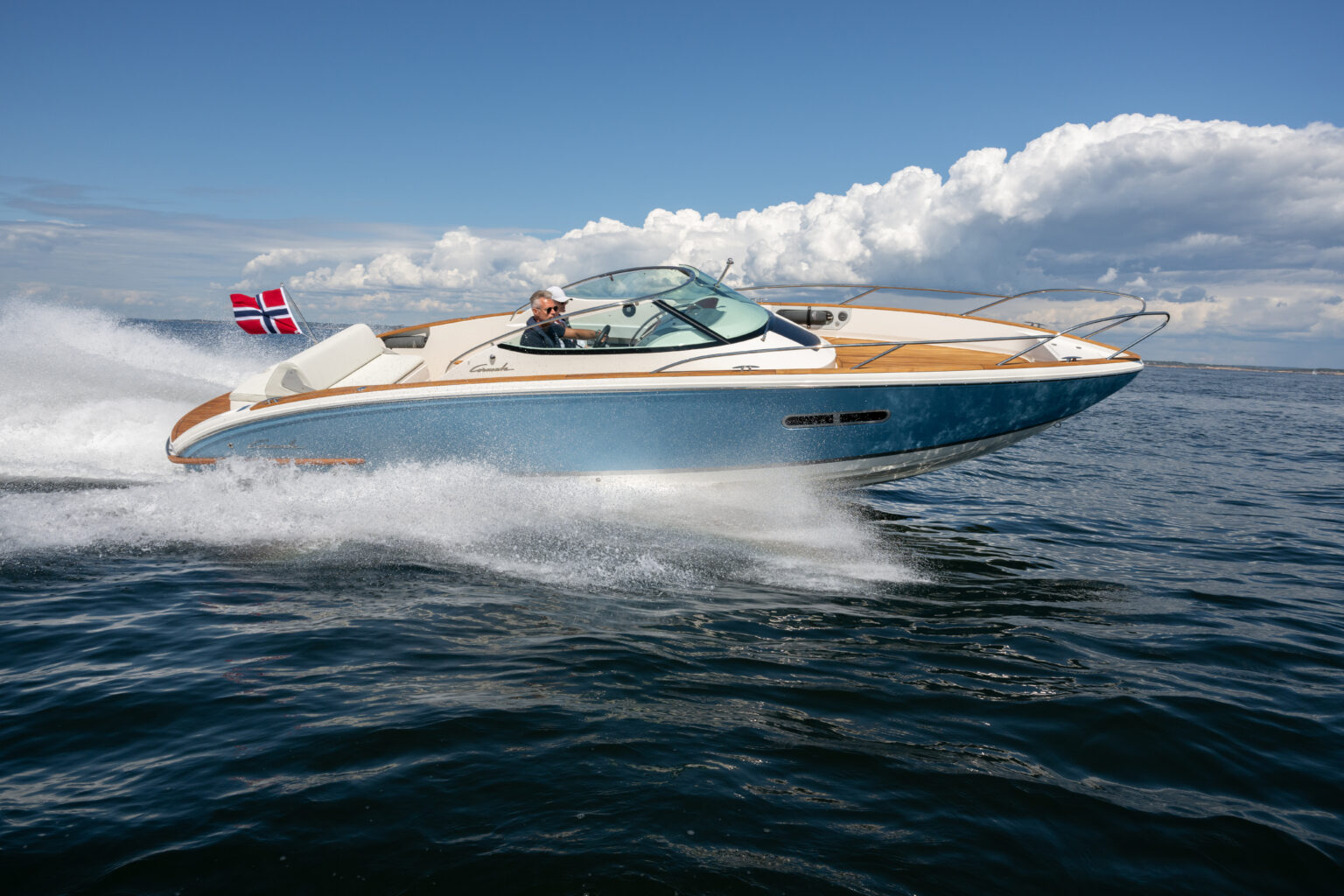
This is the half we know best. We run a private boat out of Tjuvholmen daily from May to September, and there are two good ways to spend the day, at very different prices.
By public ferry. The electric island boats leave from Rådhusbrygge by City Hall, listed in the Ruter app as Aker brygge, and your ordinary transit ticket covers them. Between 4 July and 30 August 2026 the lines divide up the islands as follows:
| Line | Serves | Crossing | Frequency |
|---|---|---|---|
| B1X | Hovedøya, direct | 8 min | Every 20 min in the daytime |
| B2 | Gressholmen, then Langøyene | 18 min and 28 min | Every 30 min |
| B1 | The full inner loop: Hovedøya, Lindøya, Gressholmen, Bleikøya, Nakholmen | 62 min round trip | Early morning and after 21:00 in this window |
That last row is the one to read twice. From 4 July to 30 August 2026 the B1 loop does not call at Hovedøya or Gressholmen between 10:00 and 21:00, which covers most of a visitor's day, so those two islands run on B1X and B2 instead (current boat timetable at ruter.no).
Hovedøya alone fills half a day: the ruins of a Cistercian monastery founded in 1147 (Store norske leksikon), flat swimming rocks on the western bays, and an easy walking loop around the island. There are live ferry times and practical notes for Hovedøya in our island reference. Our island hopping guide covers the routes stop by stop, and the islands guide covers what is on each one.
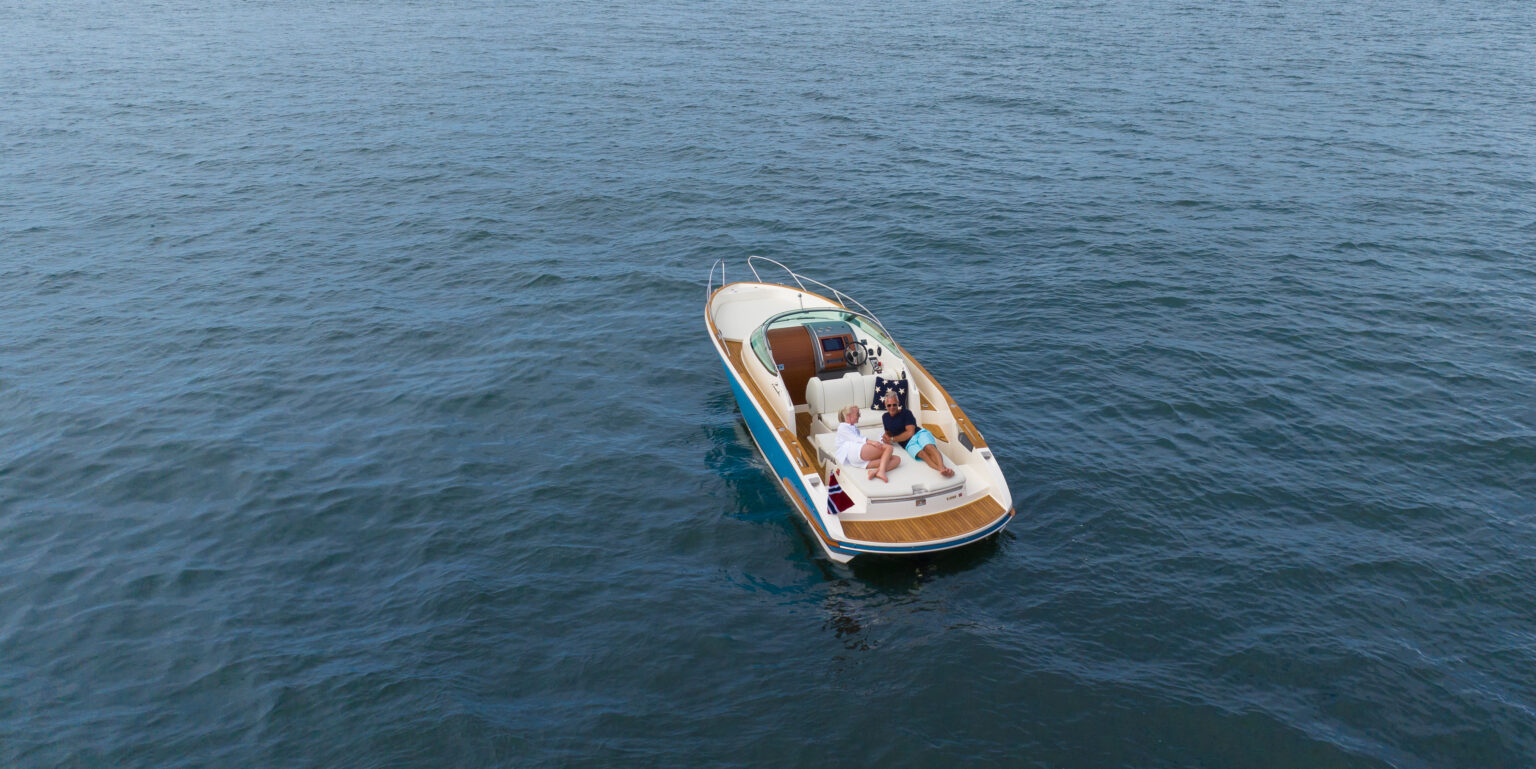
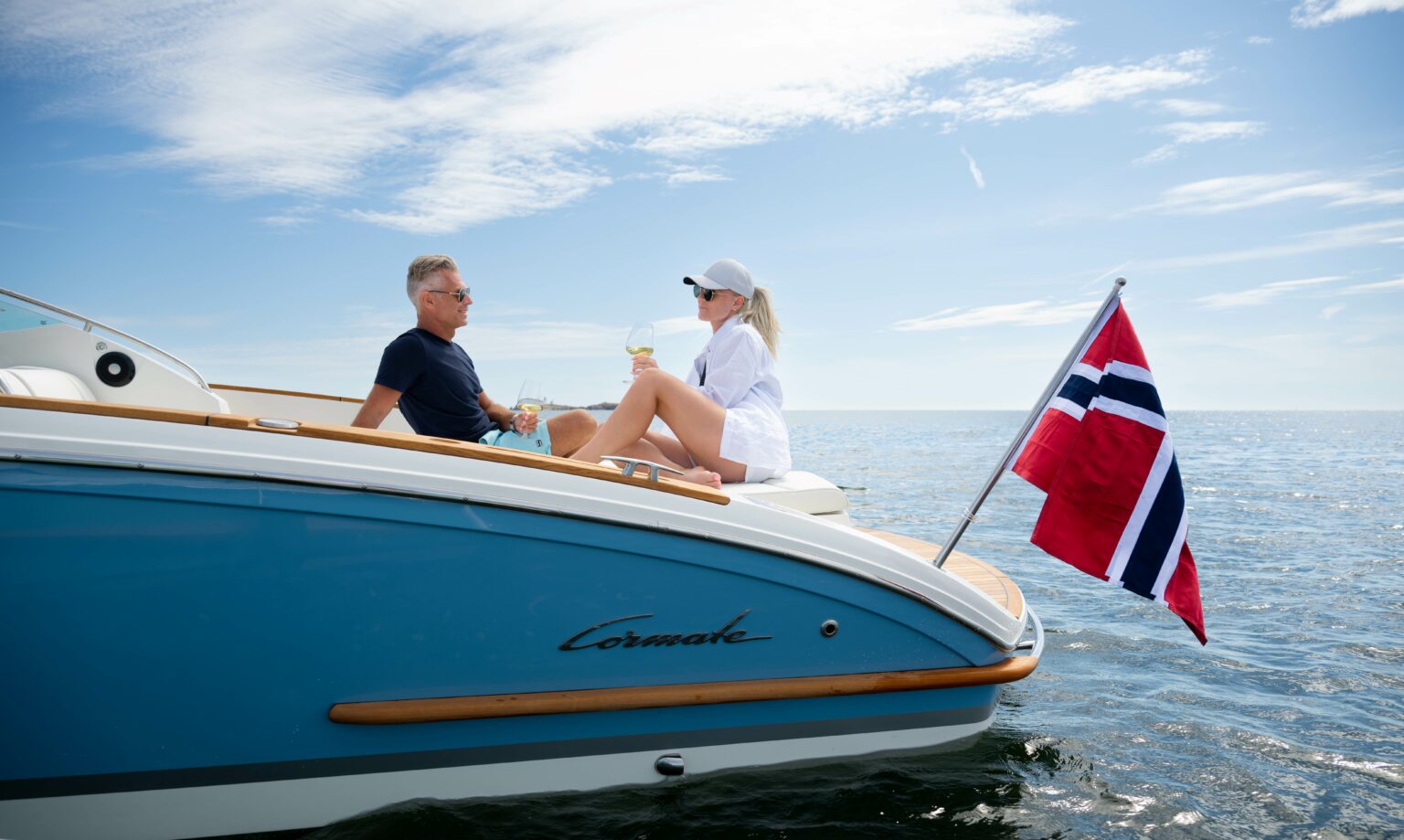
By private boat. The ferry runs its loop on a timetable, in company, and it does not anchor in the bay behind Gressholmen when the light is right. A charter does. Our three-hour private cruise takes up to seven guests for 16,688 NOK for the whole boat, departing from Tjuvholmen allé 14; three hours is enough for the monastery island, a quiet cove the ferries never enter, and Steilene, which no public route reaches. In summer the sunset version runs four hours for 20,048 NOK, and with June light lasting past 22:00 it doubles as the evening. Prices and dates are on our tours page.
The ferry is the right answer on a tight budget, and we wrote the guide to it. The charter is the right answer when the fjord day is the point of the trip.
If it rains
First move: swap the days. A wet Saturday is museum weather, and MUNCH's late hours absorb an entire grey afternoon.
If the whole weekend looks wet, or a boat is not your thing, the fjord day has a land version. Our See Oslo day is a chauffeured private day with a guide: the Opera House and the central landmarks, then up to Holmenkollen for the panorama over city, forest and fjord, and on into Nordmarka, ending at a lakeside camp in summer or a bonfire in winter. Half days start at 21,168 NOK including VAT and full days at 32,368 NOK, entrance tickets included. It runs year-round.
The self-guided version of the same idea costs a transit ticket. Metro line 1 from Nationaltheatret to Holmenkollen takes 23 minutes, climbing through the forest the whole way, and the ski jump's observation deck looks out over city, forest and fjord. The ski museum underneath it was founded in 1923 and is the oldest ski museum in the world, open 10:00 to 17:00 from May to September (Holmenkollen).
A summer weekend vs a winter weekend in Oslo
The two versions of this trip barely overlap.
| Early July | Mid-January | |
|---|---|---|
| Daylight | 18 h 41 min on 1 July, sunset 22:41 | 6 h 44 min, sunset 15:48 |
| The fjord | Island ferries at full frequency, our boat on the water | Boats ashore, ours included |
| What replaces it | Nothing needs replacing | Harbour saunas and the ski tracks above the city |
| Evenings | Light enough to stay out; the night never goes fully dark from mid-May to late July | Dark by late afternoon |
Sun times from the Norwegian Meteorological Institute. In winter the harbour saunas take over: KOK runs floating saunas at Langkaia by the Opera House and at Aker Brygge, and the sequence is heat, a short plunge into the fjord, repeat. Above the city, the groomed tracks of Nordmarka start at Frognerseteren on the same metro line 1, and Skiforeningen publishes the track reports. Our winter guide covers the fjord side of the cold months.
Both are complete trips in their own right, and they differ enough that a weekend in Oslo is really two separate trips wearing the same name.
What visitors regret on the flight home
Missing the fjord entirely. This is the most common one. The city exists because of this water, and plenty of two-day visitors never get past the harbour promenade. Even one ferry crossing fixes it.
Planning around the Viking ships. As above, the ships stay off display until 2027.
Losing a day to museum queues. Two big museums in one Saturday in high season, with no timed tickets, is how a day disappears. Pick one and book ahead.
Standing on the pier watching the wrong boat go past. In the summer window, B1 sails by Hovedøya without stopping. B1X is the one you want.
Discovering the ferry rule on the way home. The island ferries were covered by the transit ticket the whole time. Nobody told them.
Guests keep saving the fjord for Sunday afternoon, right before the flight. Do it Saturday. If the weather turns, you still have Sunday to swap; if it holds, you have spent the best day of the weekend on the water.
Whichever way the weekend falls, check the sunset time before you book dinner. On 21 June the sun goes down at 22:43, the Opera roof is open all night, and the walk up costs nothing.
Ferry seasons, timetables, fares and opening hours shift year to year. Everything above was checked on 30 July 2026; the linked sources carry the current version.
More from the fjord
Getting Married at Oslo City Hall, and the Afternoon After
Oslo City Hall marries couples on Wednesdays, Fridays and Saturdays in front of a Munch painting, 30 guests maximum. The paperwork, the costs, and the fjord after.
GuideThings to Do on the Oslofjord: Islands, Saunas, Seals and a War Story
Nine things to do on the Oslofjord: island hopping, swimming, saunas, fishing, seals, the Blücher story and a slow northern sunset. By ferry or private boat.
GuideViking Ship Museum in Oslo: Closed Until 2027, and What to See Instead
The Viking Ship Museum on Bygdøy is closed until November 2027. Where the Oseberg, Gokstad and Tune ships are now, and what to see in Oslo in the meantime.