
Two operators cover the inner Oslofjord, and they cover different halves of the job. Oslo Kayak Tours guides from Sjølyst Marina along the Bygdøy shoreline: two hours at NOK 900, three hours at NOK 1,050, May through September, no experience required. Mad Goats rents self-service sea kayaks off racks at Bjørvika and Tjuvholmen, and guides a two-hour tour of the central waterfront out of Tjuvholmen. Self-service rental requires prior experience and a signed self-rescue declaration. The three standard routes are the harbour loop past the Opera House (1–2 hours), the crossing to Hovedøya and back (3–4 hours), and the Bygdøy coast (5–6 hours).
A boat covers more water. Our fjord tours reach islands and coves in a fraction of the time a paddler needs, and if you have one afternoon in Oslo, that is the sensible way to spend it. What a kayak gives you instead is proximity. You see the barnacles colonising the fortress wall right at the waterline and you smell the seaweed warming on rock. When a fish turns ahead of the bow, you hear the splash before you see the ring.
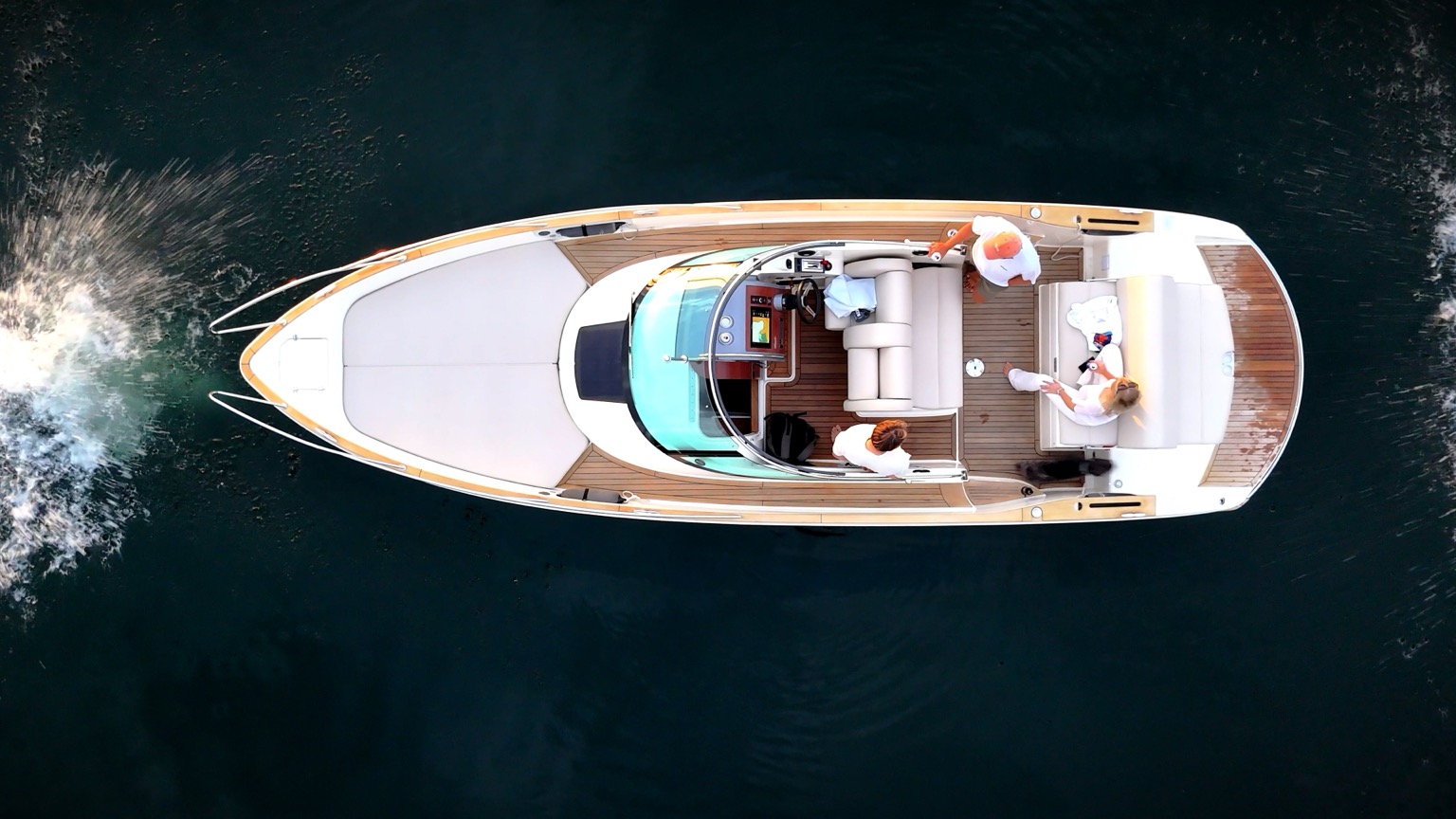
The same waters kayakers explore at a slower pace
The four routes
Inner harbour loop, beginner
The loop runs Opera House, Akershus Fortress, Aker Brygge, the Munch Museum and back, and takes two unhurried hours. This is the line Mad Goats' guided Fjord City tour follows out of Tjuvholmen, and it is the right first paddle for anyone who has not been on this water before. The basin is sheltered: Bjørvika sits behind the Opera House and the Sørenga blocks, which takes the edge off the prevailing westerly, and you never have to cross a shipping lane. The water is often calm enough that people stop paddling altogether and sit there looking up at the fortress walls from an angle no footpath in the city can give them.
Hovedøya and back, intermediate
Bjørvika out to Hovedøya, a beach stop and home again fills half a day. The crossing is roughly 800 metres of open water with ferry traffic running through it, so go at right angles, stay visible, and assume nothing under power will alter course for you. On the island, the eastern bays have flat rock, clear water and room to haul a kayak out. The monastery above those bays was founded in 1147 by Cistercian monks, plundered and burned by a Danish force in 1532, and later quarried for stone to build Akershus Fortress, according to Store norske leksikon. What is left is a low outline of walls in the grass, and you can walk it in twenty minutes.
The Bygdøy coast, intermediate
You head south along the Bygdøy shoreline, launching from Lysaker or Sollerudstranda if you bring your own boat. The guided version of this route belongs to Oslo Kayak Tours' three-hour trip, which leaves Sjølyst Marina, follows the peninsula, and rounds the island of Killingen when the weather allows. The western side of Bygdøy is open to the fjord, so conditions change quickly. Wind builds after noon, and a flat morning can turn into a headwind slog by two o'clock. The payoff is the shoreline itself: rock points, small sand bays, the royal estate at Bygdøy Kongsgård through the trees, and Huk at the tip.
Multi-island expedition, advanced
This one is self-guided through the inner archipelago: Hovedøya, Gressholmen, Bleikøya and perhaps on towards the Steilene. Reckon on a full day. It wants the skills a våttkort course teaches, proper safety kit, a VHF radio or at least a charged phone in a dry bag, and a forecast you trust. The distances are modest. Ferry traffic is constant and the wind funnels unpredictably between the islands, which is the part that catches people out, and I would not send anyone out here who has not paddled busy water before.
With those skills the archipelago opens up. You reach coves too shallow for any motorboat, land on rock where no ferry stops, and find beaches most Oslo residents have never seen. Sitting at water level with islands all around and the city reduced to a line on the northern horizon rearranges your sense of how big this fjord is.
Wind, wake and ferry lanes
Paddle in the morning. The harbour basin is sheltered enough for beginners in most conditions, but outside it the wind runs your day. The Oslofjord funnels southwesterlies up its length, and a summer afternoon can settle into a steady 10–15 knots that turns a pleasant paddle into work. Morning sessions, before the thermals build, give flat water and an easy way home. Check yr.no before you launch and take the answer seriously.
Ferry lanes are the other thing to respect. Island ferries, the Nesodden commuter boats and occasional cruise traffic all use marked channels through the inner fjord. Cross them quickly, at right angles, in a group where you can, and never paddle along one. The Nesodden boats move faster than they look from a kayak, and the wake alone can capsize a kayak caught broadside. Guided tours take all of this off your plate, since the guides know the traffic patterns and the sheltered shortcuts between islands.
What you see from water level
The fortress walls at Akershus rise straight out of the water, and from a kayak you look up at them the way someone arriving by rowing boat would have. The Opera House roof, a designed surface when you walk on it, reads as an ice shelf from the waterline. Distances stretch out. The city feels further off than it is.
Wildlife comes closer too. Eider ducks will paddle alongside you if you move slowly enough. Cormorants hold every available post and rock, wings out to dry in that cruciform pose. If you are quiet and lucky you may hear the short exhale of a harbour porpoise surfacing nearby. We see them from the boat regularly, and in a kayak you sit low enough and quiet enough that they do not always register you.
The jellyfish deserve a mention. Late summer fills the inner fjord with moon jellyfish, translucent and pulsing, drifting in slow clouds just under the surface. From a boat you barely notice them. From a kayak they are centimetres from the paddle blade, and watching them move is more absorbing than it has any right to be.
Who rents, and what it costs
Oslo Kayak Tours
The guided option, and by their own count they have taken more than 5,000 guests out on the fjord. Oslo Kayak Tours' two-hour trip leaves Sjølyst Marina on Mondays, Wednesdays and Fridays at 13:30 and costs NOK 900 for adults, NOK 750 for children aged 6 to 14, booked a day ahead. The three-hour trip runs daily at 10:00 for NOK 1,050 and NOK 850, takes up to 20 paddlers, and wants two days' notice. Both need a minimum of three people, so a solo traveller cannot turn up and join on the spot. The season is May through September, and equipment, safety briefing and route planning are included, along with the occasional retrieval of somebody's sunglasses.
Mad Goats
The self-service option. Kayaks come off a rack at Bjørvika (Opera Gata 49, beside the Munch Museum) and at Tjuvholmen (Lillestranden 10), unlocked with a code you get when you book. Rates in Mad Goats' booking catalogue started at NOK 199 and NOK 249 respectively when we checked in July 2026. Their third base, Nedre Foss Park on the Akerselva, is the meeting point for guided river trips and holds no rental rack. Lysaker is a paddleboard site, so kayaks come from Bjørvika and Tjuvholmen only. Their own pages disagree on that last point, since the våttkort page counts Lysaker as a third rental location while the rental page and the live catalogue do not, and we have gone with the catalogue.
Self-service means prior experience and self-rescue. You sign a declaration that you can get back into a capsized kayak unassisted in open water. If you cannot, their two-hour guided Fjord City tour from Tjuvholmen, from NOK 799, carries no such requirement.
The våttkort question
Norway has a paddling certificate called våttkort, earned on a course covering rescue technique, navigation and safety on open water. It is not a legal requirement. Mad Goats' own FAQ says as much: no government-issued licence is needed to kayak in Norway, but most rental providers will ask for the card before they hand over a single sea kayak. Mad Goats sell two versions, a two-and-a-half-hour introduction at NOK 995 and a two-day, twelve-hour beginner course at NOK 2,499, and it is the long one that earns you the right to rent from them afterwards. DNT Oslo og Omegn runs three-hour kayak courses at Sørenga, usually on weekday afternoons. For a single afternoon in the inner harbour, a guided tour covers you.
What to bring
On a guided tour you need nothing of your own. Kayak, paddle, spray skirt and life jacket are provided, dry bags for phone and camera too. Wear clothes you do not mind soaking and bring sunscreen.
For self-service rentals, sunscreen stops being optional. Reflection off the water adds real UV exposure on top of whatever you get from the sky, and people underestimate Norwegian summer sun at 60°N. Dress for the water temperature rather than the air temperature: if you go in, high summer means something like 17–20°C, so check the live Oslo sea temperature first. A thin base layer under a windproof shell handles most days. Bring water, because two hours of paddling in sun dehydrates you faster than walking does. Wear shoes that can get wet. You will step into ankle-deep water getting in and out, and a rocky launch in flip-flops is how people start a trip with a stubbed toe.
When to go
The paddling season runs May through September, which is also the window both guided operators work in, with early October as a shoulder for experienced paddlers. July and August are warmest and busiest. June has the longest light, sunset after 10pm, and a kayak at nine in the evening with the light going gold across the harbour belongs on any Oslo summer list. We run sunset cruises through the same evenings.
September is underrated. The water is still swimmable if you are not delicate about it, the crowds thin out, and the low autumn light hits the fortress walls and island shorelines at angles July never produces.
Where to put in
Bjørvika, at Munch Brygge, is the best launch in the city, and I would skip Tjuvholmen for a first paddle because it faces the open harbour and catches more chop. Bjørvika sits in the lee of the Opera House and the Sørenga development, which keeps the water flat even when the main harbour has whitecaps, and the Opera roof makes a better opening view than the back of a marina.
Once you are out, the shoreline is open to you. Allemannsretten, the Norwegian right to roam, covers undeveloped coast, which is why you can paddle up to an island, pull the kayak onto the rocks and walk around without anyone asking for a ticket. Norwegians file the whole business under friluftsliv, open-air living, and treat it closer to a civic habit than a hobby.
Kayak or boat
They answer different questions. A kayak gives you intimacy, quiet, and the satisfaction of moving under your own power. A private boat gives you range: three hours covers the inner islands, the outer archipelago and a swimming stop, where three hours of paddling gets you to Hovedøya and back. With one afternoon, take the boat. With two, do both.
Quick reference
| Operator | Option | Price | Experience needed |
|---|---|---|---|
| Oslo Kayak Tours | Guided 2 hr, Sjølyst Marina | NOK 900 adult / 750 child | None |
| Oslo Kayak Tours | Guided 3 hr, Sjølyst Marina | NOK 1,050 / 850 child | None |
| Mad Goats | Guided Fjord City 2 hr, Tjuvholmen | from NOK 799 | None |
| Mad Goats | Self-service, Bjørvika | from NOK 199 | Yes + self-rescue |
| Mad Goats | Self-service, Tjuvholmen | from NOK 249 | Yes + self-rescue |
| Mad Goats | Våttkort introduction, 2.5 hr | NOK 995 | None (it's the course) |
| Mad Goats | Våttkort beginner course, 2 days | NOK 2,499 | None (it's the course) |
| DNT Oslo og Omegn | Kayak course, 3 hr, Sørenga | See DNT | None (it's the course) |
If you want to swim mid-trip, the Hovedøya route is the one that allows it. Pull up on the eastern shore, stow the paddle and wade in off the rocks. It is the same tested fjord water the public beaches use, and our FAQ covers quality, temperature and safety questions.
Rent before 10am for the flat water and have the kayak back by one, before the wind builds. Bring sunscreen and shoes you don't mind soaking.
Rates, departure times and seasons belong to each operator and change. Checked against Oslo Kayak Tours and Mad Goats' booking catalogue in July 2026.
Kayak and private boat give you different things. In a kayak you get three metres from a cormorant drying its wings. On the boat you get range: Drøbak in three hours, swim stops between islands, the outer fjord at sunset. Pick by which one matches the day you want.
More from the fjord
Hiking in Oslo: The Forest at the End of the Metro Line
Four Nordmarka hikes with official DNT distances, forest lakes you can swim in, blue trail marks explained, and the 2026 metro closure at Sognsvann.
GuideOslo on Foot: Self-Guided Routes and Walking Tours
Four self-guided Oslo walking routes with real distances, how the tip-based free tours actually work, and when a private walk earns its price.
GuideFishing the Oslofjord: What You Can Catch, Where, and the Rules You Need to Know
Cod is fully protected and some zones are closed to all fishing. Here is what you can still catch in the Oslofjord, where, and the current rules.
See for yourself
Private Cormate T28 charter on the Oslo Fjord.
Up to seven guests. Fixed pricing. Departures from Tjuvholmen, Oslo.
Check pricing & availability