
An eFoil is a surfboard with an electric motor and a hydrofoil wing on a mast underneath it. Get enough speed and the wing lifts the whole board clear of the surface, so you ride above the water rather than on it, with no wave and no tow boat involved. On the Oslofjord you can try one at Oslo Efoil on Malmøya, a bridge-connected island a few minutes south of the city centre. Sessions run two hours with an instructor and cost roughly NOK 1,500 to 2,500 depending on group size (July 2026). No surf background is assumed.
The fjord suits the sport well: sheltered water, predictable wind, almost no swell inside the inner basin. The hard part is the first twenty minutes, and that is shorter than most people expect.
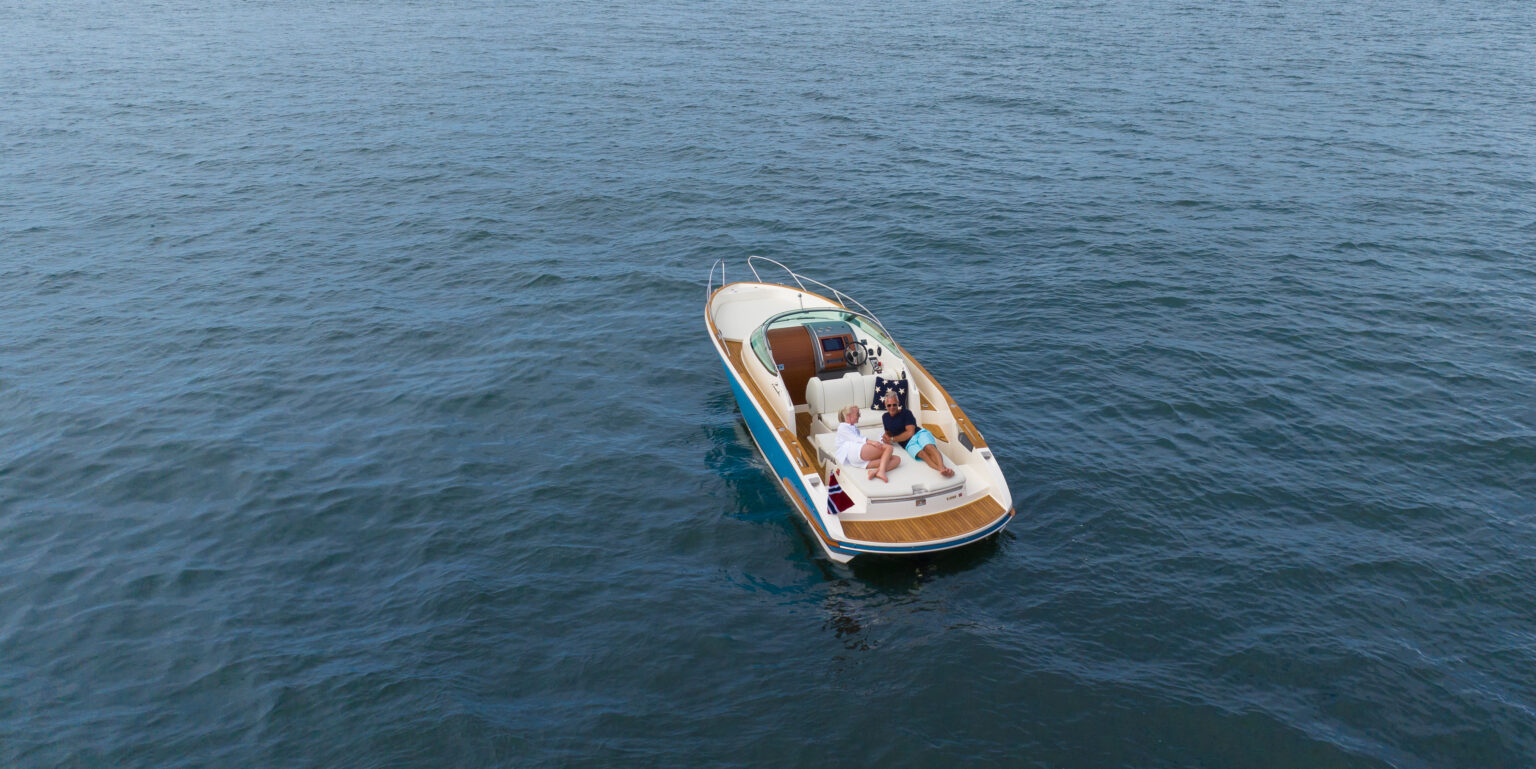
The flat fjord waters near Malmøya — perfect conditions for eFoil
What the board actually does
The name is short for electric hydrofoil. Under the board sits a mast, and at the bottom of the mast a wing and a sealed electric motor. A handheld wireless remote controls the throttle. As the board picks up speed the wing generates lift, and past a threshold the hull leaves the water entirely and you are balanced on the foil, 30 to 60 centimetres above the surface. Top speed is around 45 km/h; most people cruise at half of that and are perfectly happy there.
Nothing about it depends on waves or wind. The motor does the work, and what the board wants is what the inner fjord has on a still morning: flat water with very little current. Traditional foil sports need swell or a kite. This one needs a calm surface and some nerve.
It is also quiet. You are moving at speed and the only sounds are a hum from the submerged motor and the foil cutting through the water beneath you. There is no exhaust and no spray, and it sounds nothing like a jet ski.
Malmøya
Oslo Efoil operates from Malmøya, one of the inner Oslofjord islands, joined to the mainland by a short bridge, so you drive or take a bus rather than a ferry. Their own description is "just minutes from the city center", and for once that holds up: ten to fifteen minutes from downtown. The launch beach faces south across open water towards the outer islands, with Nesodden as a blue edge on clear days. Behind it there is a garden, a waterfront cabin and an outdoor jacuzzi.
The jacuzzi is a tactical move. You finish the session with tired arms and a half-peeled wetsuit, someone hands you a towel and points at a hot tub with a fjord view, and the afternoon extends itself by two hours.
The same site rents SUPs and kayaks and runs FliteScooter, wingfoil and wake surf sessions, plus guided coastal walks and a lobster safari. A group that splits down the middle between adrenaline and calm can put both halves somewhere.
The first twenty minutes
A board that flies above the water at speed sounds like something that takes a season to learn. It does not. Sessions at Oslo Efoil run two hours and open with a safety briefing and land instruction before anyone gets wet, and an instructor stays with you throughout. Most people get the board up onto the foil inside 20 to 30 minutes. "Getting up" is the phrase, and the moment is unmistakable: the drag vanishes, the board lifts, the noise stops, and you are moving in a way that resembles no other water sport.
You will fall in repeatedly. The water is 15–20°C in season (check the live Oslo sea temperature) and the session includes a full wetsuit, buoyancy vest and helmet, so the falls are warm enough and soft enough to stop being annoying somewhere around the third one. The remote has a dead-man switch: let go and the motor cuts, so the board stops where it is instead of leaving without you.
The requirement is that you can swim and stand on a board. If you are bringing teenagers, ask about the minimum age when you book.
Whether it suits you
Go if you are happy to be in and out of the fjord for two hours and find that funny rather than tiring. Getting up, falling off and climbing back on is real work for your legs and shoulders, and most people feel it the next day. Skip it if what you want is a calm hour on the water, in which case a kayak or a boat does the job better.
It also works well as the first half of a day rather than the whole of one. Two hours of foiling in the morning leaves plenty of afternoon.
What it costs
| Detail | Info |
|---|---|
| Operator | Oslo Efoil (oslo-efoil.com) |
| Location | Malmøya island, inner Oslofjord |
| Session length | 2 hours (briefing + water time) |
| Price range | ~NOK 1,500–2,500 (July 2026) |
| Season | Late May – September |
| Included | Board, wetsuit, vest, helmet, instruction |
| Experience needed | None; you need to be able to swim |
| Booking | oslo-efoil.com or +47 486 25 634 |
| Also on site | Jacuzzi, SUP, kayak, FliteScooter, wingfoil, wake surf, cabins |
Group and event bookings are available, and the beach and garden can host private gatherings, which makes a half day of foiling, grilling and jacuzzi a workable format for a stag party or a company outing.
When the fjord is best
The answer is calm mornings. The Oslofjord funnels southwesterly wind up its length, and on summer afternoons that wind builds enough chop to make foiling harder work than it needs to be. Before 11am the inner fjord is often glassy, particularly in the sheltered water south of Malmøya. We are out there most days on the boat and the pattern barely shifts: the water you want is the water at nine in the morning.
Mid-June to August is the core of the season. Late May works when the weather cooperates. September is possible if you accept a colder climb out of the water. June is probably the pick of it, with long light, water that has warmed up, and a fjord not yet full of weekend boat traffic.
Oslo has become good at this sort of thing generally. You can kayak the harbour and island circuit, swim from the islands, or take a private boat tour through the archipelago. Kayaking is slow and meditative, and a boat covers distance and history. The eFoil is the one that raises your heart rate without making any noise, which is a combination that ought not to work.
If you are planning a summer trip to the Oslofjord and want to fit in more than one thing, book the eFoil for nine, be back on land by eleven, and take a sunset cruise the same evening. That gives you two entirely different readings of the same water in a day.
Practical details
Book a few days ahead in peak summer. Oslo Efoil is a small operation and sessions fill, weekend mornings first. Weekday mornings are quieter on the water and easier to get into. Bring a swimsuit and a towel. Everything else comes with the session. If you wear glasses, ask about a strap, because the fjord does not hand spectacles back.
Getting to Malmøya by car is a straightforward drive south from the centre with parking near the island. By public transport, buses from the centre leave you within walking distance; check Ruter for current routes. The bridge means no ferry timetable to work around, unlike most of the other islands. The island guide covers the rest of the archipelago.
Water temperature, safety and what to expect on the fjord are covered in our FAQ, and if you would rather see the fjord without the learning curve, our fjord tours run all summer.
The first time the drag drops away and the board lifts and the surface of the Oslofjord starts sliding underneath you in silence, your brain takes about three seconds to accept that this is actually happening. Then you grin. Bring sunscreen and water shoes, and book the morning slot.
Prices, session lengths and opening dates are set by Oslo Efoil and shift with the season and group size. Confirm current rates and availability at oslo-efoil.com. Last reviewed: July 2026.
More from the fjord
Floating Saunas and Ice Swimming: Oslo’s Fjord Bathing Culture
KOK, SALT, Oslo Badstuforening — the complete guide to Oslo’s floating saunas and where to take your first cold plunge in the Oslofjord.
On the WaterKayaking the Oslofjord with Mad Goats
Self-service kayaks in central Oslo — three city bases, guided sea tours, and the Akerselva river route. What Mad Goats offers and what you should know first.
GuideHiking in Oslo: The Forest at the End of the Metro Line
Four Nordmarka hikes with official DNT distances, forest lakes you can swim in, blue trail marks explained, and the 2026 metro closure at Sognsvann.
See for yourself
Private Cormate T28 charter on the Oslo Fjord.
Up to seven guests. Fixed pricing. Departures from Tjuvholmen, Oslo.
Check pricing & availability