
The Oslofjord is open to boats year-round. On the winter solstice Oslo gets 5 hours and 54 minutes of sunlight; on the summer solstice it gets 18 hours and 50 minutes. Sea temperatures run from about 2°C in February to 17–18°C in July and August, warmer in the sheltered bays. Peak swimming season is mid-June to mid-August, with May and September as the quiet shoulder months.
Oslo sits at 59.9 degrees north, a degree and a bit south of Anchorage, Alaska. The day length swings by nearly thirteen hours across the year, and the wildlife changes with it. What follows is the whole year in one table, then a short section on each month covering what is actually different about it.
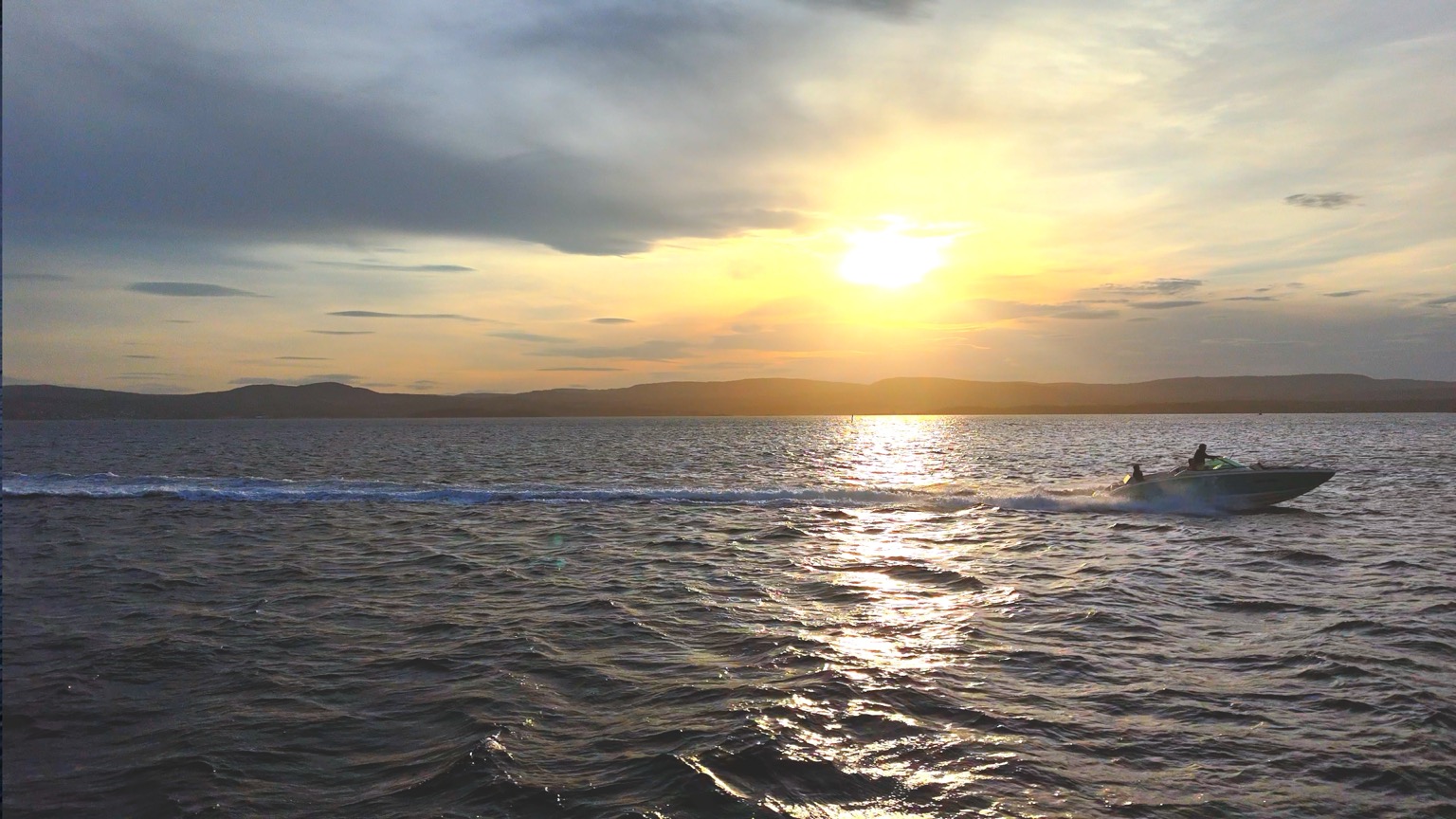
The Oslofjord at golden hour — a sight that changes with every season
The year in one table
| Month | Air, low to high (°C) | Sea (°C) | Sunrise–sunset, 15th | Daylight | Rain (mm) | Wet days | Crowds |
|---|---|---|---|---|---|---|---|
| January | −4.7 to 0.1 | 3 | 09:03–15:49 | 6h 45m | 57.9 | 10.1 | Very low |
| February | −4.7 to 1.1 | 2 | 07:54–17:07 | 9h 13m | 44.6 | 8.0 | Very low |
| March | −2.1 to 5.3 | 3 | 06:33–18:18 | 11h 45m | 41.4 | 7.3 | Low |
| April | 2.1 to 11.0 | 5 | 05:59–20:34 | 14h 34m | 48.3 | 7.9 | Low |
| May | 6.8 to 16.7 | 9 | 04:39–21:47 | 17h 08m | 60.1 | 9.1 | Moderate |
| June | 10.8 to 20.4 | 14 | 03:54–22:40 | 18h 47m | 79.7 | 10.0 | High |
| July | 13.4 to 22.7 | 17 | 04:22–22:23 | 18h 02m | 86.7 | 11.2 | Peak |
| August | 12.5 to 21.3 | 18 | 05:32–21:10 | 15h 38m | 102.7 | 11.3 | High |
| September | 8.6 to 16.4 | 15 | 06:45–19:39 | 12h 54m | 82.2 | 9.2 | Moderate |
| October | 3.8 to 9.6 | 11 | 07:56–18:08 | 10h 12m | 93.4 | 10.6 | Low |
| November | 0.0 to 4.4 | 7 | 08:14–15:48 | 7h 34m | 84.6 | 11.2 | Very low |
| December | −3.7 to 0.9 | 4 | 09:13–15:10 | 5h 57m | 53.6 | 10.0 | Very low |
Air temperature, rainfall and wet days are MET Norway's 1991–2020 climate normals for Oslo (Blindern), published through Seklima. Sunrise, sunset and day length are calculated for the 15th of each month at Oslo's latitude and given in local time, so they shift by up to half an hour across a month. Sea temperatures are seasonal averages. For the reading on the day you sail, check Yr's sea-temperature page for Oslo. Crowd levels are our own, from running the fjord.
January
The sun rises after nine and sets before four. At New Year it climbs barely seven degrees above the horizon at midday, nine by the middle of the month, so the light never loses that low, golden quality. On a clear January day the fjord reads as amber and slate: long shadows on the water, warm tones on every surface, and no sun high enough to flatten any of it. Oslo gets 47 hours of sunshine in an average January, the lowest of any month except December.
The inner fjord can ice over. Sheltered water near Bunnefjorden and between the inner islands freezes in cold winters, helped along by a layer of brackish surface water sitting on denser salt water below. In December 2025 harbour porpoises were caught by ice forming across Bunnefjorden and the fire and harbour services turned out. The outer fjord, deeper and open to North Sea water, almost never freezes. Oslo police warn people off fjord ice for good reason: the thickness is unreliable.
Overhead, white-tailed eagles are easy to pick out against a bare winter sky. It is Norway's largest raptor, 76 to 94 centimetres long with a wingspan of 200 to 240 centimetres, and it breeds along the coast all the way in to the Oslofjord (Store norske leksikon). Eider gather in sheltered bays, seals haul out on rock and ice edges, and harbour porpoises stay in the fjord all winter.
Boat tours run on short schedules dictated by the daylight window. The islands are empty. Ice swimming and the floating saunas along the Oslo waterfront are in full season.
February
February has the same average low as January, −4.7°C, and the fewest wet days of any month at eight. It is not the driest month by volume. March takes that, at 41.4 mm against February's 44.6. What February gives you is a better chance of high pressure, still air and the hard, crystalline light that photographers come north for.
The water bottoms out at around 2°C and ice extent peaks. The days, though, are moving fast. By 28 February Oslo has 10 hours and 24 minutes of daylight, four and a half hours more than on the shortest day, and you feel every minute of it.
Eider courtship starts this month. The males, black and white with a green nape patch, begin their deep cooing calls, one of the characteristic sounds of the fjord in late winter and audible from shore. Goldeneye, a winter visitor, dive for molluscs in the sheltered inner water. Almost nobody else is out there.
March
The equinox falls on 20 March and the fjord comes back into balance, twelve hours of light against twelve of dark. Oslo gains about five and a half minutes of daylight a day through March, which is enough to notice from one week to the next, and sunshine hours nearly double from February's 77 to 144. Highs still only reach 5.3°C, so it is not warm, but the settled freeze of midwinter has gone out of the air.
The first oystercatchers arrive late in the month and announce themselves from every shoreline. White-tailed eagle pairs, which stay together for life, start laying. The birds you see over the fjord now are the tail end of one of Norwegian conservation's better results: the white-tailed eagle was given full protection in 1968, the last country in western Europe to do so, and the national population went from around 400 pairs in 1975 to an estimated 2,800 to 4,200 pairs by 2015 (Store norske leksikon).
March is a month for walking rather than swimming. The island paths are empty and the evenings are getting long enough to reward the trip out.
April
The trees on the inner islands start leafing out, tentatively at first. By late April Hovedøya (HOO-ved-oy-ah) and Gressholmen (GRESS-hol-men) are going green, sunset has moved past half past eight, and daylight is up to fourteen and a half hours.
Eider begin nesting on the islands, the females plucking their own down to line the nest. Oystercatchers stake out territory along the rocks. Migrants arrive weekly from the south, and the eagles are incubating.
This is the first month the fjord feels properly open to visitors who are not winter-hardened locals. Boat tours are comfortable with the right layers, the island ferries move to spring schedules, the kayak operators start up, and you get the islands almost to yourself.
May
May is when the fjord starts doing its best work. Seventeen hours of daylight by mid-month and the sun down after ten by the end of it. The islands are fully green, wildflowers are out on Hovedøya, and Oslo logs more sunshine hours in May, 251, than in any other month of the year.
The water is still cold at around 9°C, which keeps all but the committed out of it. Everything else is close to ideal: long days, calm conditions, and clear light without the haze that can settle in midsummer.
Then there is 17 May. Constitution Day fills every street in Oslo with children's parades, brass bands and families in bunad. From the water you get a different angle on it: the harbour lined with flag-waving crowds, the fortress guns firing the salute, marching bands carrying out across the fjord. Adrian took a group out during the parade last year and the guests said it was the best day of their trip.
Terns arrive and start breeding on the outer islands. Porpoise activity picks up as prey fish move in. Look for the small triangular dorsal fin on calm days, particularly in the outer fjord and around Drøbak Sound.
June
On the solstice, 21 June, the sun rises at 03:53 and sets at 22:43. That is eighteen hours and fifty minutes of direct sunlight, and it understates what actually happens, because at this latitude the sun only reaches about 6.6 degrees below the horizon at midnight. Civil twilight never ends. The sky holds a pale blue-white glow all night, the hvite netter, and you can stand outside at midnight and read.
Two days after the solstice comes Sankthans, 23 June. Bonfires go up on the islands and along the shoreline, and from a boat you can see them flickering on Hovedøya, on Langøyene (LANG-oy-en-eh), on headlands up and down the fjord. The tradition is older than the city. One Sankthans a few years back we counted eleven fires from the water, and the smell of woodsmoke drifting across a still fjord is about as Norwegian as an evening gets.
Biologically this is the busiest month. Seal pupping starts on the sheltered skerries, the bird colonies on the outer islands are at full volume, mackerel arrive, and eagles fish the open water. Jellyfish arrive with everything else, the lion's mane included, which is worth knowing before you get in at 14°C.
July
July is when Oslo turns unexpectedly Mediterranean. The average high is 22.7°C and heat waves push well past 30°C. Surface water reaches 17°C and more, and the sheltered shallows around Langøyene run warmer still. Warm enough that you forget you are swimming in a Scandinavian fjord.
The islands are full. Langøyene, which has the inner fjord's campsite, fills with tents and barbecues across its grassy slopes, and on warm weekends the morning ferries to Hovedøya are standing room only. Many Norwegians leave for their cabins in July. The space they vacate is taken by international visitors and by Danes and Swedes who have worked out what Oslo is like in high summer.
Eider ducklings appear on the water in crèches, several exhausted females pooling their young while they recover from fasting through incubation. Mackerel schools pull porpoises, and occasionally dolphins, deeper into the fjord. On warm, still nights Noctiluca scintillans can light the water blue-green where it is disturbed, which is rare and unpredictable and unlike anything else out there.
July averages 11.2 days with rain, a hair behind August. It rarely reads that way, because the rain arrives as afternoon showers rather than grey drizzle.
August
Something shifts in August. The water is at its warmest, 18°C on average and warmer in sheltered bays, and the weather is often as good as July. The light is what changes. Sunset pulls back to 21:10 by mid-month and the sun angle drops, so the golden hour arrives earlier and burns harder. The fjord takes on evening colours that July never quite manages.
August is the wettest month of the year, 102.7 mm against July's 86.7, but it comes down as warm showers and thunderstorms. An afternoon downpour often clears into exactly the kind of evening that keeps photographers out until the last light.
For marine mammals this is the best month of the year. Harbour seals moult from mid-August into September and spend more time hauled out on rock, which makes them easier to find than at any other time. Porpoises are at their most visible in the inner fjord. Dolphins are likeliest now, following the mackerel: in early August 2019 at least fifty white-beaked dolphins moved into the inner Oslofjord, seen in Bunnefjorden and off Holmen and Hvalstrand in Asker.
The crowds thin noticeably after the first week, which is the real argument for August. Hovedøya in the middle of the month is a different place from Hovedøya in mid-July.
September
September surprises people. The water is still around 15°C, six degrees warmer than May, and swimmable for anyone reasonably confident. The sea holds its summer heat long after the air has cooled, and on still mornings that produces mist lifting off the water with the islands emerging through it.
Birch and aspen on the islands start to turn, yellow first, then amber and rust, against the dark green of the pines. The sun sits low enough that even midday has warmth in the tone of the light, if not the temperature.
Seal moulting continues. Terns head south, wader migration passes along the shores, and the bird life shifts from breeding to movement. Porpoises stay put.
Most operators are still running, including the island ferries, and the crowds have gone. If May is the overlooked shoulder month before summer, September is its counterpart afterwards, and the warmer water makes a case for it.
October
October is dramatic. Daylight drops by more than five minutes a day and the weather swings between still golden afternoons and the first proper autumn storms. When a storm comes through, the fjord changes character completely: dark sky breaking into shafts of light, wind tearing at the surface, water piling against the skerries. On the calm days between, with cold clear air and a low sun, the fjord produces some of its best light of the year.
Sea duck numbers build as winter visitors come down from the north. Goldeneye and long-tailed duck appear in the inner fjord. Lobster season traditionally opens in October where fishing is still permitted, but the Oslofjord now runs under a cod ban and three areas closed to all fishing, so check the current Oslofjord fishing regulation before you drop a pot or a line. Our fishing guide sets out the rules paragraph by paragraph.
Kayak and paddleboard operators close for the season, boat tours move to reduced schedules, and the floating saunas open for winter.
November
November is the month Norwegians endure rather than celebrate. Seven and a half hours of daylight, much of it under cloud, 51 hours of sunshine in the whole month, cold raw air and the first sleet. The fjord empties of boats and people.
The emptiness is the draw for a certain kind of visitor. City lights on still dark water, a white-tailed eagle against a steel sky with nobody else out looking at it. What remains in November is water, rock, sky and whatever wildlife is tough enough to stay: seals at the haul-out sites, eider flocks in sheltered bays, sea ducks well established. With the summer vegetation and the summer crowds gone, every animal you do see stands out.
Ice swimming and the floating saunas are in full swing. Boat tours are rare rather than impossible. The daylight window is the constraint.
December
The shortest day falls on 21 December: 5 hours and 54 minutes between sunrise at 09:18 and sunset at 15:11. The sun reaches less than seven degrees above the horizon at noon, and the light it produces is golden and almost horizontal, painting every surface warm while the temperature sits below freezing. Photographers call it the infinite golden hour, because the sun never climbs high enough to end it.
Ice starts forming in the sheltered inner fjord. Drøbak, Norway's Christmas town, keeps a permanent post office for letters to Santa and gets mail from all over the world. City lights come off the dark water, and snow on the islands rearranges everything you thought you knew about them.
Seals and eider hold in sheltered bays, eagles work the winter sky, and the porpoises stay, as the Bunnefjorden ice incident that December made plain. The winter fjord is quieter than the summer one and it is far from empty.
What to wear, by season
Four answers cover twelve months, and the one thing they share is that wind chill on a moving boat drops the felt temperature by five to eight degrees. Whatever you would wear on shore, add a windproof layer for the water.
December to March. Insulated jacket, thermal base and mid-layers, a hat that covers the ears, lined gloves, waterproof boots, and a scarf or balaclava for longer trips. Hand warmers earn their pocket space. Clear winter days are the trap: the sun feels warm on your face while the wind off the water sits near freezing.
April and May. Warm layers under a windproof shell. Gloves and a hat still make sense for morning and late-afternoon trips. Rain gear is sensible, and sunglasses and sunscreen matter more than people expect, because the low northern sun hits your face directly for hours.
June to August. Light clothing on shore, windproof jacket on the boat, swimsuit, factor 30 sunscreen reapplied after swimming, shoes with grip for wet decks and rocky paths. Add a light rain jacket in August for the afternoon showers.
September to November. Warm windproof layers with a fleece or down mid-layer, hat and gloves for early mornings, waterproof boots. If you plan to swim in September, have a towel and dry clothes waiting.
When is the best time to visit?
It depends what you are after, and the honest answer is that the fjord suits different people in different months.
Swimming and warm weather: July and early August. Water above 17°C, long days, everything open, and the crowds that come with all of it.
Wildlife: August and September for marine mammals, May through July for the full range of breeding birds. White-tailed eagles are there all year.
Fewer people, good conditions: May and September. September has the warmer water; May has the longer days.
Photography: October and November for storm light, December through February for the winter golden hour, June and July for the long evenings.
A fjord nobody else is on: January and February, if the cold does not put you off.
Practical information
Getting to the water
Oslo's waterfront is walkable from the city centre. The Ruter ferry terminal at Aker Brygge serves the inner-fjord islands on a normal transit ticket, with fewer departures in winter than in summer, so check Ruter for current routes and fares. Private boat tours generally leave from Tjuvholmen marina, five minutes' walk away. The harbour promenade runs unbroken from Sørenga in the east to Tjuvholmen in the west. For orientation, start with what the Oslofjord actually is.
Weather forecasts
Use yr.no, the Norwegian Meteorological Institute's forecast service and the one every local checks. Read the wind forecast alongside the temperature. Wind matters more than rain for comfort on the water.
A note on the normals
Every climate figure in the table above is a 1991–2020 average, which means it describes the recent past rather than the day you arrive. Summer surface water in the low twenties has turned up more than once in recent years, winters with substantial fjord ice are getting rarer, and the comfortable touring season is reaching into months that used to be reliably cold. Check the live sources before you pack.
Climate figures are MET Norway 1991–2020 normals for Oslo (Blindern) via Seklima; sea temperature and forecasts from Yr. Last reviewed: 30 July 2026.
Twelve months, twelve different fjords
The Oslofjord in January, six hours of amber light and ice around the skerries, has almost nothing in common with the Oslofjord in July, sun past ten and every island full of swimmers. Same water, and both are worth the trip.
We run tours on the fjord from spring through autumn, and no two months feel alike. For more on how each season reads from the water, see our guides to summer on the Oslofjord and the complete islands guide, or check VisitOslo and start planning.
In May the islands are greening but the water is still eight to ten degrees, too cold for most people. June gives you the longest light and July the warmest water, and by August the crowds have thinned out. September is my own favourite: the colour holds, the fjord empties, and you can still swim into the second week.
More from the fjord
Oslo in Summer: What the Locals Actually Do
Island ferries for 42 kroner, 23°C swimming coves, floating saunas and 18-hour days: how Oslo actually spends its summer, month by month.
GuideOslo in Winter: What's Open, What's Worth It, and How Dark It Really Gets
Around six hours of daylight, sledding from the metro, free skating at Spikersuppa and the exact days Oslo closes for Christmas. November to March, honestly.
GuideRain on the Oslofjord: Will the Cruise Still Run?
Rain alone does not stop an Oslofjord cruise. Wind, swell, and lightning do. The weather criteria, when we reschedule, and how the boat handles a wet day.
See for yourself
Private Cormate T28 charter on the Oslo Fjord.
Up to seven guests. Fixed pricing. Departures from Tjuvholmen, Oslo.
Check pricing & availability