
We already have a general guide to porpoises in the Oslofjord. This one is narrower: where exactly do we see them from the boat, and what is it about those particular stretches of water?
What is known about the numbers
There is no count for the inner Oslofjord. The nearest figure is regional. Havforskningsinstituttet works with about 14,000 animals from the Oslofjord and southward through Skagerrak, taken from an international survey published in 2023, and writes that the porpoise occurs regularly in the fjord without its movements here being well mapped. Across European water as a whole, SCANS-III arrived at roughly 467,000 in the summer of 2016.
Counting them by eye does not work: they are up for a second, they make no splash, and the fin is about the height of your hand. Since 2023 the institute has run six listening buoys in and around Raet national park on the south coast, logging echolocation clicks to establish relative numbers through the year and where the animals hold. Nothing like it has been done inside the Drøbak narrows, so what we have for the inner fjord is what the boats see. What the boats see is consistent: the same handful of places, season after season.
The five places I watch for them
After six seasons working this fjord, here is where I actually look.
1. Drøbaksundet
The narrows sit just south of Oscarsborg, where the fjord pinches to its tightest point and, in the same place, its shallowest. The Drøbak sill carries 19 metres of water, and everything behind it renews slowly because of that. Current pushing over the sill concentrates herring and sprat in a small volume, and the porpoises work them there, most often in summer. If I am going to see one on an inner-fjord trip, it is usually right at that passage.
2. East of Nesoddtangen
Bunnefjorden runs down the east side of the peninsula, and the trench off Svartskog drops to 154 metres. A sill of roughly fifty metres between Bygdøy and Nesodden closes that basin off from Vestfjorden. Porpoises surface in ones and twos along this line, usually in the morning and evening feeding windows.
3. The Steilene basin
The Vestfjorden basin drops to 164 metres north of Fagerstrand, down the coast from the Steilene lighthouses. I have seen a pair rolling past the lighthouse on a dead-calm August morning, outlined by their own ripples, thirty metres off the bow. It is also the stretch where a wandering harbour seal occasionally turns up on the rocks.
4. The Hovedøya, Gressholmen and Lindøya triangle
This water is shallower than the others and still productive. The channels between these three inner islands hold summer herring shoals, and porpoises move in to hunt them. Not every day; you need calm water and the right time.
5. Dyna fyr and the Bygdøy sound
Dyna is the small lighthouse off the western entrance to Oslo havn, lit in 1874. There is current through the sound and small fish gather in it. Porpoises turn up here occasionally. It is less reliable than Drøbaksundet, but close enough to the city that a morning coffee with binoculars on Bygdøy beach has produced sightings.
The kind of calm morning water where a porpoise roll is visible at distance
When to look
The two windows are early and late, and calm water matters more than either. Herring and sprat rise from depth as the light goes and drop back at sunrise, so the porpoises feed before 08:00 and again from around 17:00, and midday is the worst time to look. A porpoise breaks the surface for less than a second and rolls with almost no splash, which means any chop hides it completely. The best sightings come on the days that look least promising from shore: overcast, windless, the water gone glassy. June through September is the core season, when the prey fish move into warmer shallow water and the porpoises follow them in. I see them less often in midwinter, though they are still here.
What to look for
A porpoise surface event lasts about one second. What you see is a small dark back rolling forward through the water, a brief grey arc, and a tiny triangular dorsal fin. Then they are gone. At close range you hear the exhale, a sharp puff, and that sound is what the Norwegian name is built from: nise, from Old Norse hnísa, to sneeze or snort, according to Store norske leksikon. English went by looks instead, through the French porc poisson, pig-fish.
They do not leap, bow-ride, or jump clear of the water. If something is jumping out of the water in the Oslofjord, it is a dolphin (rare here) rather than a porpoise.
The tell when you are in the right place: you will see one surface roll, and then nothing. Fifteen to twenty seconds later, a second roll, fifty to a hundred metres from the first. That is a single porpoise travelling in a straight line underneath you. Wait, and another will appear.
Why they are still here
The inner Oslofjord has been through almost every insult humans invent: untreated sewage, industrial heavy metals, the cod stock collapsing to near zero, decades of shipping noise. Somehow the porpoises stayed.
Part of the answer is the menu. Havforskningsinstituttet lists a long roll of prey that shifts by region: capelin in the far north, herring and sprat along the Skagerrak coast, plenty of bottom fish over in the Kattegat. Herring and sprat stayed in the inner fjord through everything the cod did not survive. The other part is the shape of the seabed. The deep basins in Vestfjorden and Bunnefjorden hold quiet water off the busiest lanes, and porpoises echolocate at 130 kHz, far above the low rumble of a diesel. They can hunt in traffic as long as the fish are there.
The grim arithmetic
The biggest threat to Norwegian porpoises is gillnet bycatch. Havforskningsinstituttet's own calculation, published in 2020, put the average at 2,871 drowned porpoises a year in Norwegian nets, with individual years running from under 2,000 to over 4,000 depending on how much gear is in the water; the monkfish fishery accounts for a large share. Store norske leksikon gives a lower number, around 1,600, counting only large-mesh nets. For a small group of animals inside the Drøbak sill, one bad season would show. Commercial cod fishing has been closed across the Oslofjord for years, and the fishing regulation now in force (2026–2035) bans cod fishing from Telemark to the Swedish border and adds year-round no-fishing zones in the inner fjord, at Færder and at Hvaler. Fewer nets in the water is the one pressure on these animals that has eased.
If you want to see one
From land, Drøbak harbour on a calm summer morning is your best free option. Look across the narrows with binoculars.
From the water, your odds improve a lot. A sunset cruise in summer catches the late-afternoon feeding window and reaches both the Steilene basin and the Drøbaksundet approach. It is the tour that most often produces a porpoise sighting for us. A full-day cruise gives you enough range to wait through the dead midday and return to the evening window with coffee still warm.
There are no guarantees. Wildlife is wildlife. But the porpoises are here. Of the six seasons I have worked the Oslofjord, I have had porpoise sightings in five of them. The sixth was just unlucky timing.
One last thing. From where you stand the porpoise is silent: it surfaces, rolls, disappears. From where it swims, the fjord is a stream of returning echoes at 130 kHz, off hulls and mooring chains and the swim bladders of herring. It is locating its dinner, and the boat you are standing on, by listening to its own clicks come back.
Figures here come from Havforskningsinstituttet, the SCANS-III survey and Store norske leksikon, and the fishing rules change. Check the linked sources before relying on a detail. Last reviewed July 2026.
Idle the engine inside Steilene around slack tide and listen. The exhale is a sharp puff, closer than you expect. The inner fjord is small enough that the same patches keep producing week after week: Drøbaksundet, the Steilene basin, the channels east of Nesoddtangen.
More from the fjord
Whale Watching in Oslo: What Actually Swims in the Oslofjord
No whale safaris run from Oslo. What the fjord actually holds: harbour porpoises year-round, seals on the skerries, and the documented whale visits of 2003–2025.
GuideWinter birds on the Oslofjord: eider, goldeneye, and the mystery of 2020
The Oslofjord doesn't freeze solid. From November to March it hosts tens of thousands of diving ducks — eider, goldeneye, long-tailed duck, scoter. Where to find them, why they're here, and what happened in February 2020.
History & NatureUnderwater Oslofjord: the cod is gone, and the food web inverted
The Inner Oslofjord beach seine survey caught zero adult cod in 2022. What replaced them: mackerel as top predator, shore crabs in explosion, sugar kelp on the red list.
See for yourself
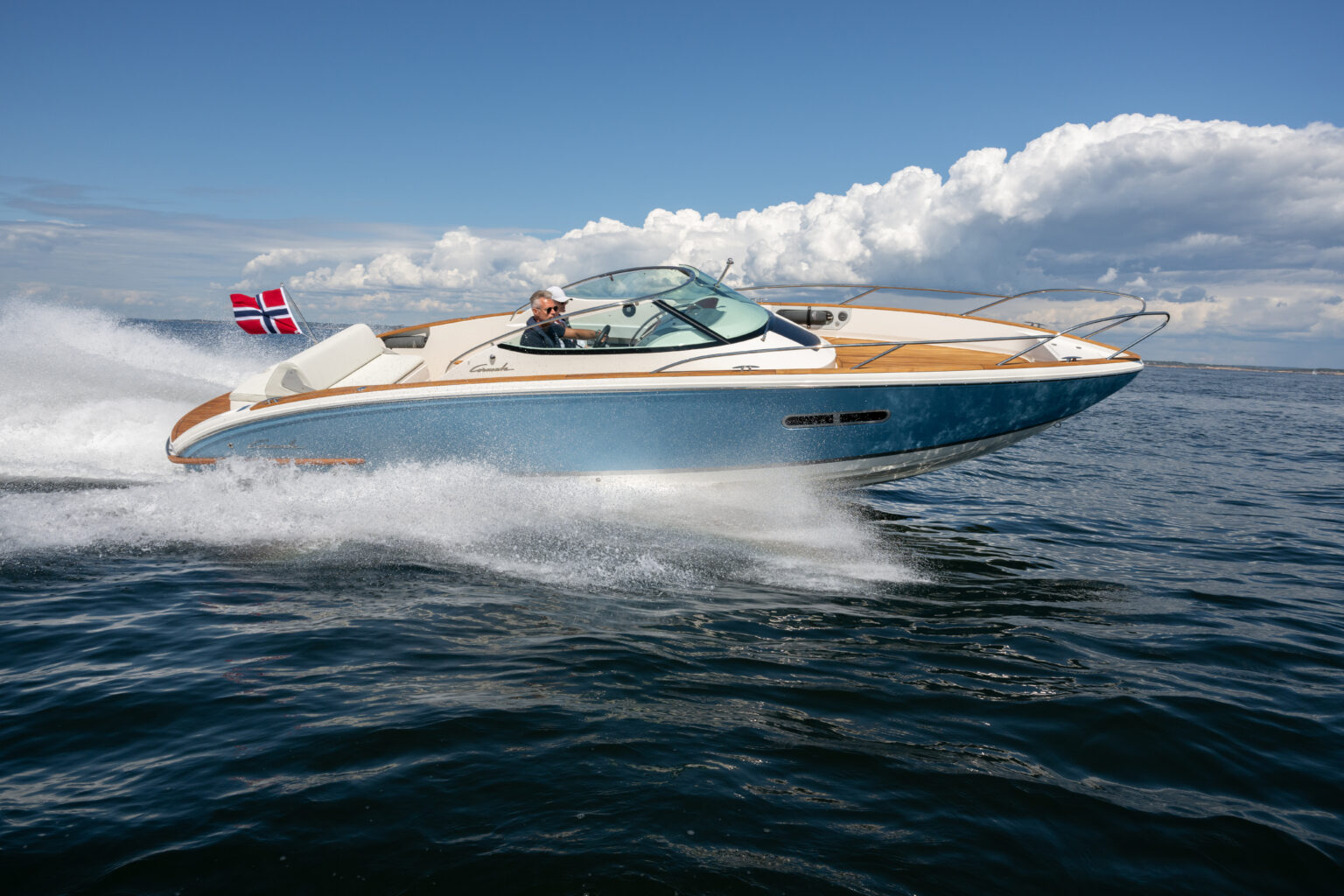
Private Cormate T28 charter on the Oslo Fjord.
Up to seven guests. Fixed pricing. Departures from Tjuvholmen, Oslo.
Check pricing & availability