
Havforskningsinstituttet has been dragging a beach seine along the same shores of the inner Oslofjord since 1936, using the same net and the same method on the same beaches, one summer after another. In 2022 the 17 stations inside the Drøbak threshold produced zero adult cod and zero juveniles. The outer fjord did better with 82 juveniles, still under the long-term average.
That is the fish most people picture when they picture the Oslofjord, and it is functionally gone. Other animals run the place now, and they are easy enough to find once you know the order they live in, from the tide line down to the bottom.
Start at the tide line
Put your hand on any rock below the tide line between Hovedøya and Malmøya in summer and you will meet a shore crab (strandkrabbe, Carcinus maenas) within about thirty seconds. They are in every tide pool and along every harbour wall. A single female spawns 150,000 to 200,000 eggs per season, up to twice a year. Cod used to eat them. Without cod there is little predation left, and the crabs proliferate.
A newer arrival has joined them. The brush-clawed shore crab (penselkrabbe, Hemigrapsus takanoi) was first found in Norway at Tjøme in 2020 and had established itself across the Oslofjord by 2022. At some stations it now makes up around 70 percent of the crabs caught. Havforskningsinstituttet currently recommends not fishing native shore crab in the outer Oslofjord, so the local species keeps a foothold against the newcomer.
The eelgrass shallows
Eelgrass (ålegress, Zostera marina) grows in sheltered shallow bays and forms the nearest thing the fjord has to a meadow. It is the cod nursery: juveniles shelter among the blades before graduating to deeper water. It is also a blue-carbon sink, storing more carbon per hectare than most forests on land.
NIVA's 2025 status report found 67 percent of Oslofjord eelgrass meadows showing signs of weakening, driven by algal overgrowth, nutrient pollution, and physical damage from anchors and trawling. The most intact meadows are around Hvaler and Færder. If you have ever anchored in Sandspollen on Hurum, you have swung over an eelgrass bed.
The kelp zone
Two species matter here. Stortare (Laminaria hyperborea) is the tall kelp with a thick stipe that builds the classic underwater forest. Sukkertare (Saccharina latissima), sugar kelp, is smaller and more delicate and forms lower meadows.
Stortare is still forest in the outer fjord. The dense tareskog between Heia and Torbjørnskjær in the Hvaler archipelago holds the full assemblage: cod (what little remains), crabs, mussels, shrimp, anemones, wrasses, nudibranchs. To see what the fjord looked like underwater everywhere, that is where to dive.
Sukkertare tells the other half of the story. The same NIVA report puts kelp forest cover down 21 percent, and southern sugar-kelp forest is now red-listed. At many stations it has been replaced by lurv, the filamentous fast-growing opportunistic algae that smothers slow-growing habitat-formers. The drivers are nitrogen and phosphorus from agriculture and sewage, combined with warmer water. Norwegian marine biologists now write "lurv" into their reports as a category of its own.
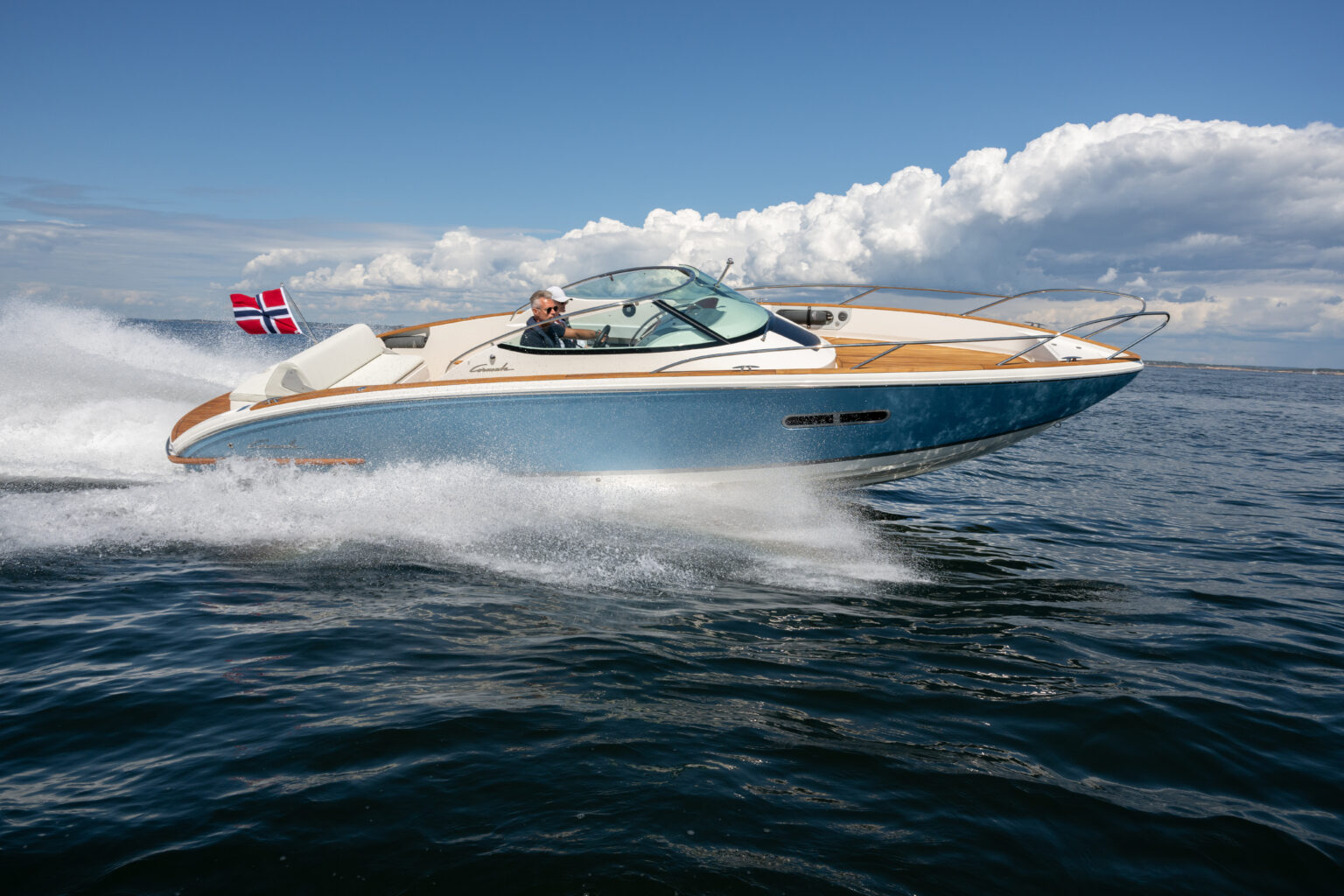
The surface looks the same. Below it, the fjord is a different place than it was in 1990.
Mid-water
What replaced the cod is not another big predator. It is a great many small ones. Havforskningsinstituttet found barely a cod over 40 centimetres anywhere in the Oslofjord, against much larger fish in Tvedestrandfjorden where fishing has been restricted since 2012. With the big predators gone, the level below them expands: the institute recorded a very high share of sculpins, common bullhead and Norway bullhead in particular, which it describes as voracious species with fish fry on the menu.
That is the trap. The species filling the gap eat the young of the species that used to fill it. A 2023 paper in Ecology and Evolution called it the recovery trap: with cod gone, sculpins boom, and the sculpins eat the cod larvae trying to establish. The longer cod stays absent, the harder its return becomes, which is why a fjord does not simply grow its cod back once the fishing stops.
Mackerel are here too, and in summer they are the fish you are most likely to see hunting at the surface. What the small pelagic fish do matters further up as well, for the seabird colonies that depend on them. They are a seasonal visitor working the top of the water column. Down on the bottom, the gap the cod left is still there.
Jellyfish share that water column, and mild winters favour them: warmer bottom water in winter means more polyp offspring the following summer. In 2024 the blue stinging jellyfish (blå brennmanet) was reported from the Oslofjord all the way north to Harstad. It stings, and August is when the swarms reach the Oslo beaches.
Below the sill
At Drøbak the fjord narrows to a ridge only 19.5 metres deep, and that sill controls how often the water in the basins behind it gets replaced. Vestfjorden goes to 164 metres and Bunnefjorden to 154, and the deep water there can sit stagnant and oxygen-poor for months. Braarud and Ruud recorded hydrogen sulphide in the Bunnefjord deep water as far back as 1937. The bottom behind the sill is functionally lifeless.
The cod, in genetic terms
The fjord's cod are down 80–90 percent since the 1970s, pushed by overfishing, warming water, loss of spawning habitat and reduced oxygen in the deep basins. Commercial cod fishing was banned from the Swedish border to Telemark in 2019. The regulation now in force took effect on 1 January 2026 and runs to 31 December 2035, keeping cod fishing closed across the whole fjord. Neither ban has reversed the decline, and the survey numbers suggest the population may be below the point where recovery happens on its own.
A 2025 genetics study from the University of Oslo found something worse underneath that. Analysing samples from 2009 and 2011 against 2022 data, the researchers identified a third cod type, separate from the known coastal and Atlantic stocks and unique to this fjord. In the more recent samples they found only a handful of them.
Lobster, and the rules that changed
European lobster (hummer, Homarus gammarus) is still in the fjord and still under heavy fishing pressure. From 1 October 2025 the rules tightened:
- Season opens 1 October, the traditional date.
- Minimum size 25 cm, maximum size 32 cm. Undersize and oversize must be released.
- Maximum 5 pots, down from 10, counted per person and per vessel.
- Pots must have escape openings.
- Expanded hummerfredningsområder in the inner fjord, with a total ban on lobster fishing and pot use inside them.
Read the full fishing-rules guide for detail. The short version: if you are not sure what you caught or which zone you are in, release it and ask.
Where the fjord is protected
Two national parks have marine components. Ytre Hvaler (2009), Norway's first, covers the Hvaler islands, Torbjørnskjær, Heia and the 470-metre Hvalerrenna trench, which brings Atlantic water in along the bottom. Færder (2013) covers 340 km² of land and sea, including the Bolærne islands and 309 red-listed species.
Fishing regulations are layered on top of the park boundaries. The 2026 regulation sets nullfiskeområder, zero-fishing zones, in the inner fjord and around Færder and Hvaler, where all fishing and harvesting is prohibited. Check the current text before you fish anywhere in the fjord.
The king crab myth
The red king crab (Paralithodes camtschaticus) was released on the Murmansk coast by Soviet scientists in the 1960s and has spread west into Finnmark and Troms. Norwegian management works to hold the quota-regulated area east of 26 degrees east longitude. It is a very long way from the Oslofjord. If someone tells you they caught a kongekrabbe off Bygdøy, they are either confused or lying.
Diving and snorkelling
Diving is possible year-round. April to October is warmest, and September to March gives the best visibility, once the algal blooms have cleared. Accessible entries: Sørenga in central Oslo (shore dive, surprisingly lively in autumn), Nakholmen (boat or shore), Malmøya, Steilene. The better sites are all outer-fjord: the Hvaler kelp, and the wreck sites around Drøbak.
Reading the water from the boat
Even without going under, the surface tells you things. Mackerel feeding at the top, in brief splashes and quick circular disturbances, means a pelagic pulse through that part of the fjord. Seabirds diving in a concentrated patch usually means a herring shoal. Big flat calm patches that look oily are often nutrient-rich upwelling. A dense green surface film is an algal bloom, usually late summer.
September is the month for it. The water clears, mackerel shoals thin out, and seabirds concentrate on what food is left. From the deck of a private cruise you can read more of the fjord's biology than at any other time of year: the surface is calm enough, the light is angled enough, and the captains know where to look.
For what you can legally catch and where, our fishing guide has the full breakdown. For the cod story on its own, we have a longer piece on the collapse.
Twenty years ago you could not put a hook in the water at Drøbak without catching a cod. Now you can fish a full day and not see one. The 2025 genetics work showed why that matters: the Oslofjord cod was its own type, separate from the Atlantic stock, and it is not somewhere else waiting to come back.
Stock figures, kelp and eelgrass numbers, and fishing and lobster rules all change. Lovdata carries the regulation in force, and Havforskningsinstituttet and NIVA publish the survey numbers. Last reviewed: July 2026.
More from the fjord
White-tailed eagles over the Oslofjord
After 126 years of absence, the havørn returned to the Oslofjord in 2008. Where it nests now, how to tell it from a golden eagle, and why it took so long.
GuideWhale Watching in Oslo: What Actually Swims in the Oslofjord
No whale safaris run from Oslo. What the fjord actually holds: harbour porpoises year-round, seals on the skerries, and the documented whale visits of 2003–2025.
GuideWinter birds on the Oslofjord: eider, goldeneye, and the mystery of 2020
The Oslofjord doesn't freeze solid. From November to March it hosts tens of thousands of diving ducks — eider, goldeneye, long-tailed duck, scoter. Where to find them, why they're here, and what happened in February 2020.
See for yourself
Private Cormate T28 charter on the Oslo Fjord.
Up to seven guests. Fixed pricing. Departures from Tjuvholmen, Oslo.
Check pricing & availability